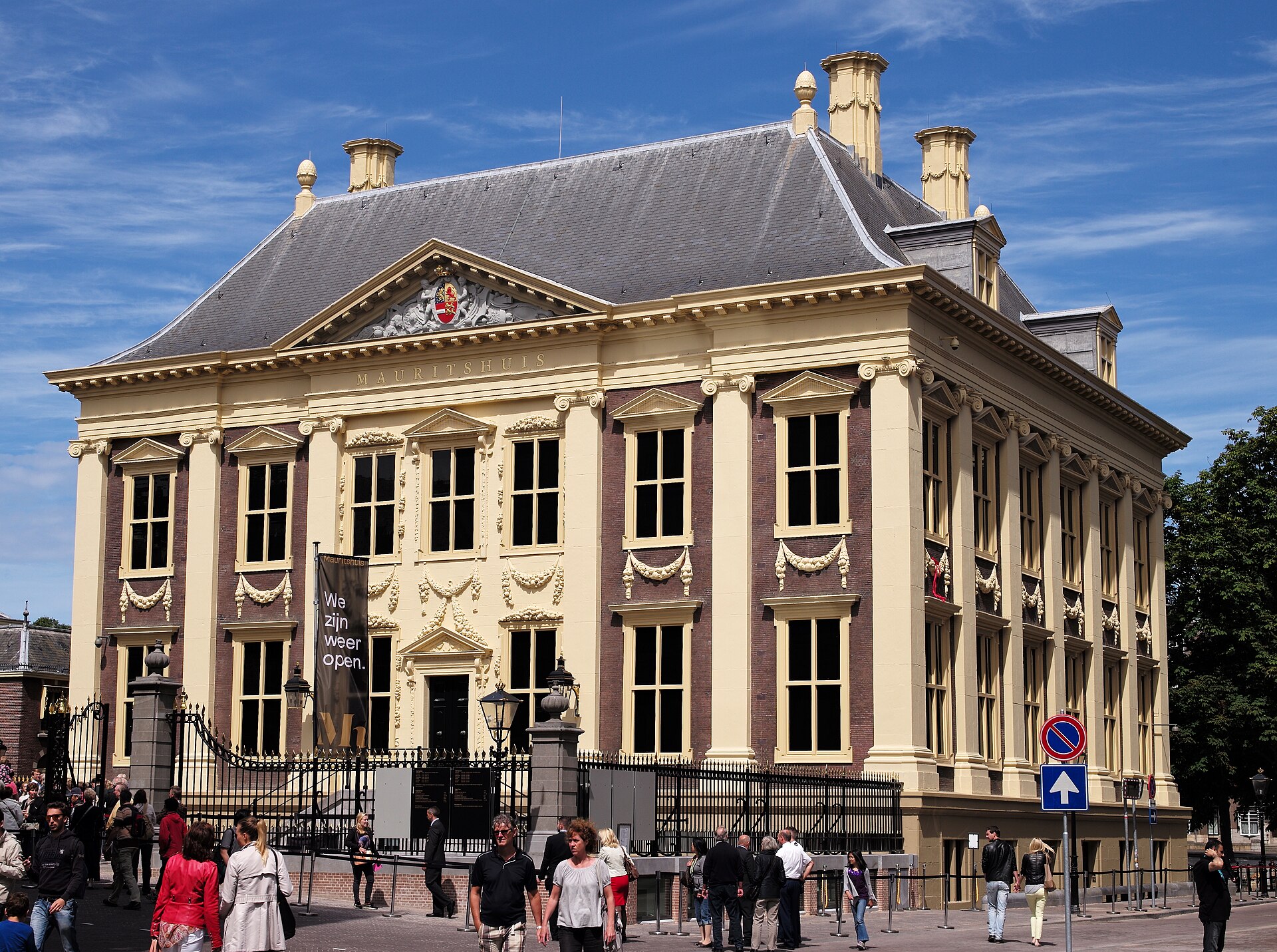
The Mauritshuis is one of those rare museums that doesn’t announce itself with grand gestures but lingers in your memory long after you’ve left. Tucked away in the heart of The Hague, it occupies a building that is itself a work of art—a stately 17th-century mansion that once belonged to Count Johan Maurits van Nassau-Siegen. Designed as a private residence, it later became the home of the Dutch royal collection, and today it houses some of the finest paintings from the Dutch Golden Age. Unlike the vast halls of the Rijksmuseum or the Hermitage, the Mauritshuis offers an intimate experience, where the art feels personal, almost like stepping into a private gallery curated with quiet devotion.
The building itself is a story carved in stone. Completed in 1640 by architect Jacob van Campen—who would later design Amsterdam’s grand town hall—it was conceived as a residence for Count Maurits, a man whose life was as colorful as the art it would one day contain. As governor of the Dutch colonies in Brazil, he returned with more than just exotic plants and animals; his experiences shaped the very design of the house. The façade, adorned with pilasters and a classical pediment, reflects the grandeur of the era, while the interiors reveal a meticulous attention to detail. After the count’s death, the mansion passed to William V, Prince of Orange, before eventually becoming a museum, its walls now lined with masterpieces that once belonged to kings.
Inside, the Mauritshuis feels more like a well-loved home than a public institution. There are no overwhelming crowds or endless corridors, just a sense of quiet discovery. The collection is small but carefully chosen, each room offering a different perspective on Dutch painting. The stars of the show are the works of Rembrandt, Vermeer, and Frans Hals, but the real magic lies in how these paintings converse with one another. They don’t just hang on the walls; they invite you into the world of 17th-century Holland, where merchants, scientists, and artists shaped a society that valued both prosperity and beauty.
The museum’s most famous painting, Vermeer’s *Girl with a Pearl Earring*, is a study in quiet fascination. Little is known about the subject—who she was, why she turns her head with that enigmatic half-smile—but that mystery is part of her allure. In the Mauritshuis, she occupies her own space, allowing visitors to study the delicate play of light on her face, the soft folds of her turban, the luminous sheen of the pearl. Nearby, Vermeer’s *View of Delft* captures the city in a moment of serene clarity, its skyline rendered with such precision that it feels almost tangible. These paintings don’t just depict scenes; they preserve fleeting moments, as if time itself has been suspended.
Yet the Mauritshuis is more than just Vermeer. Rembrandt’s *The Anatomy Lesson of Dr. Nicolaes Tulp* commands attention with its dramatic composition, each figure in the painting alive with individual character. Frans Hals’ portraits burst with energy, their subjects caught mid-gesture, as if about to step out of the frame. Then there are the still lifes—Dutch artists elevated this genre to an art form, painting flowers, fruit, and everyday objects with such realism that you can almost smell the blooms or taste the grapes. These works reveal a culture that found beauty in the ordinary, where a simple meal or a vase of tulips could be as worthy of celebration as a royal portrait.
Beyond the paintings, the museum holds other treasures: delicate porcelain, antique maps, and even anatomical specimens, a reminder of how closely art and science were intertwined in the 17th century. The building itself is an exhibit, its architecture a testament to the era’s craftsmanship. The play of light through tall windows, the intricate plasterwork on the ceilings, the way the wooden panels seem to glow in the soft illumination—all of it transports you back in time. In the basement, the old kitchens and storerooms remain, offering a glimpse into the daily life of the mansion’s original inhabitants.
What makes the Mauritshuis special is its unhurried atmosphere. There are no flashy interactive displays or pushy audio guides, just the quiet hum of appreciation as visitors move from one masterpiece to the next. The museum doesn’t demand your attention; it earns it, allowing you to linger as long as you like in front of a single painting or simply sit on a bench and watch others discover something new. In a world where museums often compete for spectacle, the Mauritshuis offers something rarer: the chance to slow down and truly see.
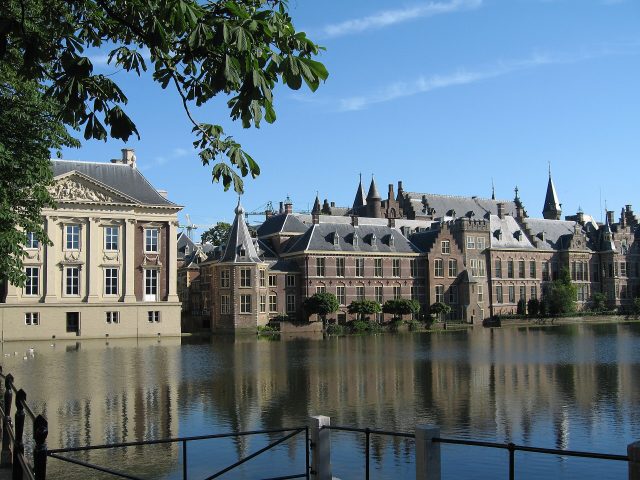
The Hague isn’t always thought of as an art city, but the Mauritshuis is a reminder of its cultural depth. The museum sits just a short walk from the Binnenhof, the historic seat of Dutch government, and the nearby Royal Picture Gallery, which hosts rotating exhibitions. After a visit, you might stroll along the Hofvijver, the small lake where the mansion’s reflection shimmers in the water, or duck into one of the city’s cozy cafés. The Mauritshuis doesn’t ask for much—just your time and curiosity—and in return, it offers something far more valuable: a connection to the past, to the artists who saw the world with such clarity, and to the quiet beauty that endures.