Manila Ocean Park feels like a quiet pause in the middle of the city, a place where the usual noise of traffic and crowds fades into the gentle hum of water. For a country made up of thousands of islands, the ocean is never far away, yet here, beneath the glass and steel of the capital, it becomes something you can step into—close enough to touch, but just out of reach. The park sits along Parade Avenue, unassuming from the outside, its real magic unfolding indoors, where the rhythms of the sea take over.
Opened in the early 2000s, the oceanarium arrived at a time when Manila had few spaces that blended education with wonder. The Philippines lies at the heart of the Coral Triangle, home to more marine species than anywhere else on Earth, and the park was designed to reflect that richness. It wasn’t just about displaying fish in tanks; it was about showing how fragile and interconnected these ecosystems are. Over the years, as conversations about plastic pollution and climate change grew louder, the oceanarium became a place where those ideas took shape, not through lectures, but through the slow, mesmerizing movement of life underwater.
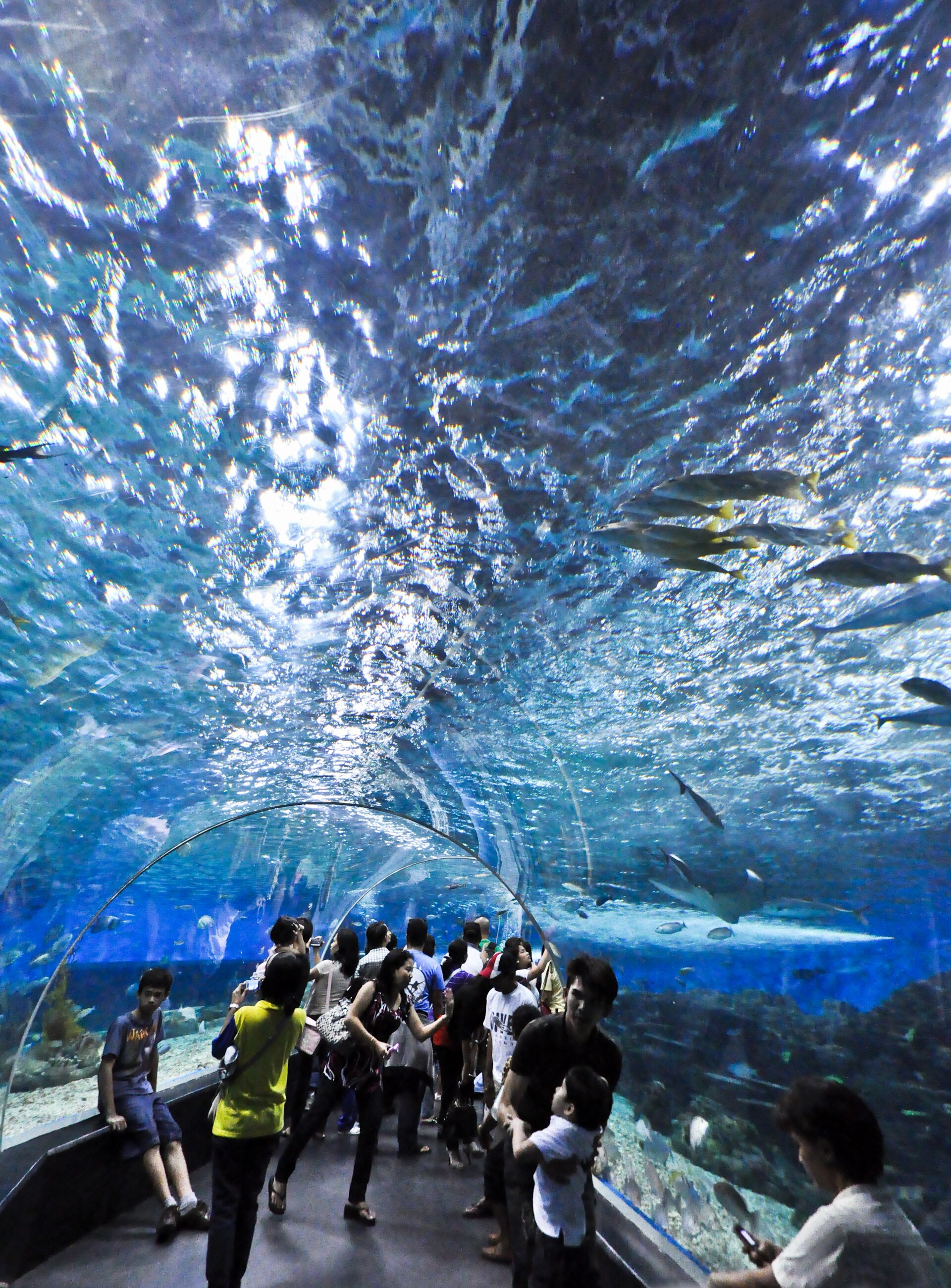
The building itself doesn’t demand attention. There are no grand facades or striking designs—just a doorway leading into a world of dim light and the sound of water. The layout guides visitors deeper, zone by zone, each one mimicking a different marine environment. The journey starts with smaller exhibits, where clownfish dart between anemones and seahorses cling to swaying seaweed. Then the space opens up, the tanks growing larger, the creatures more imposing. The real shift happens when you step into the underwater tunnel. The ceiling curves overhead, and suddenly, you’re surrounded. Sharks glide past, their shadows rippling across the floor. Rays flap their wings just inches above your head. For a moment, it’s easy to forget you’re still in the city.
Beyond the local species, the oceanarium brings in animals from other parts of the world—penguins waddling in a climate-controlled enclosure, jellyfish pulsing in tanks lit by soft blue light. There are touch pools where children can run their fingers over the rough skin of a starfish or the spiny shell of a sea urchin, always under the watchful eye of staff. For many kids, this is their first real encounter with marine life, a chance to see something alive and moving that isn’t a stray cat or a pigeon in the park.
The park also runs programs that go beyond the usual aquarium experience. There are talks on how coral reefs bleach when the water gets too warm, or how plastic waste ends up in the stomachs of turtles. Sometimes, they’ll set up a station where visitors can sort through microplastics sifted from sand, a hands-on way to understand how even small actions add up. These aren’t just lessons; they’re conversations, and they happen in the same space where people come to marvel at the beauty of the ocean.
Inside, the atmosphere is different from the rest of Manila. There’s no rush, no jostling for space. People move slowly, stopping to read the signs or watch a fish hover in place. Children point and whisper, their voices mixing with the sound of water trickling through the exhibits. It’s one of the few places in the city where silence feels natural, where the only urgency is the slow, steady pulse of the sea.
For locals, Manila Ocean Park is a familiar part of the city’s fabric. Parents bring their kids on weekends, groups of friends wander through after lunch, and sometimes, people come alone, just to stand in front of a tank and watch the light play on the scales of a fish. It’s not a place for luxury or nightlife, but for something quieter—a reminder that beneath the surface of everyday life, there’s a whole other world, vast and strange and worth paying attention to.