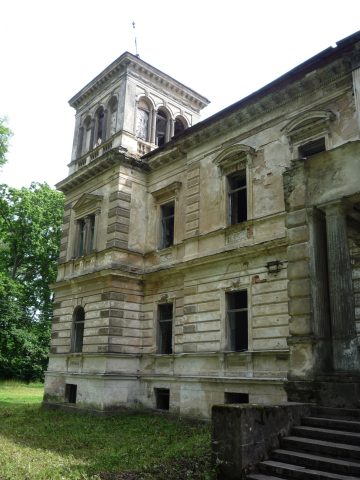
Lyntupy is a quiet town in northern Belarus, where life moves at its own unhurried pace. There are no bustling avenues or crowds of tourists here—just narrow streets lined with old wooden houses, a landscape that feels frozen in time. It’s the kind of place where you can easily imagine how people lived decades ago, where the rhythm of daily life is shaped by simplicity and tradition. At the heart of this town stands the Lyntupy House of Culture, a building that has served as the community’s gathering place for generations.
Built in the mid-20th century, the House of Culture was part of a nationwide movement to create spaces where people could come together, socialize, and explore their creative interests. Across the Soviet Union, similar buildings sprang up in towns and villages, each one meant to foster a sense of collective identity. Lyntupy was no exception. The locals, along with the authorities, put effort into making sure this place wasn’t just another public hall but a true cultural hub. Today, the building looks much as it did decades ago—modest but well-kept, its facade bearing the quiet marks of time.
The architecture is typical of the era: functional, symmetrical, and unadorned. There’s no grandeur here, just a straightforward design that prioritizes purpose over ornamentation. Inside, a spacious hall with high ceilings hosts concerts, plays, and community meetings, while smaller rooms serve as rehearsal spaces for local groups. For many in Lyntupy, this place holds memories of childhood—New Year’s celebrations, concerts for International Women’s Day and Victory Day, and weekend dances with live music. It was, and still is, a second home for those who grew up here, a place to meet friends, take part in events, and feel connected to the town.
Though the world outside has changed, the House of Culture continues to play its role. Children and adults still gather here for classes—folk dancing, music lessons, or just casual conversation. The main hall regularly hosts performances by local artists, amateur theater groups, and even touring shows from other towns. For a small place like Lyntupy, this is a rare chance to experience culture without leaving home. The building may not be grand, but it’s a vital part of the town’s social fabric.
Traditional holidays bring the House of Culture to life in a special way. Victory Day, for instance, is celebrated with particular reverence. Veterans gather for solemn concerts, while children recite poems and sing songs about the war. During Maslenitsa, the town comes alive with pancakes, games, and folk dances, and in the summer, open-air festivals fill the air with music. These events draw not just locals but visitors from nearby villages, turning the House of Culture into a regional gathering spot.
While the building isn’t a protected landmark or a tourist attraction, its significance to the people of Lyntupy is immense. For them, it’s a place filled with memories—of youth, first loves, friendships, and those who are no longer around. To an outsider, it might seem like just another provincial cultural center, but for those who call this town home, it’s something far more personal. Here, culture isn’t just performed; it’s lived, in every gathering, every rehearsal, every person who walks through its doors.
Like many similar institutions in small towns, the House of Culture faces challenges. Funding is limited, young people often leave for bigger cities, and interest in traditional forms of entertainment is fading. Yet, local enthusiasts—teachers, musicians, artists—keep the place alive. They organize new projects, seek out sponsors, and rally volunteers to ensure the building doesn’t fall into disrepair. Their efforts are a quiet testament to the belief that culture matters, even in a place as unassuming as Lyntupy.
This isn’t the kind of destination that draws crowds looking for grand experiences or museum-worthy sights. Everything here is understated, but that’s part of its charm. The House of Culture isn’t just a building; it’s a living piece of the town’s history, a reflection of how life in Belarus’s provinces has evolved over the decades. For those curious about how small communities preserve their identity far from the capital, this place offers a glimpse into a way of life that’s both ordinary and deeply meaningful. There’s no pretension here, just the simple, enduring joy of people coming together to sing, dance, and share moments with one another.