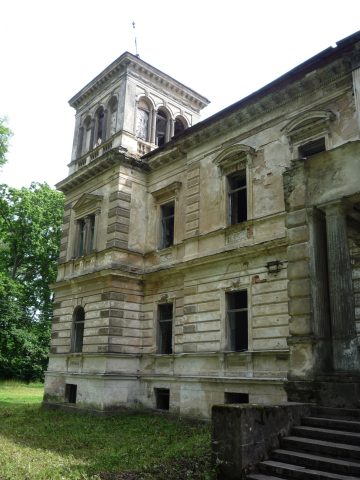
Lyntupy is a quiet town in northwestern Belarus, where life moves at an unhurried pace, far from the bustle of cities. The streets are lined with old wooden houses, and the air carries the scent of pine forests and meadows. Among the few landmarks here, the Church of St. Andrew Bobola stands out—not for its grandeur, but for the quiet significance it holds in this rural corner of the world.
The church was built in the early 20th century, when this region was still part of Poland. Construction began in 1910 and was completed in 1922, after the upheavals of World War I. Designed by an architect from Vilnius, the building was adapted by local craftsmen, who adjusted the plans to suit the materials and traditions of the area. Unlike the wooden or white-stone structures common in Belarus, the church was built from red brick, giving it a sturdy yet warm appearance. The choice of material was unusual for the region, but it lent the building a sense of permanence without losing the modest charm of a rural parish church.
The architecture blends elements of Neo-Gothic and Art Nouveau, a combination typical of the era. Tall, pointed windows and slender towers evoke the Gothic cathedrals of Europe, though here the design is simpler, stripped of excessive ornamentation. The main entrance is framed by a small portal with a semicircular stained-glass window, and above it rises a clock tower. Inside, the church is spacious, with high vaulted ceilings and soft, muted colors. The altar, classical in style, features columns and subtle stucco work, but avoids overwhelming detail.
The church is named after St. Andrew Bobola, a 17th-century Jesuit missionary who became a symbol of faith and resilience for Catholics in Belarus and Poland. Born in the Polish-Lithuanian Commonwealth, Bobola preached in the region before his violent death in 1657 during the Khmelnytsky Uprising. Canonized in the 20th century, his legacy endures in places like Lyntupy, where the church dedicated to him serves as a reminder of the area’s deep Catholic roots.
Like many religious sites in Belarus, the church has endured turbulent times. During World War II, it suffered significant damage—its roof, walls, and interior were all affected. After the war, when Lyntupy became part of the Soviet Union, the church was closed, repurposed first as a warehouse and later as a community center. It wasn’t until the 1990s, after Belarus regained independence, that the building was returned to the Catholic community. Restoration took years, but today the church is once again an active place of worship.
Now, the Church of St. Andrew Bobola is more than just a religious site; it’s a piece of Lyntupy’s cultural heritage. Perched on a small hill and surrounded by old trees, it’s visible from a distance, standing as a quiet landmark in the town. A small park nearby is a favorite spot for locals to stroll, especially in warmer months. Inside, some original details remain—carved pews, old icons, and faded murals—though much of the interior has been carefully restored to reflect its early 20th-century appearance.
For visitors, the church is one of the few reasons to linger in Lyntupy. There are no grand exhibitions or guided tours, just the stillness of the space and the sense of history it carries. The silence inside invites reflection, while the view from the bell tower offers a sweeping panorama of the town and its surroundings. On feast days, the sound of the organ and choir fills the air, creating an atmosphere that even those indifferent to religion might find moving.
Lyntupy isn’t a tourist hotspot, and the Church of St. Andrew Bobola isn’t a monument of overwhelming scale or opulence. But that’s precisely what makes it special. It fits naturally into the landscape, a quiet witness to the passage of time and the lives of those who have passed through its doors. In a world where so much is loud and fleeting, places like this offer something rare—a sense of continuity, a connection to the past that lingers long after you’ve left.