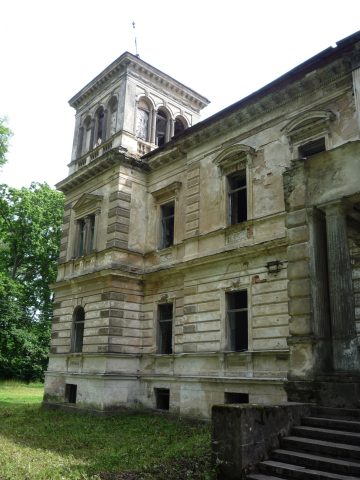
Andrew’s Church in Lyntupy is one of those quiet places where time seems to stand still. Perched on a gentle hill in the center of the village, it has watched over the changing seasons and the slow rhythm of life here for over a century. Unlike grand cathedrals in big cities, this church doesn’t overwhelm with size or opulence. Instead, it carries a quiet dignity, its modest design blending local traditions with the subtle influences of European architecture that once shaped this borderland region.
The history of the church is woven into the story of Lyntupy itself. This small village, nestled near the modern border between Belarus and Lithuania, has long been a crossroads of cultures and faiths. In the 19th century, as Catholic parish life flourished in the area, the need for a place of worship grew. While the exact date of its construction remains unclear, by the early 20th century, the church had become a focal point of the village—not just as a spiritual center, but as a landmark that shaped the identity of the place.
The building is a fine example of Neo-Gothic style, which was popular in this part of Europe at the time. Built from red brick, the church has a warm yet restrained appearance. Its tall, pointed windows, slender towers flanking the main facade, and delicate tracery along the eaves give it an air of lightness, despite the solidity of its structure. Inside, the space is simple but thoughtfully arranged. Wooden pews line the nave, leading to an unadorned altar, while soft light filters through the stained glass, casting muted colors across the walls.
Like many religious sites in the region, Andrew’s Church faced hardships during the Soviet era. It was closed, and its purpose shifted over the years—serving as a warehouse, a community hall, and even a gym at different times. Fortunately, the building survived, and in the 1990s, it was returned to the Catholic community. Restoration took time, but today, the church is active once again, welcoming both worshippers and visitors drawn to its history and architecture.
Lyntupy is far from a tourist hotspot, and the church sees only a handful of visitors most days. The village itself is a quiet place, where life moves at an unhurried pace. The streets are lined with old wooden houses, and the church is surrounded by a small park where locals often gather. In summer, children play on the grass, and elderly residents sit on benches, watching the world go by. It’s an ordinary scene, one that feels worlds away from the noise of cities.
For the people of Lyntupy, Andrew’s Church is more than just a place of worship. It’s a symbol of the village’s past, a link to generations who came before. Many life events—baptisms, weddings, funerals—have taken place within its walls. Even those who don’t practice Catholicism regard the church with respect, seeing it as part of their shared heritage. It stands as a reminder of the traditions that have shaped this community over the decades.
Stepping inside the church, you’re met with a hush broken only by the occasional rustle of prayer books or the distant sound of footsteps. The air carries the scent of wax and aged wood, while sunlight streams through the stained glass, painting the interior in soft hues. If you’re lucky, you might hear the organ, its notes filling the space with a quiet, resonant beauty.
There’s something deeply peaceful about Lyntupy and its church. Time here doesn’t rush; it lingers. The village moves to its own rhythm, where every building, every tree, and every person has a place in the slow unfolding of daily life. Visiting Andrew’s Church isn’t about grand discoveries or dramatic sights. It’s about noticing the small things—the way the light falls through the windows, the sound of the wind through the trees, the quiet pride of a local who might share a story about the village’s past. In the end, the church isn’t just a building. It’s a living piece of Lyntupy’s soul, one that endures, quietly and steadfastly, through the years.