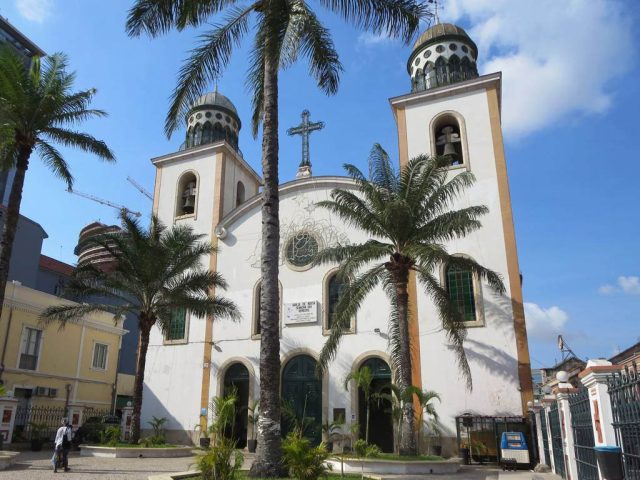
Nossa Senhora da Nazaré Church is one of those quiet corners of Luanda where time seems to slow down. Tucked away among the bustling streets of Angola’s capital, it doesn’t draw crowds of tourists, but for those who look beyond the obvious, it offers something deeper—a sense of history that lingers in its walls. Built in the 17th century, the church stands as a reminder of Luanda’s colonial past, when the city was a key port in the transatlantic slave trade and a center of Catholic missionary activity in the region.
The architecture is simple but striking. Whitewashed walls, a modest facade with arched windows, and a small bell tower reflect the style of Portuguese churches from that era. Inside, the wooden pews have darkened with age, and a few old icons remain, their presence adding to the sense of quiet reverence. The main altar is dedicated to Our Lady of Nazareth, the patron saint of sailors, a fitting tribute given the church’s origins as a place of prayer for Portuguese merchants and navigators who passed through Luanda’s harbor.
The history of Nossa Senhora da Nazaré is closely tied to Angola’s own story. During the colonial period, the church was more than just a place of worship—it was where lives were marked by both faith and tragedy. Slaves were baptized here before being shipped across the ocean, and those who didn’t survive the journey were mourned within these walls. After Angola gained independence in 1975, the church, like many colonial-era landmarks, faded from public attention. But over time, its significance as a historical site has been reconsidered, not as a relic of oppression, but as a testament to the complexities of the past.
Today, the church remains active, with services held regularly. Locals visit not just on Sundays but throughout the week, some seeking solace, others simply a moment of quiet. Unlike the more famous cathedrals in Luanda, this one is free from the usual tourist bustle. There are no crowds with cameras, no guided tours—just the hush of footsteps on stone floors and the faint echo of prayers whispered over centuries.
The surrounding neighborhood is one of Luanda’s oldest, where narrow streets and low-slung buildings still carry the weight of history. Nearby, remnants of 16th-century fortifications stand as silent witnesses to the city’s turbulent past. The pace here is unhurried, and even the noise of the modern city feels distant, as if reluctant to disturb the peace of this place. A short walk away, the waterfront marks the spot where countless ships once departed, carrying enslaved people to the Americas.
Nossa Senhora da Nazaré is more than just a church—it’s a living record of change. It has endured wars, political upheavals, economic crises, and the slow rebuilding of a nation. Its walls hold the echoes of Angola’s complicated history, from colonial rule to the present day, as the country navigates its place in the world. To a casual visitor, it might seem unremarkable, but for those who look closer, it reveals layers of meaning that guidebooks often miss.
Visiting the church offers a chance to reflect on how attitudes toward the past have shifted. During Angola’s socialist era, such buildings were often dismissed as symbols of colonialism, but today they are increasingly recognized as part of the country’s cultural heritage. There’s no grandeur here, no ornate frescoes or gilded decorations—just a quiet dignity that makes it all the more compelling. It doesn’t demand attention; it simply exists, as much a part of Luanda as the people who pass by it every day.
If you find yourself in Luanda, take a moment to step inside. Sit on one of the worn pews, listen to the stillness, and let the weight of history settle around you. This is what travel is often about—not just seeing new places, but touching the stories they hold, the lives they’ve witnessed, and the quiet resilience that endures.