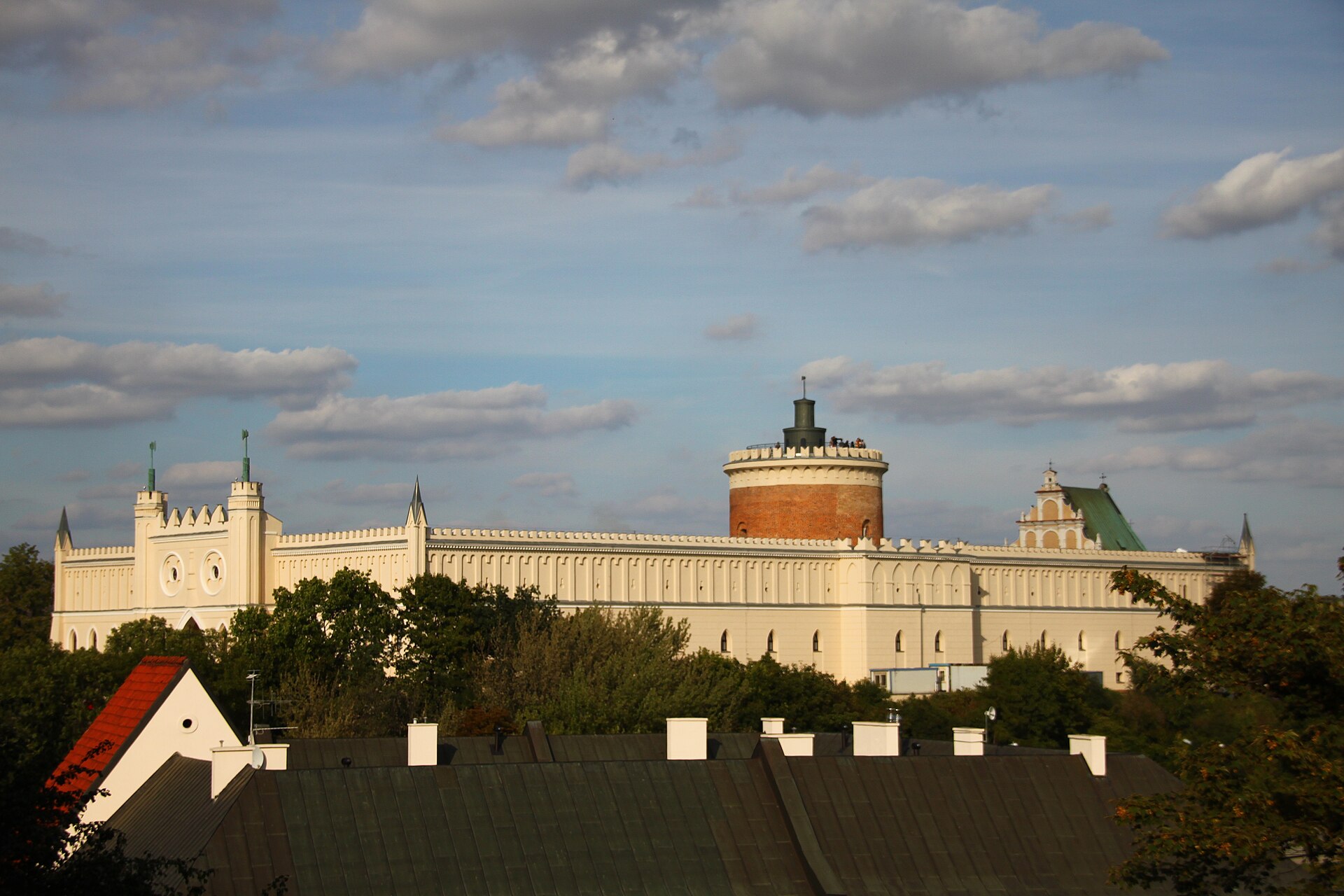
Lublin Castle stands on a hill overlooking the city, a quiet witness to centuries of change. Its story begins in the 12th century, when wooden fortifications first rose here to protect trade routes and serve as a seat of local power. Back then, Lublin was a frontier town, caught between shifting borders and rival ambitions. The castle’s early years were marked by conflict—raids, sieges, and the constant threat of war. By the 14th century, it had been rebuilt in stone, its walls thickening to withstand the pressures of a turbulent region where Polish, Lithuanian, and Tatar forces often clashed.
The castle’s most famous moment came in 1569, when its halls hosted the negotiations that led to the Union of Lublin. This agreement merged Poland and Lithuania into a single state, the Polish-Lithuanian Commonwealth, reshaping the political landscape of Eastern Europe for centuries. The room where the treaty was signed still exists, its atmosphere heavy with the weight of history. Walking through it, you can almost hear the murmurs of diplomats and the scratch of quills on parchment, sealing a union that would define the region’s future.
Architecturally, the castle is a patchwork of eras. The oldest surviving part is the Romanesque keep, a squat, formidable tower from the 13th century. Its thick walls and narrow slits for archers speak of a time when defense was everything. Later additions softened its harsh lines—Renaissance arcades and decorative details brought elegance, while grand halls reflected the growing importance of Lublin as a cultural and political center. But the castle’s history wasn’t always glorious. In the 19th century, when Poland was partitioned between Russia, Prussia, and Austria, the fortress was repurposed as a prison. For decades, it held political prisoners, rebels, and those who dared to fight for independence. The cells, still preserved, are a stark reminder of how easily power can turn oppressive.
Today, the castle houses a museum, its exhibits weaving together the many threads of Lublin’s past. Archaeological finds, everyday objects from different centuries, and religious artifacts fill the rooms. Among the most treasured pieces is the Lublin Icon of the Mother of God, a revered image believed to have miraculous powers. Legends say it protected the city from disasters, and even now, it draws pilgrims and visitors seeking a connection to something deeper than history. The museum doesn’t just display relics; it tells stories—of merchants and monks, soldiers and scholars, all of whom left their mark on this place.
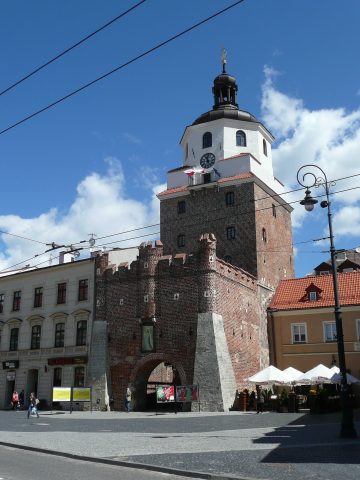
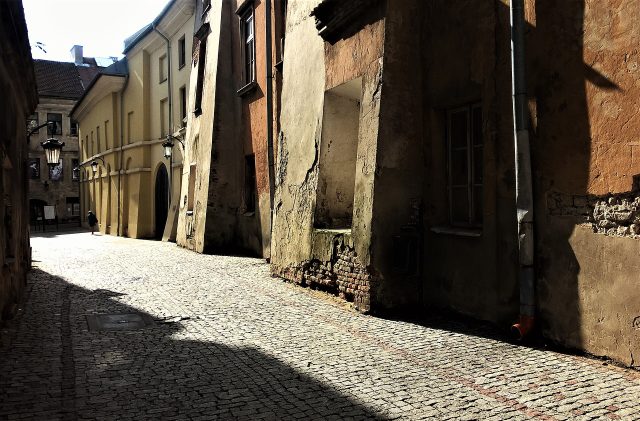
Beyond the exhibits, the castle offers something less tangible but just as compelling: a sense of time layered upon itself. From its ramparts, the view stretches over Lublin’s rooftops, where the spires of churches and the winding streets of the Old Town create a living postcard. Below, the Market Square buzzes with life—cafés spill onto cobblestones, street musicians play, and the scent of fresh bread mixes with the crisp air. The castle isn’t just a backdrop to this scene; it’s a bridge between the city’s past and present, a place where history feels immediate, not distant.
The castle we see today is a reconstruction, painstakingly restored after the devastation of World War II. But the restorers didn’t erase the scars. Bullet marks, fire damage, and the uneven lines of old repairs remain visible, refusing to let the past be romanticized. This honesty makes the castle feel real, not like a polished monument but a place that has endured, survived, and adapted. It’s a rare quality in a world where so many historic sites are sanitized for tourists.
For locals, the castle is more than a landmark—it’s part of Lublin’s identity. Throughout the year, it hosts events that bring the past to life: medieval fairs where knights joust and craftsmen demonstrate old trades, Christmas markets with mulled wine and handmade ornaments, and concerts that echo through its courtyards. Families come here to explore, school groups arrive for lessons in history, and visitors wander its halls, each finding something different in its stones. The castle doesn’t belong to any single era; it belongs to everyone who has ever passed through its gates.
Walking through Lublin Castle is like flipping through the pages of a history book, but one where the stories aren’t confined to text. Here, the Middle Ages, the Renaissance, and the dark days of the 19th century coexist in the same space. There’s no single narrative, no neat timeline—just the accumulation of moments, some grand, some tragic, all part of the same continuum. The castle doesn’t try to be beautiful or perfect. It simply is, with all its cracks and contradictions, a place where the past isn’t just remembered but still lingers in the air.