Lubinsky Prospekt is one of those rare urban spaces that feels both timeless and alive. Stretching from the banks of the Irtysh River to Lenin Square, it carries the quiet rhythm of a city that has grown around it, neither rushing nor lingering, but simply existing as it always has. The wide sidewalks, lined with trees in summer and twinkling lights in winter, invite you to slow down. There are no towering skyscrapers here, no glass-and-steel facades—just a collection of buildings that tell the story of Omsk through their weathered brick, ornate plasterwork, and the occasional wrought-iron balcony.
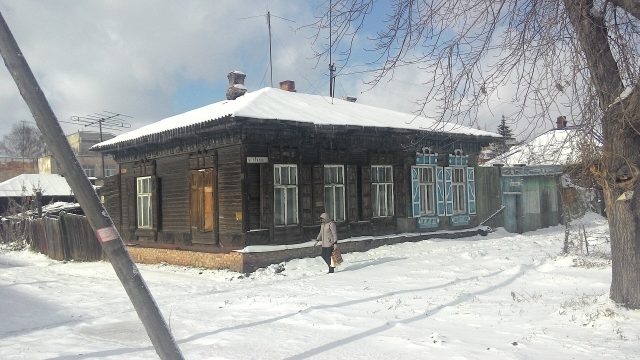
The street’s history begins in the late 19th century, when Omsk was transforming from a modest Siberian outpost into a thriving trade and industrial hub. Back then, it was known as Bulvarnaya Street, a name that hinted at its early character as a tree-lined promenade. The first stone buildings appeared in the early 1900s, replacing the original wooden structures, and many of them still stand today. Walking along the prospekt, you can see the layers of time in the architecture—a mix of neoclassical symmetry, Art Nouveau flourishes, and the sturdy, practical designs favored in Siberia. Some of the most striking buildings belong to the merchant era, with their intricate window frames and balconies that once overlooked a bustling commercial district.
When the street was renamed in honor of revolutionary figure Ivan Lyubin during the Soviet era, its purpose shifted, but its spirit remained. It became a stage for public life—parades, rallies, and celebrations that marked the rhythms of the 20th century. The 1930s and 1950s brought another wave of change, as Stalinist architecture left its mark with grand, columned facades and wide pedestrian avenues. The street was closed to traffic, turning it into a place where people could gather, stroll, and linger without the noise of cars. That decision preserved its character, making it one of the few truly walkable spaces in a city where urban planning often prioritizes movement over pause.
Today, Lubinsky Prospekt is where Omsk’s past and present coexist. You might start your morning with coffee at a small café tucked into a historic building, then browse a secondhand bookstore where the scent of old paper lingers in the air. In the afternoon, the street fills with the sounds of street musicians or the chatter of students from nearby universities. Summer brings open-air markets selling everything from handmade crafts to fresh berries, while winter transforms the prospekt into a festive corridor of ice sculptures and warm tea stalls. It’s not a place for grand spectacles, but for the quiet, everyday moments that make a city feel like home.
What makes the prospekt special are the details—the way sunlight filters through the leaves of the linden trees in June, the way the facades of old buildings glow in the late afternoon, the way the sound of footsteps echoes against the pavement. There’s the former Public Assembly building, with its neoclassical columns and intricate moldings, now home to cultural events. Or the Batyushkin House, once a merchant’s residence, now a school of arts, its stained-glass windows casting colored light onto the sidewalk. These buildings aren’t just relics; they’re living parts of the city, still serving a purpose, still shaping the way people move through the space.
Walking here, you can’t help but wonder about the lives that have unfolded along this street. The merchants who once haggled over goods in the shops that lined the prospekt, the revolutionaries who marched here in the early 20th century, the families who gathered for parades during Soviet holidays, the students who now rush past on their way to class. Each era has left its mark, not just in the architecture, but in the way the street feels—like a place where history isn’t something distant, but something you can touch.
Despite being in the heart of Omsk, Lubinsky Prospekt doesn’t feel crowded. There’s no sense of being hurried along, no pressure to keep moving. Instead, it offers a rare kind of urban calm, a place where you can sit on a bench and watch the world go by. Maybe that’s why locals love it so much—it’s not just a thoroughfare, but a part of their daily lives. It’s where friends meet for coffee, where couples take evening strolls, where children ride bikes on weekends. The prospekt has a way of making even the most ordinary moments feel a little more meaningful.
If you find yourself in Omsk, take the time to walk along Lubinsky Prospekt. It’s not just a street, but a cross-section of the city’s soul. Here, you’ll find the layers of history that have shaped Omsk, the small details that make it unique, and the quiet charm that keeps people coming back. Whether you’re here for an hour or a whole afternoon, the prospekt has a way of making you feel like you’ve stepped into a place that’s both familiar and entirely its own.