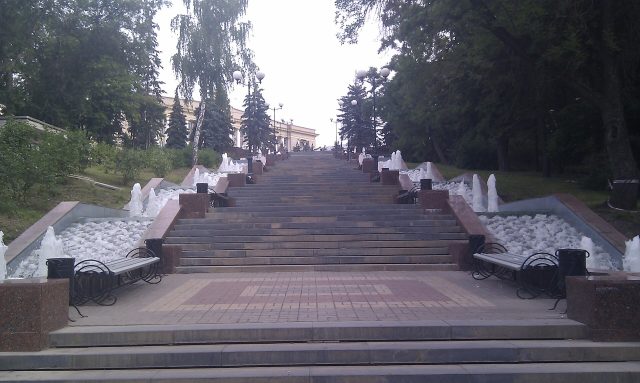
Lipetsk Resort feels like a place where time has paused, just long enough to let the past linger without fading entirely. Tucked in the heart of the city, it offers a quiet retreat from the noise of everyday life, its paths winding through history as much as through greenery. The story of this resort began in the early 19th century, when the mineral springs here caught the attention of physicians and travelers. Back then, Lipetsk was not yet an industrial hub but a destination known for its healing waters, often compared to those in Europe. The resort quickly became a favorite among the nobility and wealthy townspeople, who came not just for treatment but for the peaceful surroundings, where the air carried the scent of linden trees and the rustle of leaves.
The architecture here tells its own tale, a blend of styles that mirrors the resort’s long evolution. The main building, with its classical columns and high ceilings, still carries the elegance of an era when the upper classes sought refuge within its walls. Around it stretches a park that has grown older but not less beautiful, its ancient trees shading winding paths and ponds where ducks glide across the water. Some of the structures date back to the resort’s earliest days, while others were added later, during the Soviet period, when sanatoriums and treatment facilities expanded the grounds. Together, they create a sense of continuity, where the past isn’t just preserved but still very much alive.
The mineral waters have always been the heart of Lipetsk Resort. Rich in iron, magnesium, and other minerals, they’ve been used for centuries to treat ailments of the digestive system, heart, and joints. In the 19th century, scientists studied their properties, confirming what locals had long known—that these waters had real healing power. Today, the resort still welcomes visitors, offering everything from traditional mineral baths to modern physiotherapy. Yet it hasn’t lost the unhurried, almost intimate feel of a place where people come not just for treatment but for rest. There’s no rush here, no sense of being just another guest in a crowded wellness center.
The park is perhaps the resort’s most enduring feature. Planted over a century ago, its linden trees still stand tall, their branches forming a canopy over the paths. Ponds dotted with ducks and swans add to the tranquility, while the changing seasons bring their own magic. In summer, the shade offers relief from the heat, and in autumn, the leaves turn gold, painting the park in warm hues. Winter transforms the paths into quiet, snow-covered trails, evoking the days when ladies in long dresses and gentlemen in top hats strolled beneath the bare branches. Even now, walking here feels like stepping into a slower, gentler rhythm of life.
This isn’t a place for loud entertainment or crowded tourist spots. Instead, it offers something rarer—silence, fresh air, and the chance to simply be. Many visitors come not just for the treatments but for the quiet, for the way the resort lets them step away from the rush of modern life. The small café on the grounds serves tea and coffee, and in the evenings, the soft glow of lamplight turns the park into a cozy retreat. There’s no need to fill the time with activities; sometimes, just sitting by the water or wandering the paths is enough.
Despite being in the middle of Lipetsk, the resort feels like its own world, where time moves differently. There’s no urgency here, no sense of needing to be somewhere else. Instead, there’s space to breathe, to think, or to do nothing at all. That’s probably why people keep coming back—not just for the health benefits, but for the way the place makes them feel. It’s a reminder that even in a city, there can be pockets of stillness, where the noise of the world fades into the background.
For many locals, Lipetsk Resort is tied to personal memories. Some remember coming here as children with their parents, others recall weekend walks through the park or simply enjoying the fresh air. It’s become part of the city’s identity, a symbol of calm in the midst of urban life. Over the years, the resort has seen changes—restorations, updates, new services—but its essence remains the same. It’s a place where history and modernity coexist, where old traditions meet new approaches to wellness.
Today, the resort continues to evolve, but gently, as if aware that its greatest charm lies in its unhurried pace. It may not be as famous as it was in the 19th century, but it hasn’t lost its significance. For those who visit, it’s more than just a sanatorium or a park; it’s a piece of living history, a quiet corner where the past and present meet. And perhaps that’s the real reason people keep returning—not just for the waters, but for the sense of peace that lingers here, as timeless as the trees themselves.