Tutankhamun’s tomb, known as KV62, is one of those rare places where time seems to have stood still. Tucked away in the Valley of the Kings on the west bank of the Nile, it remains a quiet testament to both archaeological discovery and the enduring mysteries of ancient Egypt. When Howard Carter uncovered its entrance in 1922, he found something almost unheard of—a royal burial nearly untouched by grave robbers. Inside, over five thousand objects lay preserved, from golden chariots to intricate jewelry, each piece offering a glimpse into the life and death of a boy king who ruled more than three thousand years ago.
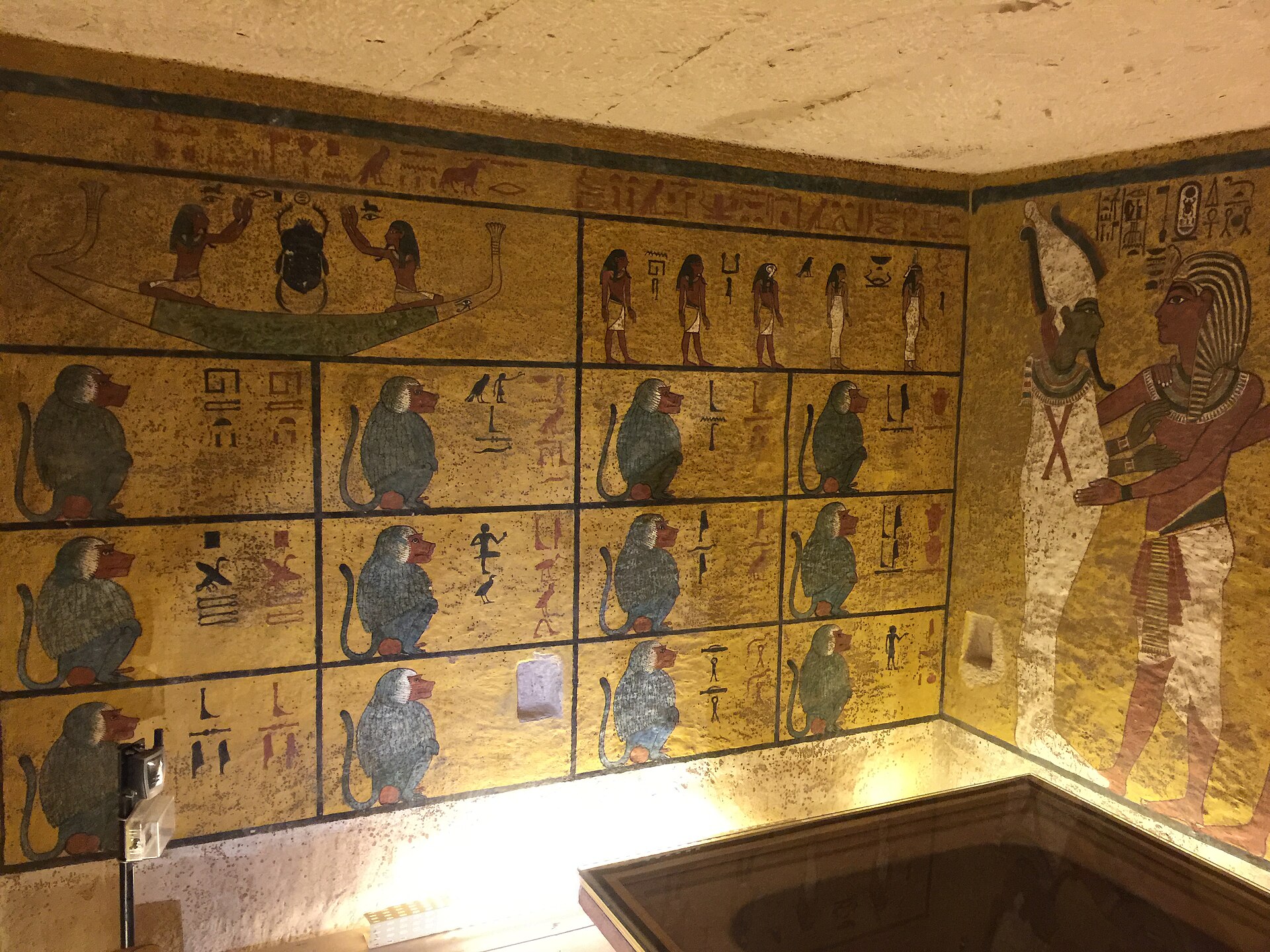
The tomb itself is modest in size, especially when compared to the grander sepulchers of other pharaohs. This is no accident. Tutankhamun died young, before a more elaborate resting place could be prepared. The narrow entrance, hidden beneath layers of rock and sand, still feels like a threshold into another era. The walls are adorned with scenes from the Book of the Dead, their vibrant colors remarkably well-preserved thanks to Egypt’s dry climate. These images were meant to guide the pharaoh through the afterlife, a silent ritual frozen in time.
The burial chamber is the heart of the tomb, where the stone sarcophagus once held Tutankhamun’s mummy. Today, the outer sarcophagus remains, though the innermost coffin—crafted from solid gold—has been moved to Cairo. Weighing over two hundred pounds, this golden coffin became one of the most iconic symbols of ancient Egypt, a dazzling reminder of the civilization’s wealth and craftsmanship. Around it, statues of guardians and amulets were once arranged, each object carefully chosen to accompany the young king into eternity.
What makes KV62 particularly intriguing is that it was never intended for Tutankhamun. Evidence suggests the tomb was originally meant for someone else—perhaps a high-ranking official or even a successor—before being hastily repurposed after the pharaoh’s sudden death. This explains its unusual layout, lacking the long corridors and multiple chambers found in other royal tombs. There are no grand processional halls like those in the tombs of Ramses II or Seti I, just a series of small, intimate rooms carved into the rock.
The discovery of the tomb in 1922 sent shockwaves through the world. For the first time, archaeologists—and the public—could see a royal burial as it had been left, not the looted remnants that were usually found. The sheer volume of gold, lapis lazuli, and ivory spoke of a civilization at the height of its power. Yet, for all its splendor, the tomb also carried a sense of intimacy. It wasn’t the grand monument many had expected, but rather a personal snapshot of a moment in history, a young king’s final resting place hurriedly prepared.
Today, KV62 is one of Luxor’s most visited sites, though access is carefully controlled to protect its fragile wall paintings and delicate environment. Tutankhamun’s mummy now rests in a climate-controlled glass case within the tomb, while most of the artifacts have been relocated to the Egyptian Museum in Cairo. Even without them, the tomb retains its magic. The rough-hewn walls, the faint tool marks left by ancient workers, the dim light filtering through the narrow passage—all of it feels like stepping into a story that hasn’t quite ended.
Visiting the tomb is less about spectacle and more about connection. Unlike the towering columns of Karnak or the vast courtyards of Luxor Temple, KV62 feels almost domestic, as if the past is still lingering in the air. It’s a reminder that behind every great historical narrative are real people—with their fears, their beliefs, and their unfinished lives. Standing in the quiet darkness of the burial chamber, it’s easy to imagine the final prayers whispered over the golden coffin, the last rites performed before the tomb was sealed forever. The mystery of Tutankhamun endures, not just in the treasures he left behind, but in the questions that still hang in the stillness of this small, unassuming space.