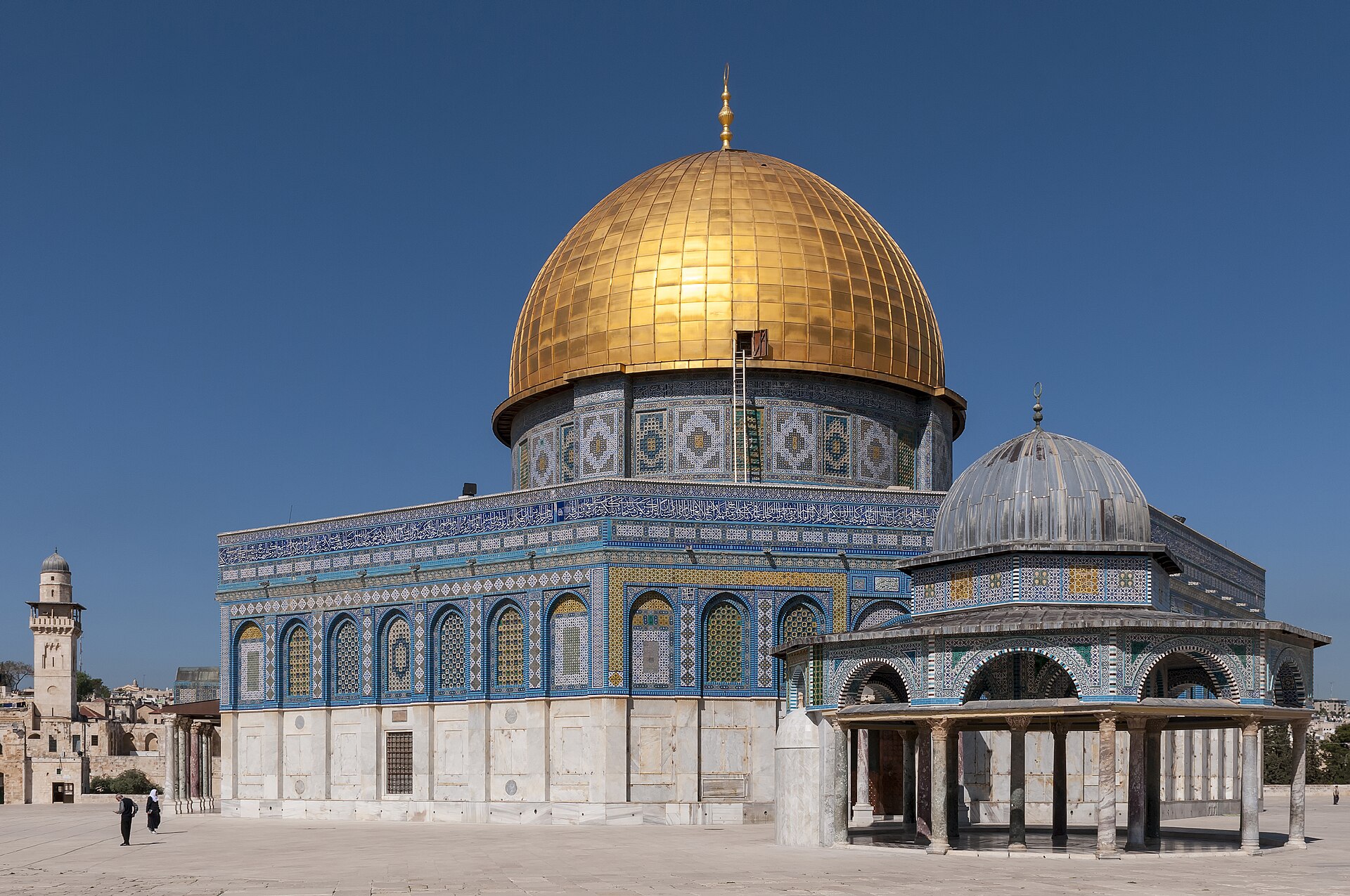
The Dome of the Rock stands on the Temple Mount in the heart of Jerusalem, a city where history feels alive in every stone. Its golden dome, shimmering under the Middle Eastern sun, is one of the most recognizable landmarks in the world, visible from nearly every corner of the Old City. Built in the late 7th century, it is not a mosque but a shrine, a place of profound spiritual significance for Muslims, Jews, and Christians alike. The structure itself is a masterpiece of early Islamic architecture, blending Byzantine, Persian, and Syrian influences into something entirely its own.
The rock at the center of the shrine is where, according to Islamic tradition, the Prophet Muhammad ascended to heaven during the Night Journey. For Jews, this same rock is believed to be the foundation stone of the world, the place where Abraham prepared to sacrifice his son Isaac, and the site of the Holy of Holies in the ancient Jewish Temple. The overlapping layers of belief make the Dome of the Rock a place where faiths intersect, sometimes in harmony, sometimes in tension, but always with deep reverence.
The exterior of the Dome is a spectacle of intricate tilework, restored over the centuries but still retaining its original grandeur. The lower walls are covered in marble, while the upper sections feature vibrant geometric patterns and Arabic calligraphy, much of it original from the Umayyad period. The calligraphy, some of the oldest surviving examples of Quranic script, wraps around the building in a continuous band, a reminder of the sacredness of the words it carries. The dome itself, originally made of wood and covered in lead, was later gilded with gold, a gift from the Ottoman Sultan Suleiman the Magnificent in the 16th century.
Inside, the space is intimate yet overwhelming. The rock is enclosed by an octagonal arcade of columns and arches, their surfaces adorned with mosaics of scrolling vines, jewels, and crowns—a style borrowed from Byzantine churches but reinterpreted with Islamic motifs. The ceiling, a marvel of engineering, is a wooden dome painted in rich reds and blues, with gold accents catching the light that filters through the stained-glass windows. The atmosphere is one of quiet awe, the air thick with the weight of centuries.
The Dome of the Rock has not always been a place of peace. It has witnessed conquests, crusades, and conflicts, each leaving its mark on the structure and the city around it. The Crusaders, who captured Jerusalem in 1099, turned it into a church, renaming it the Templum Domini. When Saladin retook the city in 1187, he restored it as a Muslim shrine, a status it has maintained ever since. The building has been damaged by earthquakes and fires, each time repaired with care, its significance too great to allow it to fade.
Today, the Dome of the Rock remains a symbol of Jerusalem’s complex identity. It is a place of pilgrimage for Muslims, who come to pray at the Al-Aqsa Mosque nearby, and a site of fascination for visitors of all faiths. Non-Muslims are not permitted to enter the shrine itself, but the Temple Mount is open to visitors at certain times, offering a chance to walk in the footsteps of prophets and kings. The plaza around the Dome is often quiet, the hustle of the Old City fading into the background as people pause to take in the view.
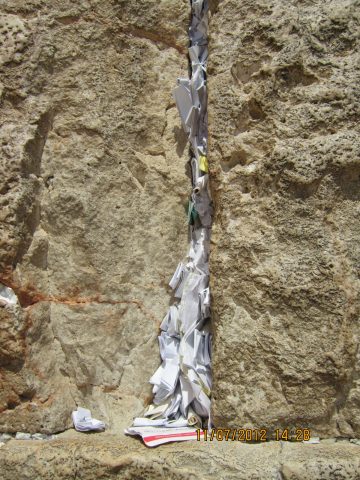
The golden dome dominates the skyline, but the Temple Mount is more than just one building. It is a vast esplanade, home to gardens, fountains, and smaller structures, each with its own story. The Western Wall, part of the retaining wall of the ancient Jewish Temple, lies just below, drawing Jewish worshippers who come to pray and place written prayers into its cracks. The contrast between the two sites—one a place of Muslim reverence, the other a focal point of Jewish faith—captures the essence of Jerusalem: a city where the past is never far away, and where every stone tells a story.
Visiting the Dome of the Rock is not just about seeing a monument; it’s about feeling the pulse of a place that has shaped civilizations. The air is filled with the sound of prayers, the scent of incense, and the murmur of languages from around the world. Whether you come for the history, the architecture, or the spirituality, the Dome of the Rock leaves an impression that lingers long after you’ve left its shadow. It is a reminder that some places are more than just destinations—they are living chapters in the story of humanity.