Perched on a quiet promontory where the land meets the waters of the Gulf of Finland, Kulchukskoye Gorodishche feels like a place suspended outside of time. The site lies just beyond the village of Gromovo in Leningrad Oblast, a short distance from the modern world yet seemingly untouched by it. There are no crowds here, no brightly colored signs or guided tours—just the wind off the gulf, the rustle of grass, and the low earthen ramparts that once formed the backbone of a formidable fortress.
This was the early Middle Ages, roughly between the 8th and 13th centuries, when the lands around the Gulf of Finland were home to the Izhorians and Votes, Finnic peoples whose lives were woven into the broader tapestry of Northwestern Rus. They built their settlements on high ground, not just for defense but as hubs of trade and craftsmanship. Kulchukskoye Gorodishche was likely one such place—a stronghold where blacksmiths forged tools and weapons, potters shaped clay into vessels, and merchants bartered with neighboring tribes, including the Slavs. The fragments of pottery, tools, and jewelry unearthed here hint at a community that was far from isolated, its people connected to a wider world through rivers and sea routes.
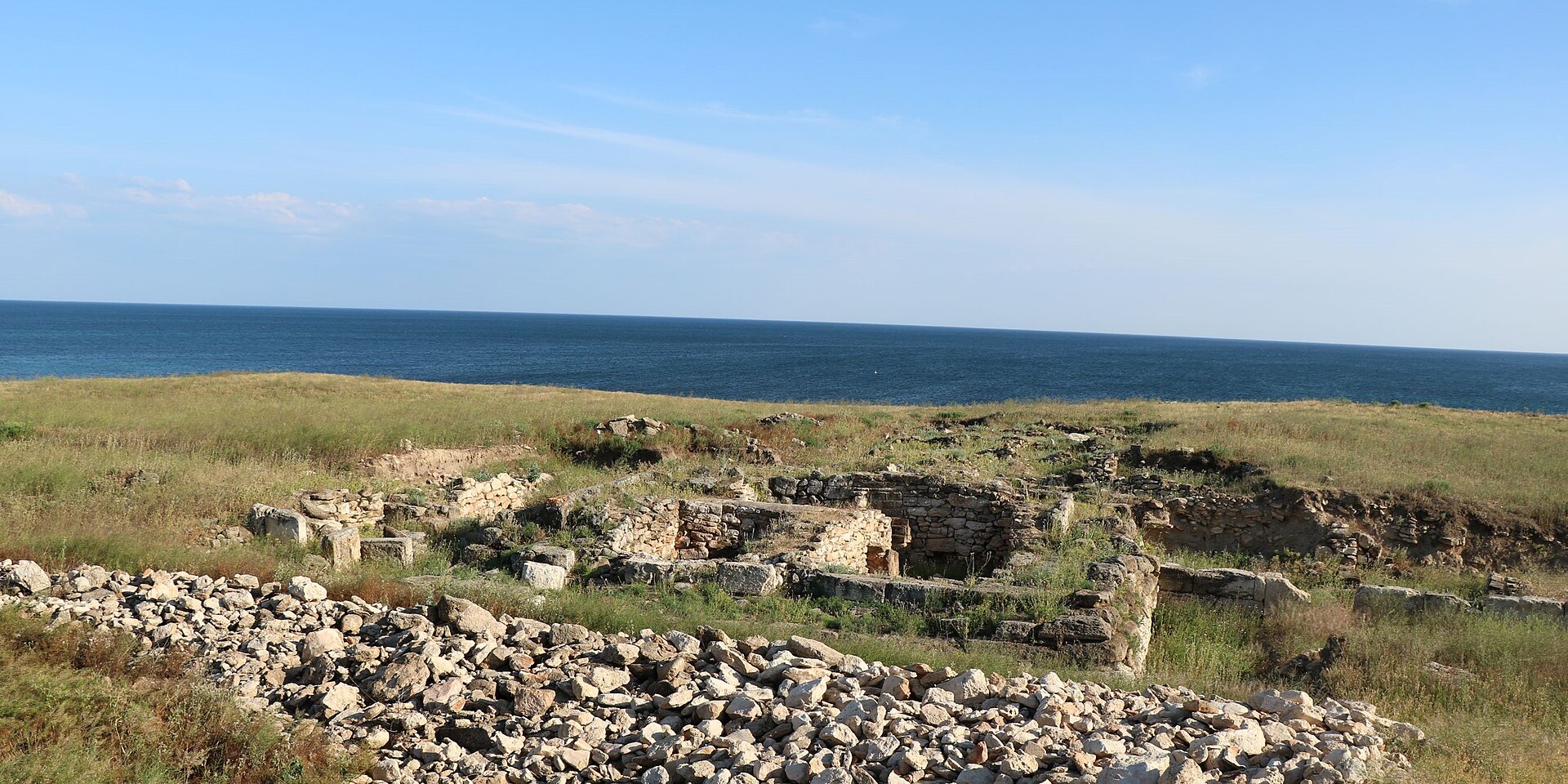
What remains today are the remnants of those ancient defenses: a ring of earthen walls and ditches encircling a roughly one-hectare plateau. The ramparts, though weathered by centuries, still rise in places to three meters, their slopes now softened by grass and wildflowers. Inside, the ground is uneven, marked by shallow depressions where wooden structures once stood. Walking along the perimeter, it’s easy to imagine the scene as it might have been—timber palisades lining the edges, smoke curling from hearths, the murmur of voices in a language long faded from memory.
The site’s location was no accident. Built on a narrow headland, it was nearly surrounded by water on three sides, a natural barrier that made it all but impregnable. To the fourth side, a man-made ditch and rampart completed the defenses. This was a common strategy for fortifications of the era, where builders relied on the land itself to bolster their strength. Today, the view from the promontory is just as striking—on clear days, the gulf shimmers in shades of blue and green, its surface stretching toward the horizon.
By the 13th century, these lands had been absorbed into the Novgorod Republic, and later, the Grand Duchy of Moscow. As political power shifted, Kulchukskoye Gorodishche gradually lost its strategic importance, and life here faded into silence. Yet the past never entirely vanished. The name "Kulchuk" lingers in local speech, though its origins are unclear—some suggest it may derive from a Finnic word for hill or height. The surrounding villages, too, carry echoes of that earlier time, their names and stories woven into the landscape.
There are no museums here, no reconstructed huts or costumed reenactors. That’s part of the appeal. Kulchukskoye Gorodishche is a place where history feels tangible in a different way—less about grand narratives, more about the quiet persistence of the land itself. In summer, the grass grows thick and green over the ramparts; in autumn, golden leaves drift down from the trees, contrasting with the gray of the earth and the deep blue of the gulf. It’s a spot that invites contemplation, where the absence of modern distractions makes it easier to imagine the lives that once unfolded here.
Getting to the site is straightforward. From Gromovo, it’s a short walk or bike ride along a country road, through a landscape of pine forests, small lakes, and meadows that slope gently toward the water. The area is rich in wildlife—birds flit between the trees, and if you’re lucky, you might spot a fox or hare darting through the undergrowth. For those drawn to history, the site offers a rare chance to explore a medieval stronghold without the layers of interpretation that often come with more famous ruins. For nature lovers, it’s an opportunity to experience the quiet beauty of the Russian North, where the land and water seem to exist in perfect balance.
Kulchukskoye Gorodishche isn’t the kind of place that makes it onto postcards or travel brochures. There are no souvenir stalls, no cafes, just the earth, the sky, and the water. That’s precisely why it feels so authentic—a reminder that history doesn’t always need to be grand or dramatic to leave a mark. Sometimes, all it takes is a few weathered ramparts and the whisper of grass in the wind to connect with the people who stood here centuries ago.