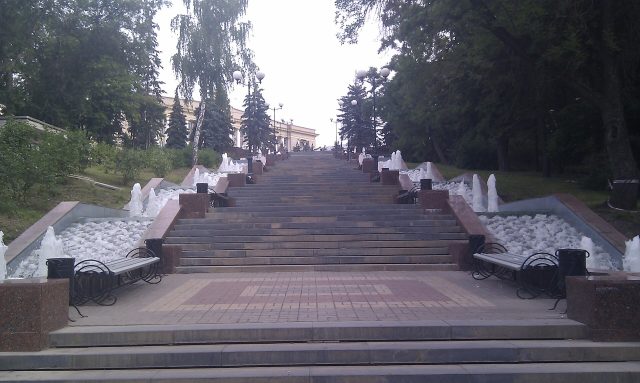
Kudykina Gora is one of those quiet corners of Lipetsk that feels like it belongs in an old storybook. There are no crowds here, no grand monuments or tourist traps—just open space, stillness, and the sense that time moves a little differently. Perched on the edge of the city, where the last apartment blocks give way to fields and patches of forest, the hill offers sweeping views of the Voronezh River winding through the landscape, distant high-rises, and rolling green hills stretching toward the horizon. On clear days, the air is so crisp you can almost pick out individual leaves on the trees below.
The name itself is a mystery, even to locals. Some say it comes from an old word, *kudykat*, the local term for the eerie call of an owl. Others claim it’s tied to a legend about a bandit named Kudyka who once hid here with his gang. A few insist it harks back to an ancient pagan shrine where sacrifices were once made. Whatever the truth, the name has stuck, woven into the fabric of local folklore passed down through generations.
The history of Kudykina Gora is deeply entwined with Lipetsk’s own past. In the 18th century, the land belonged to the Bibikov family, a noble dynasty that established an estate here. The hill was part of their vast property, where orchards flourished and pedigreed livestock grazed. Later, during the Soviet era, the area became home to pioneer camps, and limestone quarries sprang up nearby. Today, little remains of the old estate—just fragments of foundations and a few ancient linden trees that have witnessed centuries of change. Yet even these faint traces lend the place a quiet charm, a whisper of the past that lingers in the air.
There are no grand architectural landmarks here, and that’s part of its appeal. The hill is unassuming: gentle slopes covered in wild grass and shrubs, small ravines where rainwater trickles after a storm, and a handful of trees that seem to have grown in just the right spots. Along the paths, you’ll find boulders left behind by glaciers millennia ago, and in places, the remnants of old quarries—narrow fissures in the limestone where stone was once cut for buildings. These scars on the hillside tell their own story, as vivid as any museum exhibit.
For Lipetsk residents, Kudykina Gora is both familiar and slightly mysterious. Families come here for picnics, couples choose it for first dates, and in winter, children sled down its steep slopes. Summer is especially beautiful, when the grass sways in the breeze, bees hum over wildflowers, and the air is thick with the scent of wormwood and sun-warmed earth. In autumn, mushroom hunters wander the slopes, and in spring, when the first green shoots appear, the hill seems to wake from a long sleep. Locals know every twist of the trails, every bush, and that knowledge is passed down like a quiet tradition.
Despite its proximity to the city, Kudykina Gora retains a sense of untamed nature. There are no paved paths, no streetlights, no benches—just the earth beneath your feet and the sky above. At dusk, when the sun dips below the horizon and mist rises over the river, the hill takes on an almost otherworldly quality. Sometimes, it’s easy to imagine figures from the past stepping out from behind the trees—a peasant with a scythe, a soldier in a worn-out coat, or a traveler who wandered here by mistake. These daydreams don’t unsettle; instead, they soothe, a reminder that history never truly fades.
This isn’t the kind of place people visit to tick off a bucket list. They come for the silence, for the chance to be alone or with loved ones, for the feeling of connection to something larger than the rush of daily life. Here, you can sit on the grass, listen to birdsong, and let your thoughts drift. Or you can wander the slopes, gathering wildflowers, and feel like a part of the landscape itself. In a city where everyone is always hurrying somewhere, such places are rare—and that makes them all the more precious.
In recent years, new cottage developments have sprung up around the hill, and the city is slowly creeping closer. But for now, Kudykina Gora remains unchanged—still quiet, still unhurried, still full of stories waiting to be told. Maybe in a few decades, everything will be different. But for now, you can simply come here, take a deep breath, and understand why this place means so much to those who know it.