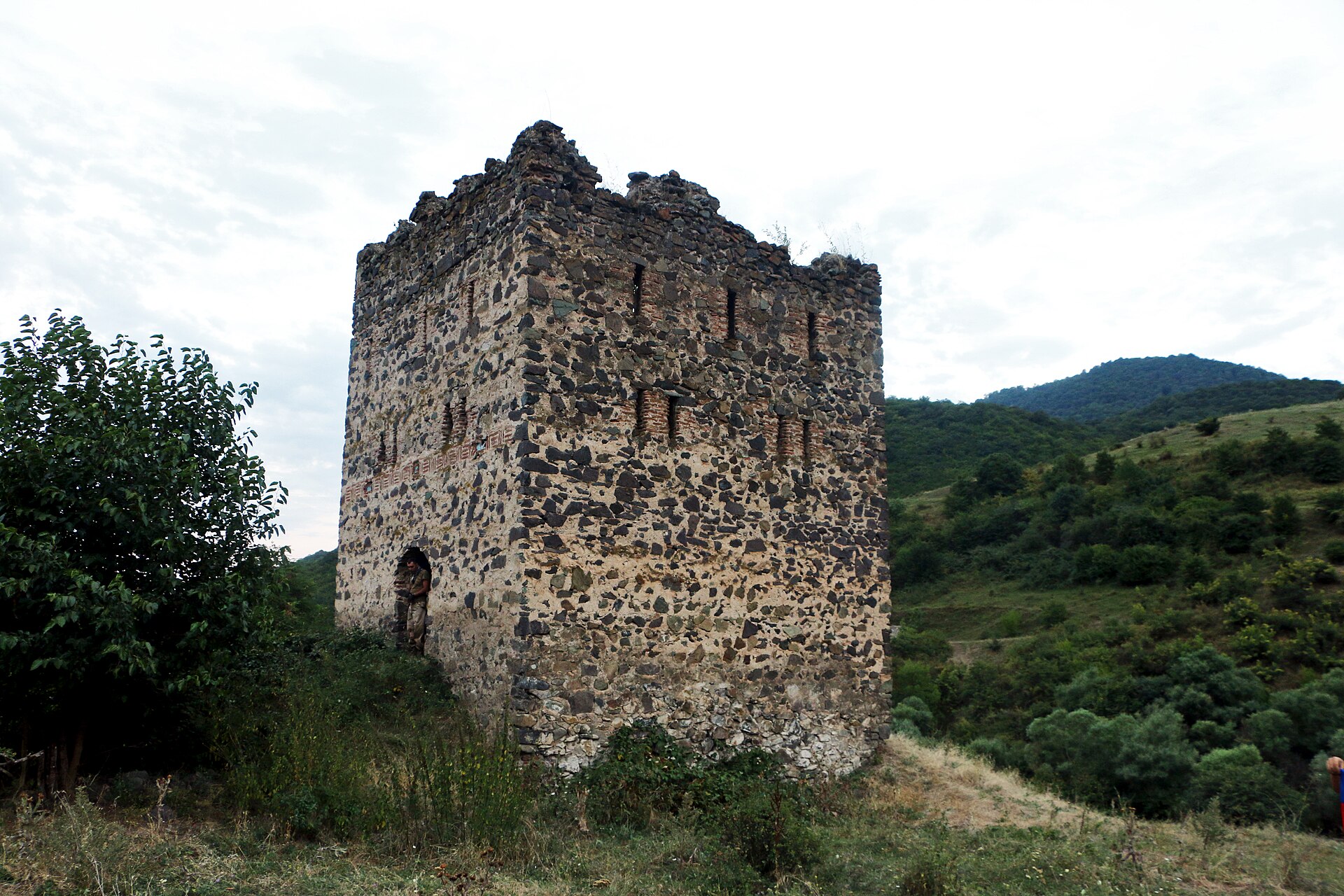
Voskepar Fortress sits quietly on a low hill above the village of the same name, where Armenia’s rugged mountains begin to soften into rolling foothills. The landscape here is open and unhurried, stretching into wide valleys that seem to breathe with the wind. There are no crowds, no flashy signs pointing the way—just the quiet presence of stone walls that have stood for centuries, watching over a land that was once a crossroads of trade and conflict.
No one knows exactly when the fortress was built, but historians agree it dates back to the tenth or eleventh century, a time when Armenia was fractured into feudal territories. Small fortifications like this one were common then, serving not only as military outposts but also as checkpoints along the routes that connected the Caucasus with Persia and Byzantium. Voskepar’s location made it ideal for this purpose, perched where several valleys met, its walls blending into the golden hues of the surrounding hills.
The architecture is simple and practical, much like other medieval Armenian fortresses. Thick walls with crumbling battlements still stand in places, and a round tower rises above the rest, its stones worn smooth by time. Inside, the remains of living quarters, storage rooms, and water cisterns hint at the fortress’s past life—a place built to withstand long sieges. Though little more than foundations remain, the tower still commands the landscape, a silent reminder of the power it once held.
Voskepar was never a capital or a major city, but its role in the region was far from insignificant. In the Middle Ages, caravans laden with silk, spices, and metals passed through these valleys, and the fortress served as both a defensive stronghold and a toll station. When trade routes shifted and borders moved, Voskepar’s importance faded. Over time, locals carried away its stones to build their homes, yet even in ruin, the fortress endures as a testament to the past.
Today, Voskepar is a place for those who prefer history without fanfare. There are no guided tours here, no souvenir stalls—just the quiet rustle of grass and the occasional murmur of villagers in the distance. The surrounding fields and vineyards stretch out toward the mountains, which seem to go on forever. For the people who live nearby, the fortress is simply part of the landscape, as familiar as the old apricot trees or the stone walls that line the roads.
Climbing the tower offers a sweeping view of the valley below. On clear days, the horizon feels endless, the mountains dissolving into the sky. It’s easy to see why this spot was chosen—from here, approaching enemies would have been visible long before they reached the walls. Now, the scene is peaceful, but centuries ago, it was part of a network of defenses, each fortress playing its part in a larger story.
Time moves differently here. The sun beats down during the day, warming the stones until they’re almost too hot to touch, while evenings bring a cool breeze scented with wild herbs. Locals sometimes come to sit in the shade, bringing food and wine, talking quietly or simply enjoying the stillness. For them, the fortress isn’t a relic to be preserved behind glass—it’s a living part of their world, a place to reflect or unwind.
Voskepar isn’t the kind of place that makes it into glossy travel brochures. There are no grand palaces or ornate churches, just the quiet authenticity of weathered stone and open skies. It’s a place for those who want to see history not as a polished exhibit, but as something raw and real—where the past lingers in the wind, in the silence, and in the sense of standing where others once stood, shaping their own destinies.