Negede sits quietly in northwestern Iran, a small town most travelers overlook. It offers no immediate spectacle—just the quiet rhythm of a place that has long existed outside the usual tourist routes. On its outskirts stands the Seljuk fortress, a remnant of a time when this region was at the crossroads of empires.
The fortress was built in the 12th century by Turkic nomads who settled across the Middle East, establishing cities and fortifications. It served as both a military stronghold and an administrative hub. Trade caravans moving between Anatolia and Central Asia were monitored from here. The walls have witnessed centuries of movement—merchants, soldiers, and messengers passing through.
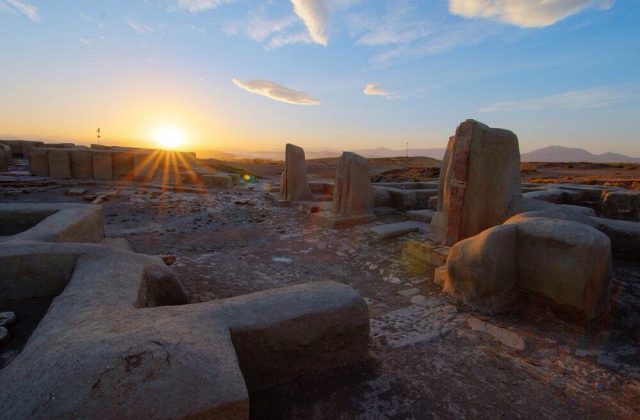
The architecture is plain, built for function. Large stone blocks held together by lime mortar form an irregular polygonal shape that follows the hill’s contours. The main gate, once a barrier, now exists only as a foundation. Inside, the ruins of living quarters and storage buildings remain. Water cisterns, essential in this arid region, are still visible. The walls, though crumbling in places, still stand several meters high, offering a view over dry hills and the town below.
The fortress feels abandoned.
Its stones hold the warmth of the sun long after it sets. The wind moves through the ruins, carrying the scent of dry earth and wild herbs. Locals rarely visit. There are no signs, no plaques, no attempts to romanticize its past. It stands as it always has.
Climb the walls as the sun dips below the horizon. The light softens, casting long shadows across the stones. The air grows cooler, filled with the faint aroma of wormwood and dust. In these moments, the past feels almost tangible. It is an odd sensation—this awareness of time layered upon time, of lives lived and forgotten in the same space.
Negede and its fortress are not the kind of place that demands attention. There are no crowds, no guided tours, no souvenir stalls. What you find instead is a different side of Iran—one that moves at its own pace. The Seljuk fortress is a relic of an era when these lands connected cultures, languages, and histories. It does not offer dramatic stories, but a quiet invitation to reflect.
If you find yourself in this part of the country, visit. Walk up the hill, run your fingers over the sun-warmed stones. They feel alive, as if they have absorbed the heat of every summer since the fortress was built. Around you, the silence is broken only by the wind and the occasional cry of a bird. In that stillness, imagine the people who once called this place home—their routines, their conversations, the way they looked out over these same hills.