Ngurdoto Crater sits in northern Tanzania, a quiet corner of Arusha National Park. Most travelers rush past it on their way to Kilimanjaro or Ngorongoro, but those who stop find something different: a place where the savanna breathes without an audience. The air smells of damp earth, and the only sounds are the calls of birds and the rustle of grass where buffalo or elephants move unseen.
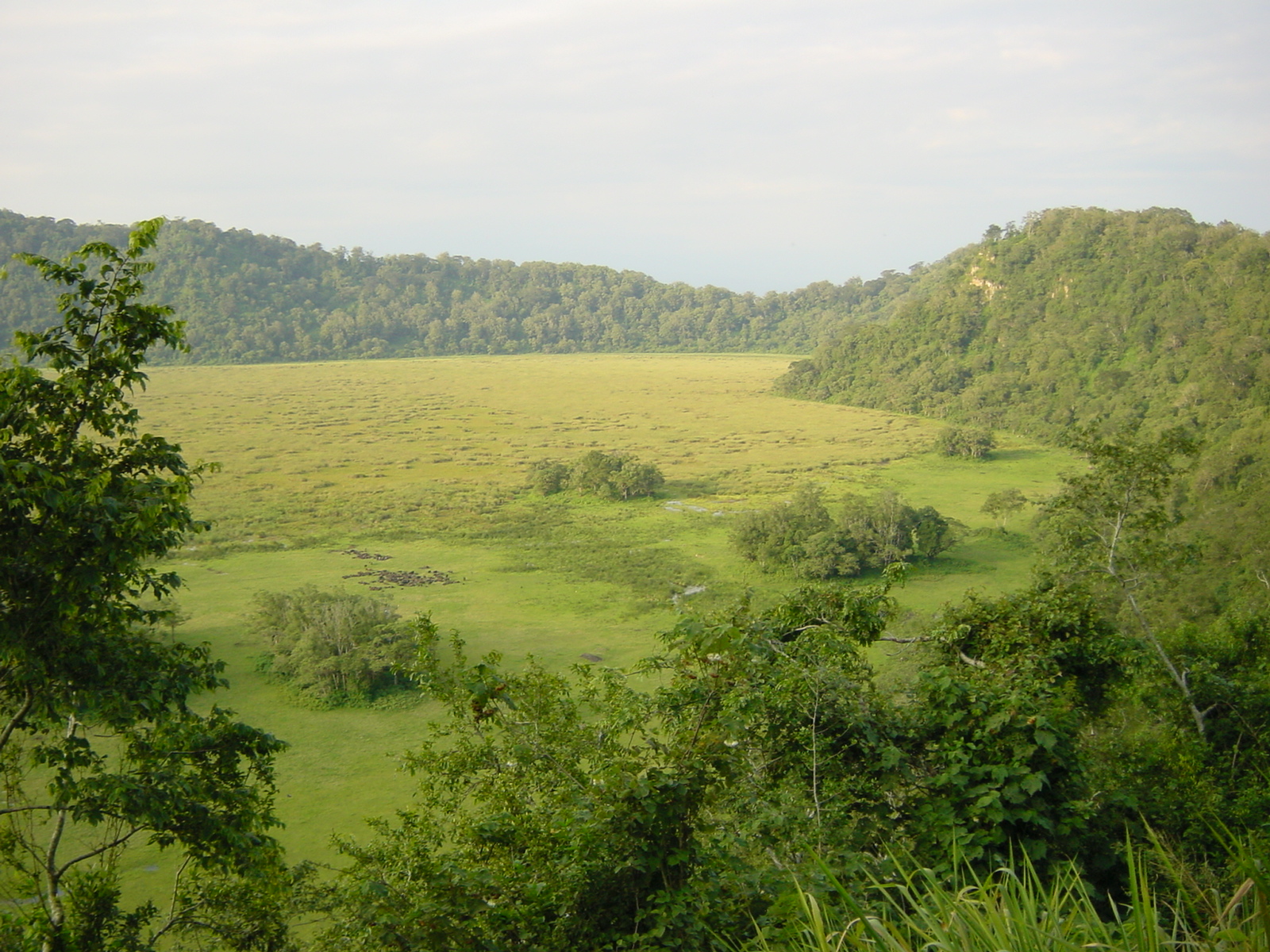
The crater formed two and a half million years ago when a volcano collapsed. Its rim spans five kilometers, dropping four hundred meters into a bowl of forest and wetlands. Underground springs keep the ground marshy, feeding an ecosystem that thrives on stillness. No great herds gather here—just leopards slipping through the undergrowth and rare birds circling above.
Have you ever stood somewhere and felt like the land was living around you, not for you?
Visiting Ngurdoto isn’t about spotting the Big Five. The roads are rough, the trails barely there, designed to leave the animals undisturbed. Dawn is the best time to arrive, when mist clings to the wetlands and the first light filters through the trees. By evening, the crater grows quiet, the forest sounds taking over as night falls. There’s no schedule, no checklist—just the slow rhythm of a day in the wild.
The Maasai call Ngurdoto sacred. Their stories say ancestral spirits live within its walls, that it’s a doorway to another world. Some rituals still happen here, though certain areas are closed to outsiders. That changes how you see the place—not just as scenery, but as something alive with meaning.
There are no lodges or restaurants here, just a few campsites for those who stay overnight. Sleeping under the stars, you’ll notice how close the sky feels, the Milky Way bright against the dark. In the morning, the first light over the savanna stays with you long after you’ve left.
Ngurdoto isn’t on the typical safari route. No crowds, no tour buses, no pressure to see everything at once. You can walk the trails, sit on a viewpoint, and leave knowing you’ve witnessed something real. It’s not for those who need constant entertainment. It’s for those who want to stand still and let the wild come to them.
Tanzania protects this place carefully. Poaching is rare, and visitors must follow strict rules to avoid disturbing the land. The result? One of the few places in Africa where nature isn’t just preserved—it’s left alone. That’s why people come here: not for spectacle, but for the chance to be part of something older than themselves. Here, the land doesn’t perform. It simply exists.