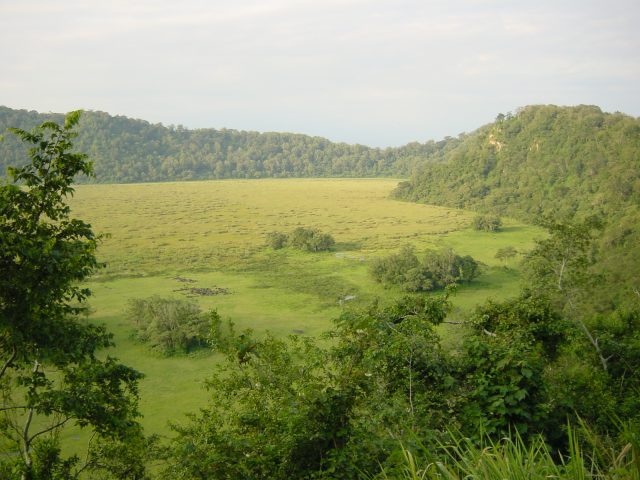
Arusha National Park sits quietly in northern Tanzania, overshadowed by the dormant volcano that shares its name. The mountain’s presence is impossible to ignore—its slopes shape the landscape, creating a patchwork of ecosystems that feel almost too varied for such a compact space. At just over a hundred square miles, the park is small by Tanzanian standards, yet it packs in dense rainforests, open savannas, marshy lowlands, and a series of lakes, each with its own rhythm. Unlike the Serengeti or Ngorongoro, where tourist circuits dictate the pace, Arusha moves to a slower beat. There are no crowds here, no queues of safari vehicles jostling for the best view. Instead, the park offers something rarer: the chance to experience the wild without an audience.
The land wasn’t always protected. Long before it became a park, these were the grazing grounds of the Maasai, who lived alongside the wildlife, hunting and herding cattle across the same plains where elephants and buffalo now roam. When German colonizers arrived in the early 20th century, they saw potential in the area—not for conservation, but for sport. Hunting reserves were established, and it wasn’t until the 1960s, after Tanzania gained independence, that Arusha was officially designated a national park. Even then, the transition wasn’t seamless. The park’s history is one of negotiation, a balancing act between preserving nature and respecting the rights of the people who had called these lands home for generations. Traces of that tension linger, visible in the way the park’s boundaries brush against Maasai villages, in the occasional sight of cattle herds moving through the savanna.
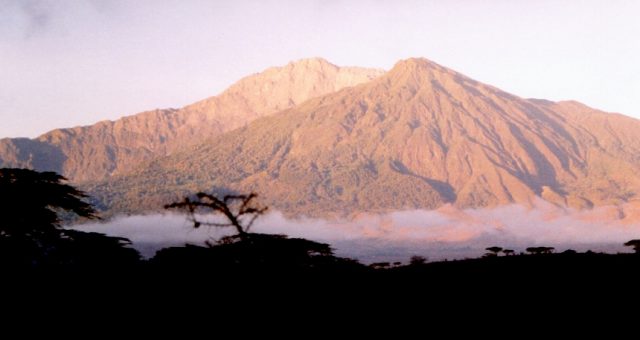
The heart of the park is Mount Meru, Tanzania’s second-highest peak. Rising nearly 15,000 feet, it dominates the skyline, its slopes a challenge for those willing to attempt the climb. The trek isn’t for the unprepared—it takes several days, passing through rainforests thick with colobus monkeys, then up into alpine meadows where the air thins and the temperature drops. The reward is a view that few get to see: the vastness of the savanna stretching out below, and on clear days, the distant, snow-capped silhouette of Kilimanjaro hovering on the horizon. The mountain isn’t just a physical landmark; it’s a reminder of how quickly the landscape can shift, from steamy lowlands to windswept heights in the span of a few days’ walk.
Wildlife here is less predictable than in Tanzania’s more famous parks. The dense forests provide cover for elephants, buffalo, and giraffes, while zebras and antelopes graze on the open plains. Predators are around, but sightings are rare—leopards might slip through the undergrowth, and lions, if they’re present, keep their distance. The real stars of the park are the colobus monkeys, their black-and-white fur unmistakable as they swing through the trees near the mountain’s base. They’ve become something of a symbol for Arusha, a quiet emblem of the park’s understated charm.
The lakes are another world entirely. The Momella Lakes, a cluster of shallow, alkaline pools, shimmer in hues of blue and green, their edges often crusted with salt. The water isn’t hospitable to most life, yet it teems with fish, and the shores are a magnet for birds. Flamingos wade in the shallows, their pink feathers contrasting with the pale water, while pelicans and storks nest in the reeds. During migration season, the lakes become a temporary home for thousands of birds, a chaotic, noisy spectacle that feels like a secret shared only with those who venture this far.
What sets Arusha apart is its atmosphere. There’s a sense of stillness here, a feeling that time moves differently. Even in peak season, it’s possible to find a stretch of savanna or a lakeside spot where the only sounds are the calls of birds and the rustle of grass. The park doesn’t have the dramatic scale of the Serengeti or the geological grandeur of Ngorongoro, but it has something else: intimacy. It’s the kind of place that rewards patience, where the best moments often come not from ticking off a checklist of sights, but from simply being present.
This isn’t just a park; it’s a place where people and nature have coexisted for centuries. The Maasai still live on the edges of the reserve, their lives intertwined with the land in ways that tourism can’t always capture. You might see herders guiding cattle through the savanna, or hear the distant rhythm of a traditional song drifting from a village. It’s a reminder that Arusha isn’t a frozen snapshot of the wild—it’s a living, evolving landscape, shaped by both the forces of nature and the people who call it home.
For those who come here, Arusha offers a different kind of Tanzanian experience. There are no endless plains or dramatic migrations, just quiet forests, still lakes, and the chance to see the country without the usual fanfare. There are no crowds, but there are conversations—with guides who know the land, with Maasai elders who remember when these hills were free of park boundaries. And then there’s Mount Meru, standing tall, waiting for those willing to climb it. The view from the top is worth the effort, but the real reward is the journey itself—the way the landscape changes with every step, the way the air grows thinner, the way the world below seems to shrink into something manageable, something you can almost hold in your hands.
In the end, Arusha isn’t about spectacle. It’s about connection—the quiet kind that comes from walking through a forest where colobus monkeys chatter overhead, or sitting by a lake where flamingos feed just a few feet away. It’s about seeing Tanzania not as a postcard, but as a place where the wild and the human have learned to share the same space. And if you’re lucky, it’s about standing on the summit of Meru at dawn, watching the sun rise over a land that feels, just for a moment, like it belongs to you.