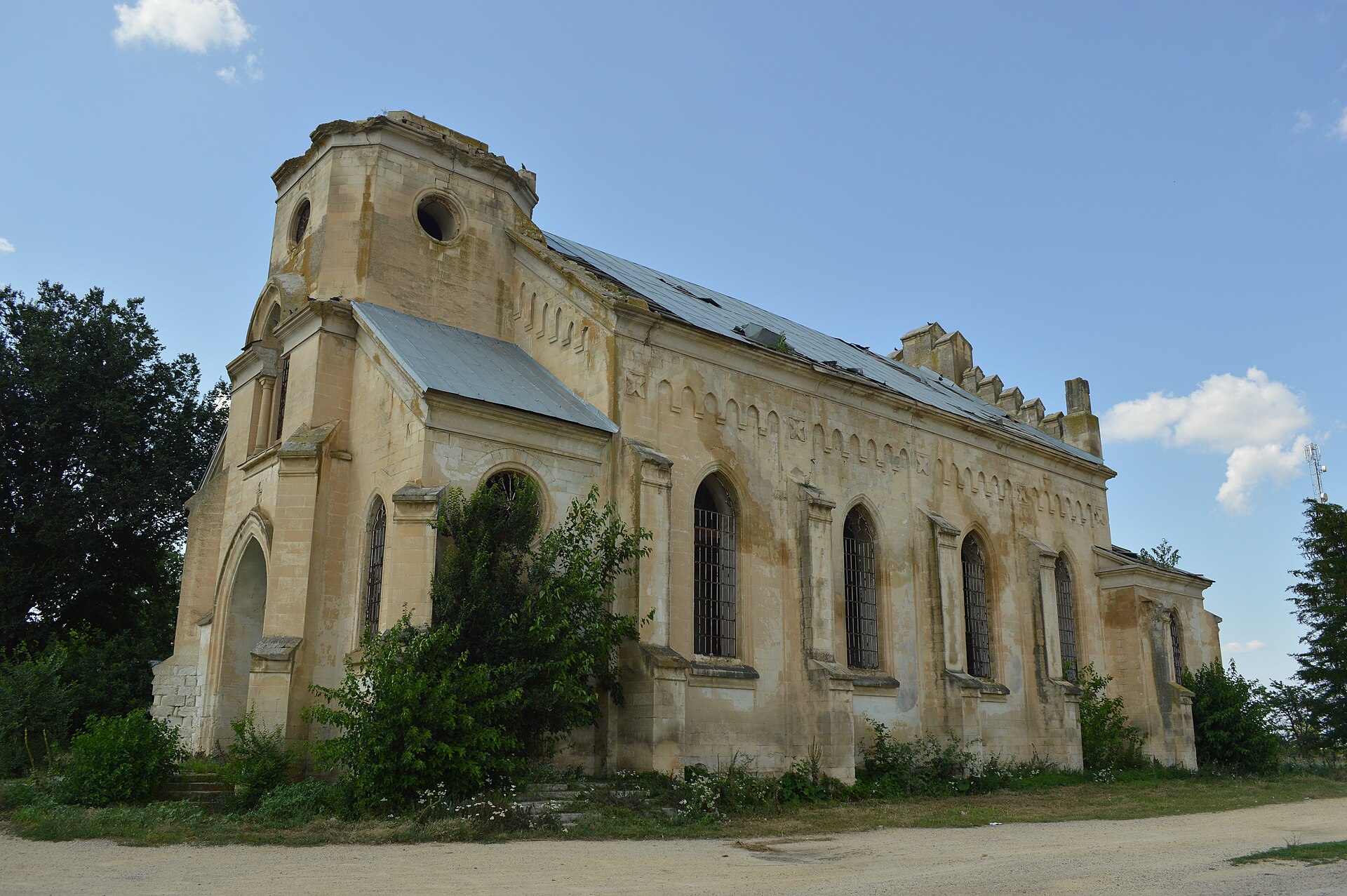
The Church of the Sacred Heart of Jesus in Alexandrovka is one of those quiet places that seem suspended in time, holding onto stories of people and eras long gone but not forgotten. It stands on the edge of what was once a German settlement, founded in the mid-19th century by migrants from the Baltic region. Back then, these lands were part of the St. Petersburg Governorate, and Alexandrovka was a small but thriving agricultural community where life moved to the rhythm of farm work and church services. The Catholic congregation, mostly made up of Latvians and Germans, needed a spiritual home, and so the church was built in 1906, by which time the village had already taken root, with its own houses, schools, and workshops.
The church’s architecture is unassuming yet striking in its simplicity. There’s none of the grandeur of St. Petersburg’s cathedrals, but instead, a quiet harmony that feels right for a rural place of worship. Built from red brick, its facade is marked by tall, pointed windows and a modest tower topped with a cross. Inside, the space feels larger than it is, bathed in the soft light filtering through the stained glass. The wooden pews and neo-Gothic altar evoke a sense of continuity, a reminder of the people who once gathered here to pray, celebrate, and support one another. What makes the church particularly interesting is that it was funded entirely by the community—everyone contributed what they could, whether money, materials, or labor.
Like Alexandrovka itself, the church has had a difficult history. After the 1917 Revolution, life for the Catholic congregation changed dramatically. Services became rare and eventually stopped altogether. During the Soviet era, the building was repurposed for storage, then used as a community club, and later abandoned. For years, it seemed destined to crumble, like so many other churches across the country. But in the 1990s, as Russia began to reconnect with its spiritual heritage, the church was returned to the faithful. Restoration took time, and today, though services are infrequent, the church is active once more. Those who visit can’t help but feel they’re stepping into a story that never truly ended—just paused for a while.
Alexandrovka today is a quiet place where time moves slowly. The village is no longer the same as it was in the early 20th century—many houses have been rebuilt, roads paved, and young people have left for the cities. Yet the church remains a link to the past, a small island where history and the present coexist. Around it stretch fields and groves, and on clear days, the hill where the church stands offers a sweeping view of the countryside—endless spaces where farmers once worked and where now roads and power lines stretch into the distance. There are no crowds of tourists here, no guided tours or souvenir stalls. Just silence, the scent of grass, and the sense that you’ve stumbled upon a place where time stands still.
The Church of the Sacred Heart of Jesus is more than just an architectural landmark; it’s a witness to the history of an entire community. It speaks of how different peoples and cultures once lived side by side, how churches and homes were built, and how traditions were born and faded. Today, you’re unlikely to hear Latvian or German spoken here, but the memory of those who once prayed under its vaulted ceilings lingers. That’s perhaps why the church draws not only the faithful but also those curious about history. It doesn’t demand attention or shout its story, but if you look closely, you’ll see in its walls the echoes of a whole era.
Visiting this place is worth it if only to realize how much a single building can tell you. It’s nothing like the grand cathedrals of St. Petersburg or the ancient churches of Pskov, but there’s a quiet strength in its simplicity. There are no golden domes or elaborate frescoes, just an authenticity that comes from human lives, labor, and faith. If you find yourself in this part of the country, don’t rush past. Stop, climb the hill, step inside. You might just feel something rare in today’s hurried world—a quiet but profound connection to the past.