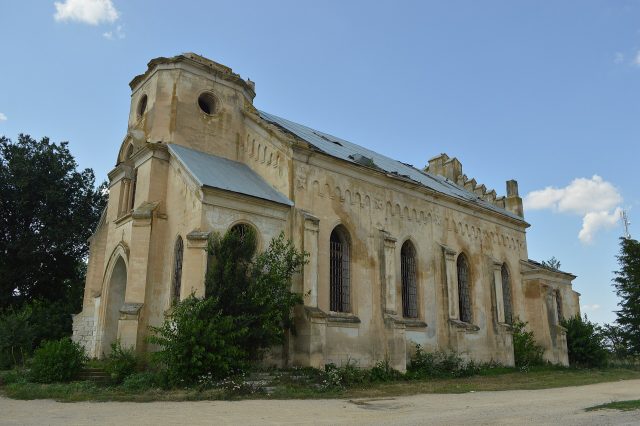
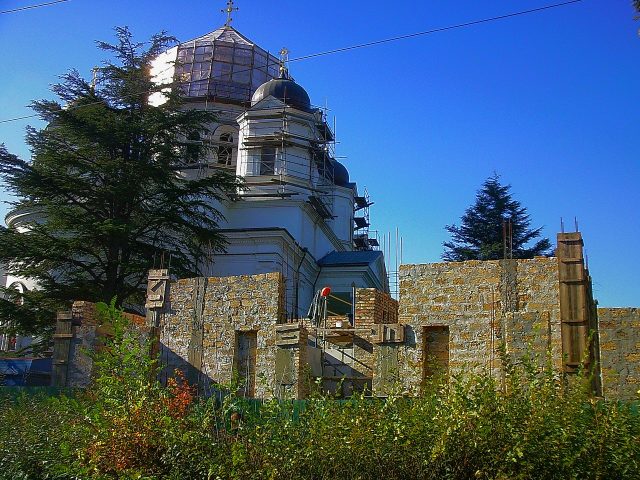
The Church of the Intercession of the Holy Virgin is on the banks of a slow-moving river in Alexandrovskoye Rural Settlement, outside St. Petersburg. It doesn’t draw crowds, but if you pass through, stop.
The church was built in the mid-18th century, when noble estates shaped the landscape. Landowners held balls, peasants worked the fields, and the church was the center of both prayer and community life. The estates are gone, their halls now ruins, but the church survived. Closed during the Soviet era, it reopened decades later and still holds services—fewer than in the city’s grand cathedrals, but the quiet inside feels different, as if the walls remember every prayer.
The architecture is typical of northern Russian churches from that time: whitewashed walls, tall windows, and simple ornamentation. The interior is open without being vast; the iconostasis is modest, yet some icons date back to the church’s earliest days. The ceiling fresco, a depiction of heaven with angels, blurs the line between earth and sky. This was never just a building—it was meant to be a threshold.
A small cemetery surrounds the church. Some headstones are worn smooth, their inscriptions lost; others are freshly tended. Names of nobles and peasants lie side by side. In summer, greenery grows thick; in winter, snow covers everything evenly. Time feels still here.
No postcards feature this church. No crowds gather, no souvenir stalls line the path. Only silence—the kind you don’t find in cities—and the sense that you’ve found something untouched. The area around it holds traces of the past: overgrown manor parks, crumbling outbuildings, fields that once fed villages. Together, they create a mood that’s slow, almost nostalgic, as if the place has been waiting.
Alexandrovskoye is a quiet part of Leningrad Oblast. Locals know the church well, but it’s not a spectacle for them—just a place for holidays, weddings, and funerals. Sometimes, it hosts concerts of sacred music, drawing a few enthusiasts from nearby towns. Even without events, it continues as it always has: baptizing, blessing, saying goodbye.
If you visit, stay longer than a day. There are no hotels or cafes, but rooms can be rented in neighboring villages. In summer, forests and fields invite wandering; in winter, snow-covered trails are good for skiing. The church will be there, unchanged, patient. It doesn’t perform—it simply is, and that’s why it lingers in your mind.