Alexandrovsky Park feels like a place where time hasn’t so much stopped as settled into a slower rhythm. Tucked away in a quiet rural corner of Russia, it carries the unhurried atmosphere of a country estate from the nineteenth century—back when such places were part of everyday life rather than tourist attractions. There are no crowds here, no souvenir stalls, no signs shouting for attention. Just the rustle of leaves, the occasional call of a bird, and the murmur of voices drifting through the trees.
The park’s origins trace back to the early eighteenth century, when these lands belonged to Alexander Menshikov, a close associate of Peter the Great. Later, in the 1800s, a new owner transformed the estate into a masterpiece of landscape design. The trees planted then—towering lindens, oaks, and maples—still stand today, their branches forming a dense canopy that filters the sunlight. Some of them have witnessed generations of visitors, their roots tangled in the same soil where people once strolled two centuries ago.
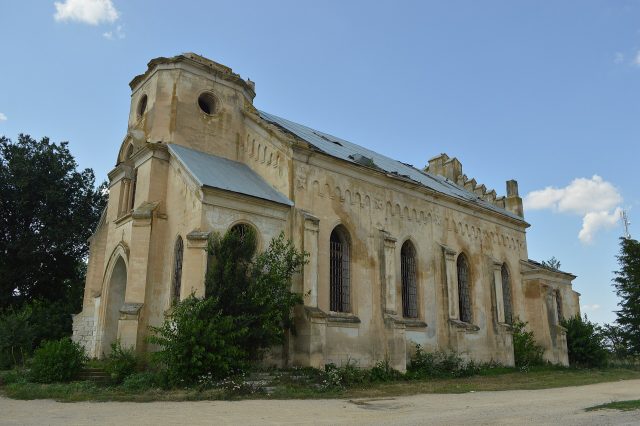
The architecture here is understated but striking. The main manor house, with its classical columns and balanced facades, was once the heart of social gatherings. Now it wears an air of gentle neglect, its weathered walls adding a quiet charm rather than detracting from it. Nearby, a small white church with a green roof remains active, its bells ringing on Sundays. Scattered across the grounds are pavilions, bridges, and gazebos, placed not according to some grand plan but wherever they best framed a view or offered a moment of rest.
The ponds are the park’s most captivating feature. There are several, each with its own character. The largest is surrounded by tall trees, giving it the feel of a secluded forest lake. Another, with a tiny island at its center, looks like something plucked from an old engraving. In summer, ducks glide across the water; in winter, the surface freezes into a natural skating rink. The water is clear, with a faint greenish tint, and on still days, the reflections are so sharp it’s hard to tell where the sky ends and the pond begins.
The park changes with the seasons. In spring, the air is thick with the scent of lilacs and bird cherry blossoms. Summer brings cool shade even on the hottest days, perfect for sitting on a bench and watching the play of light through the leaves. Autumn turns the grounds into a golden landscape, while winter wraps everything in a quiet stillness, as if the park has stepped straight out of a Russian novel.
Locals visit year-round—some with books, others with children, many just to walk. For them, this isn’t just a park; it’s a place to step away from the rush of daily life and feel a connection to the past. There are no strict rules here. You can wander off the paths, sit on the grass, or find your own quiet corner. Some come for inspiration, others for solitude, and some simply because it’s beautiful.
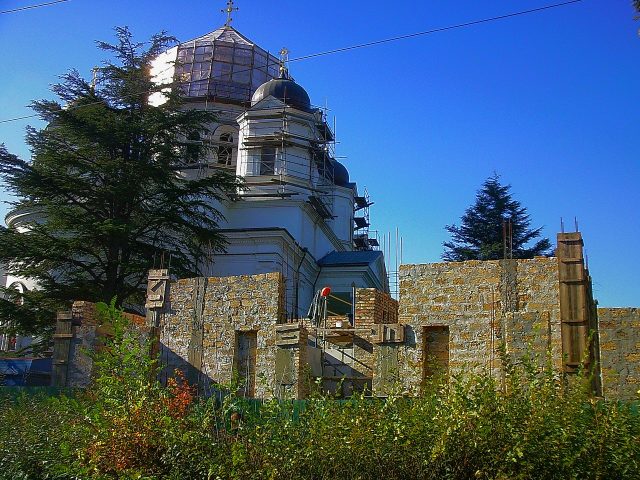
In recent years, restoration work has begun, but the goal isn’t to turn the park into a perfectly manicured garden. Old trees are preserved, paths are repaired, and the natural atmosphere remains untouched. The charm lies in its imperfections—the way the past and present coexist without fuss.
For many visitors, Alexandrovsky Park is an unexpected discovery. There are no grand monuments or world-famous landmarks here. Instead, it offers something quieter: a sense of real Russia, the kind that exists in the everyday. History isn’t locked behind glass; it’s in the trees, the stones, the way the light falls on the water.
Come here if you want to be alone with your thoughts and the natural world. The park asks for nothing but respect for its quiet beauty. It doesn’t need to impress—it just is.