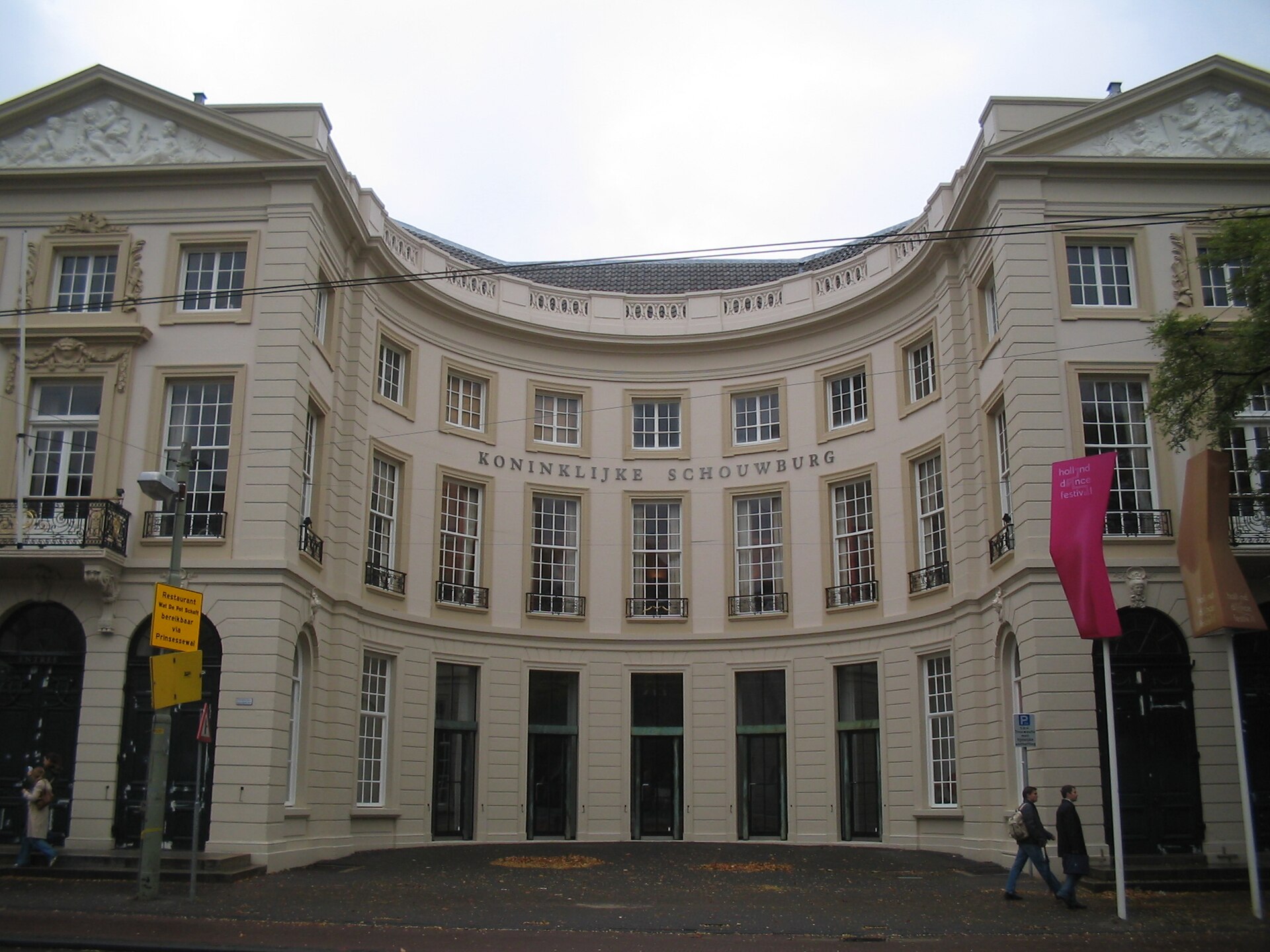
The Royal Theatre in The Hague is one of those rare places where history doesn’t just linger—it breathes. Built in the mid-19th century, it emerged during a period when the Netherlands was redefining itself after decades of political upheaval. The country was searching for new ways to express its identity, and the theatre became a symbol of that cultural awakening. Its architecture reflects this duality: the exterior, with its neoclassical columns and pediment, suggests order and tradition, while the interior unfolds like a grand European salon, rich with gilded details and velvet drapes. It’s a space where the past and present coexist effortlessly, as if time itself has been carefully curated.
The theatre opened its doors in 1852, commissioned by King Willem III and designed by architect Johan Frederik Metzelaar. Metzelaar drew inspiration from the great opera houses of Paris and Vienna but adapted their grandeur to fit the more restrained Dutch sensibility. The result is a building that feels both familiar and distinctly local. The façade, with its symmetrical columns and statues, announces its importance from afar, while the interior surprises with its intimacy. The auditorium, though large enough to seat hundreds, feels almost personal, as if each performance is meant for an audience of one. The ceiling is adorned with frescoes depicting the muses, and the stage, equipped with the latest technology of its time, was designed to accommodate elaborate productions with shifting scenery and dramatic effects.
From the beginning, the Royal Theatre was meant to be more than just a venue for opera and drama. Over the years, its repertoire expanded to include ballet, concerts, and even experimental works. It became a stage for some of the most celebrated artists of the 19th and 20th centuries, from renowned opera singers to avant-garde directors. The theatre played a particularly significant role after World War II, when it became a beacon of cultural revival in a country still healing from occupation. For many Dutch people, it represented resilience—the idea that art could help rebuild not just a city, but a nation’s spirit.
The interior of the theatre is a masterpiece in its own right. The auditorium, with its tiers of boxes and plush seating, was designed to create an atmosphere of elegance and exclusivity. The ornate chandeliers, intricate plasterwork, and deep red velvet evoke a sense of occasion, whether the performance is a grand opera or an intimate chamber concert. Even as modern technology has been integrated over the years, the theatre has managed to preserve its historic charm. The updates feel seamless, as if they were always meant to be part of the space.
The Hague has long been a city where art and politics intersect, and the Royal Theatre is no exception. Throughout its history, it has hosted everything from royal receptions to charity galas, drawing diplomats, aristocrats, and artists alike. In the 19th century, it was a place where the tastes of Dutch high society were shaped, while in the 20th century, it became a forum for new ideas—whether in the form of modernist performances or debates about social change. The theatre has always been more than just a stage; it’s a reflection of the city’s evolving identity.
Today, the Royal Theatre remains a vibrant part of The Hague’s cultural life. It’s not a relic of the past but a living institution, hosting everything from classic operas to contemporary dance and experimental theatre. The programming is diverse, appealing to both longtime patrons and curious newcomers. The theatre also plays an active role in the broader cultural scene, collaborating with other institutions, participating in international festivals, and nurturing young talent. It’s a place where tradition and innovation coexist, where the past is honored but not worshipped.
Even if you don’t catch a performance, the theatre is worth visiting. Its grand façade, with its statues and columns, is one of the most recognizable landmarks in The Hague. The courtyard behind the building offers a quiet retreat from the city’s bustle, a place to sit with a coffee and imagine the generations of artists and audiences who have passed through its doors. The surrounding neighborhood is full of small cafés, bookshops, and galleries, where the spirit of the theatre spills out into the streets.
The Royal Theatre is more than just a building—it’s a piece of The Hague’s soul. It reminds us that culture isn’t static; it’s shaped by the people who create it, the audiences who experience it, and the moments in history that give it meaning. Whether you’re watching a Verdi opera, a modern ballet, or an experimental play, the theatre offers more than entertainment. It’s a chance to see the world through the lens of art, to connect with something larger than yourself. And even if you’re not a regular theatregoer, simply being there is enough to feel the weight of history—and the promise of what’s still to come.