- Home
- United Kingdom
- Edinburgh
- Royal Mile

Photo: Lion2791, CC BY-SA 4.0
Royal Mile
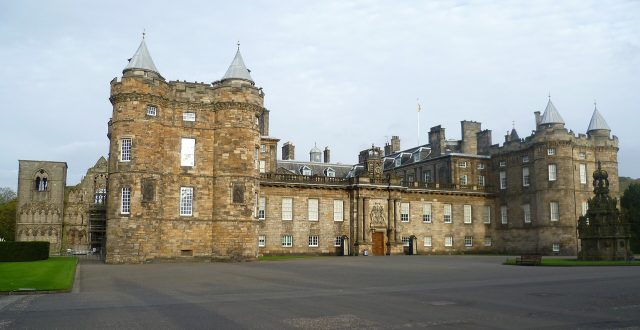
out of 5 0 ratingsThe Royal Mile is the backbone of Edinburgh’s Old Town, a winding spine of stone that stretches from the towering battlements of Edinburgh Castle down to the gates of the Palace of Holyroodhouse. This isn’t just a street—it’s a living timeline, where every step carries you through centuries of history. The route follows the natural ridge left by a long-vanished glacier, a high ground that made it the obvious heart of the medieval city. Over time, the Old Town grew outward from this line, its narrow closes and towering tenements clustering around it like iron filings drawn to a magnet.
The Mile isn’t one street but several, each with its own name and character. Near the castle, Castlehill feels like the city’s grand entrance, its broad pavement leading past the esplanade where the military tattoo now plays out in summer. Further down, Lawnmarket and High Street form the bustling core, lined with shops and landmarks that have witnessed everything from royal processions to public executions. Canongate, the eastern stretch, was once a separate burgh with its own tollbooth, and even now it carries a quieter, more residential air. The final leg, Abbey Strand, narrows toward the palace gates, where the ruins of Holyrood Abbey stand as a reminder of the site’s monastic past.
The buildings here are unmistakably Edinburgh—tall, narrow, and stacked like books on a shelf. In the Middle Ages, the city was hemmed in by defensive walls, so space was precious. The solution was to build upward, creating some of Europe’s earliest high-rise tenements. Many of these houses were divided by social class, with the wealthy living on the lower floors and the poor crammed into the attics. Some still bear the scars of history: bullet holes from the 1745 Jacobite uprising, or the soot-blackened facades from centuries of coal fires. The closes—those narrow alleys branching off the main street—were the city’s hidden arteries, leading to courtyards, workshops, and tenement entrances. Most are still in use, though some, like Mary King’s Close, have been sealed off for centuries. That particular close, now a museum, offers a glimpse into the city’s underground past, where entire streets were buried beneath later construction.
Landmarks punctuate the Mile at every turn. St Giles’ Cathedral, with its distinctive crown spire, has been a place of worship since the 12th century, though much of what you see today dates from later rebuilds. Inside, the Thistle Chapel is a masterpiece of intricate woodcarving, while the stained glass windows tell stories of Scotland’s saints and reformers. Nearby, the Scottish Parliament building stands in stark contrast—a modernist complex of glass, oak, and granite that opened in 2004 after years of controversy. Its design, by the Catalan architect Enric Miralles, was meant to reflect the landscape of Scotland, with upturned boats and leaf-like shapes, though opinions on its success remain divided. Further down, the Writers’ Museum celebrates the lives of Robert Burns, Walter Scott, and Robert Louis Stevenson, while the John Knox House, one of the oldest surviving buildings on the Mile, offers a glimpse into the turbulent era of the Scottish Reformation.
In August, the Royal Mile transforms. The Edinburgh Festival Fringe, the world’s largest arts festival, spills out from the venues and onto the streets. Performers juggle, sing, and recite poetry on makeshift stages, while crowds gather to watch impromptu shows. The atmosphere is electric, but it comes at a cost—sidewalks become rivers of people, and moving against the flow feels like swimming upstream. The Fringe isn’t the only event that takes over the city; the Edinburgh International Festival, the Military Tattoo, and the Book Festival all converge in late summer, turning the city into a nonstop celebration of culture. For those who prefer quieter streets, it’s best to visit outside of August, when the crowds thin and the pace slows.
The shops along the Mile cater to tourists, with tartan scarves, whisky miniatures, and shortbread tins lining the windows. Prices here are higher than in the rest of the city, but the selection is undeniably convenient for last-minute souvenirs. For something more authentic, it’s worth stepping into one of the closes or side streets, where small galleries, bookshops, and cafés offer a break from the main drag. The Scotch Whisky Experience, just off the Mile, provides a crash course in Scotland’s national drink, complete with a barrel ride through the production process. Meanwhile, the Museum of Edinburgh, tucked away on the Canongate, houses relics like the original plans for the New Town and the collar of Greyfriars Bobby, the loyal Skye terrier who became a city legend.
The Royal Mile’s slope is deceptive. Walking downhill from the castle feels effortless, the weight of history pulling you forward. The return journey, however, is a different story—each step upward is a reminder of just how steep the ridge really is. The gradient was practical in the past, helping with drainage and defense, but today it makes for a good workout. Along the way, benches offer a chance to rest and take in the view, whether it’s the spires of the Old Town or the distant hills of Fife.
Edinburgh’s Old Town, with the Royal Mile at its core, has been a UNESCO World Heritage Site since 1995. The designation recognizes not just the individual landmarks but the way the entire area tells the story of the city’s evolution. From the medieval tenements to the Georgian grandeur of the New Town just beyond, the contrast is striking. The Old Town feels like a place where time has layered itself, each era leaving its mark without erasing what came before.
For those drawn to the darker side of history, the Royal Mile delivers. Ghost tours are a staple here, with guides leading groups through dimly lit closes and recounting tales of plague victims, executed criminals, and restless spirits. The stories are often more theatrical than factual, but the setting lends them weight. The Old Town’s labyrinthine layout, with its hidden courtyards and underground vaults, was made for eerie legends. Even without the theatrics, the atmosphere is undeniable—especially in the evening, when the streetlamps cast long shadows and the sound of footsteps echoes off the cobblestones.
Practicalities are straightforward. St Giles’ Cathedral is free to enter, though there’s a small charge for photography. The Scottish Parliament is open to visitors on non-sitting days, with free admission to the public galleries and exhibitions. In August, accommodation fills up months in advance, and prices spike—booking early is essential. Outside of festival season, the city is more relaxed, though the Royal Mile remains lively year-round. Whether you’re here for the history, the architecture, or simply the chance to wander a street that has seen kings and commoners alike, the Mile offers something for every visitor. It’s not just a path through Edinburgh; it’s a journey through the layers of a city that has always been more than the sum of its parts.
Day around this place
Where else to go on the same day
Building the day…
Where it is
55.95153, -3.17920