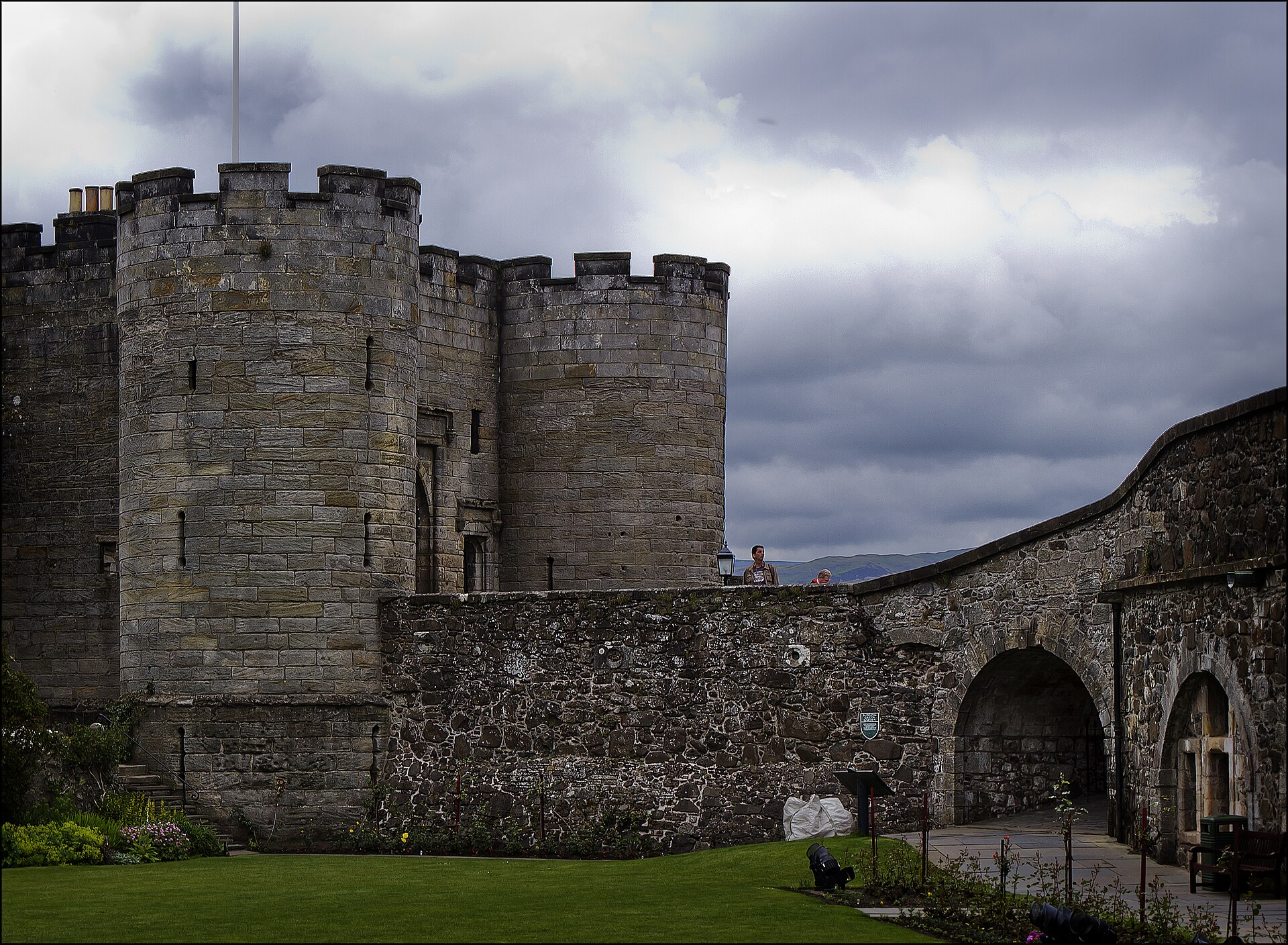
Perched atop a towering volcanic crag, Stirling Castle commands the landscape where Scotland’s fate was so often decided. The rock beneath it has been a fortress since time immemorial, but it was during the medieval era that the castle became the linchpin of the nation’s struggle for survival. From its battlements, the view stretches across the Forth Valley, a natural corridor that armies have contested for centuries. The land below is quiet now, but the echoes of clashing steel and shouted orders still seem to linger in the wind.
The castle’s architecture tells the story of its evolution. The oldest surviving structure, the Royal Chapel, dates to the early 1500s, its vaulted ceilings and intricate stonework a testament to the skill of medieval masons. Over time, the fortress was transformed from a military stronghold into a royal residence, its austere walls softened by Renaissance elegance. The royal apartments, with their ornate fireplaces and tapestries, offer a glimpse into the lives of Scotland’s monarchs—spaces where alliances were forged, heirs were born, and power was wielded. The Great Hall, once the largest banqueting space in the country, still hums with the memory of feasts and parliamentary gatherings.
Stirling’s place in history is inseparable from the wars of independence. It was here, at the Battle of Stirling Bridge in 1297, that William Wallace’s forces outmaneuvered the English army, a victory that breathed life into Scotland’s resistance. Seventeen years later, Robert the Bruce’s triumph at Bannockburn, just a few miles away, secured the nation’s sovereignty. Though the castle itself changed hands multiple times, its strategic importance never waned. The very ground beneath it seems to remember the weight of those struggles.
The castle has witnessed coronations, betrayals, and moments of high drama. Mary, Queen of Scots, was crowned here as an infant, her tiny form dwarfed by the grandeur of the chapel. Later, the fortress withstood sieges during the Rough Wooing, a brutal conflict in which England sought to force a marriage alliance. Even when the tide of war turned against the Stuarts, Stirling remained a royalist stronghold until Oliver Cromwell’s forces finally breached its defenses in 1651. The scars of those conflicts are still visible in the pockmarked walls and the stories passed down through generations.
Today, the castle is a bridge between past and present. Visitors wander through its courtyards, past cannons that once defended its walls, and up to the battlements where the wind carries the scent of heather from the distant hills. Inside, exhibits trace Scotland’s military history, from the weapons of Wallace’s era to the intrigues of the royal court. The Royal Palace, restored to its 16th-century splendor, feels almost alive—the carved figures of kings and queens on its facade seem to watch the crowds below with quiet amusement.
The mood of the castle shifts with the seasons. In summer, it buzzes with activity, the sound of laughter and footsteps filling the courtyards. Autumn wraps the fortress in mist, softening its edges and lending it an air of mystery. Winter strips it bare, revealing the stark, unyielding stone that has stood for centuries. Spring brings a sense of renewal, the surrounding hills bursting into green as if to remind visitors that history is not just something that happened—it is something that continues to unfold.
Standing on the castle’s ramparts, it’s impossible not to feel the weight of the past. The view stretches across the Forth Valley, where the land rolls away in gentle waves, unchanged by the passage of time. Below, the modern world hums along, but up here, the air is thick with stories—of battles fought, of kings and queens who shaped a nation, of ordinary people who lived and died within these walls. Stirling Castle is more than a monument; it is a place where history is not just remembered but felt, where the past is not a distant memory but a living presence.