The Scottish Parliament Building in Edinburgh stands out among modern British architecture. Completed in 2004, it marks Scotland’s political revival after the original Parliament dissolved in 1707. The country regained its legislative body in 1999 with devolved government. The building serves as both an administrative center and a statement of identity, blending contemporary governance with history in a city known for tradition.
Designed by Enric Miralles, the structure reflects his approach to architecture—rooted in its surroundings rather than dominating them. Miralles, who died before completion, imagined a complex that would echo Edinburgh’s landscape. Instead of a grand, symmetrical design, he created interconnected volumes that rise from Holyrood’s hills and rocks. The result feels like a neighborhood, with bridges, courtyards, and pathways linking its spaces.
The exterior’s most recognizable elements are the curved steel "leaves" or "boats" atop several roofs. These shapes, reminiscent of fern fronds or Viking ships, define the building’s silhouette. Inside them are MSPs’ offices. Sandstone from local quarries, the same used for Edinburgh Castle, ties the structure to the city’s heritage while its modern lines contrast with the Old Town’s medieval spires.
The debating chamber, where plenary sessions take place, resembles an amphitheater. Wooden paneling and high windows fill the space with natural light. The atmosphere is less formal than expected, with practical design choices. Elsewhere, details like floating staircases, internal gardens with native plants, and open spaces encourage movement. Miralles wanted the building to feel alive, and it does.
Since opening, the building has sparked debate. Critics call it an extravagant mismatch with Edinburgh’s Georgian elegance; supporters see it as a bold statement of Scotland’s future. Cost overruns drew criticism, but today it feels like part of the city. It doesn’t imitate the past but exists alongside it, showing Scotland as a place with a living culture.
Visitors can explore the parliament, though guided tours aren’t always offered. The foyer or temporary exhibitions provide a glimpse of its purpose. When the parliament is in session, the atmosphere is lively—flags fly outside, and live broadcasts play in the lobby.
Walk around the building. From some angles, it appears as a cluster of shapes; from others, it blends with Arthur’s Seat behind it.
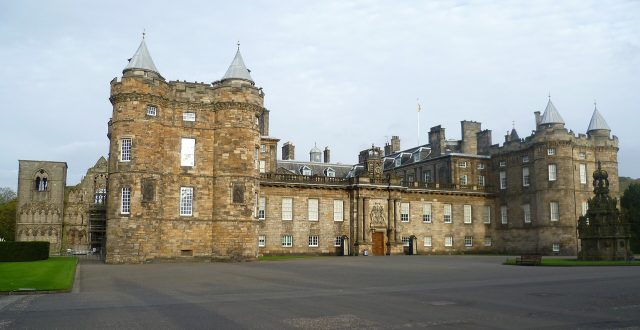
The parliament sits near Holyrood Palace and the Royal Mile, linking Edinburgh’s past and present. The area is busy with tourists, locals, and students. Parks, cafés, and shops make it easy to include in a day of exploring. Its position at Arthur’s Seat’s foot reinforces its connection to the landscape.
The building is more than a political hub—it’s a symbol of change. It shows that even traditional cities can evolve. There’s no pretension here, just openness. That’s why it provokes strong reactions: some see it as too bold, others as a reflection of Scotland’s future. Either way, it has become part of Edinburgh’s story, its unconventional design inspiring photographers, artists, and anyone drawn to architecture that stands apart.