Perched at the eastern end of Edinburgh’s Royal Mile, where the narrow medieval streets of the Old Town dissolve into open parkland and rolling hills, the Palace of Holyroodhouse feels less like a relic of the past and more like a place where history still breathes. This is the official residence of the British monarch in Scotland, but its walls hold far more than state ceremonies and royal visits. They whisper of power struggles, personal tragedies, and the quiet persistence of time, all woven into the very fabric of the building. To walk through Holyroodhouse is to step into a living story—one that unfolds in stone, wood, and the faint echoes of footsteps long gone.
The palace’s origins stretch back to the 12th century, when an Augustinian monastery stood on this site. Its name, Holyrood, derives from a fragment of the True Cross said to have been kept in the abbey church. By the 16th century, the monastery had been transformed into a royal residence, and from then on, Holyroodhouse became inseparable from Scotland’s monarchy. Few figures loom as large in its history as Mary, Queen of Scots, who spent some of her most turbulent years here. Her private chambers on the second floor remain much as they were during her time—low ceilings, dark oak paneling, and narrow windows framing views of the hills beyond. One room, in particular, is tied to a moment of violent intrigue: the murder of her secretary, David Rizzio, stabbed to death in her presence. The event is still debated by historians, but the room itself carries the weight of that night, its atmosphere thick with the unresolved tension of the past.
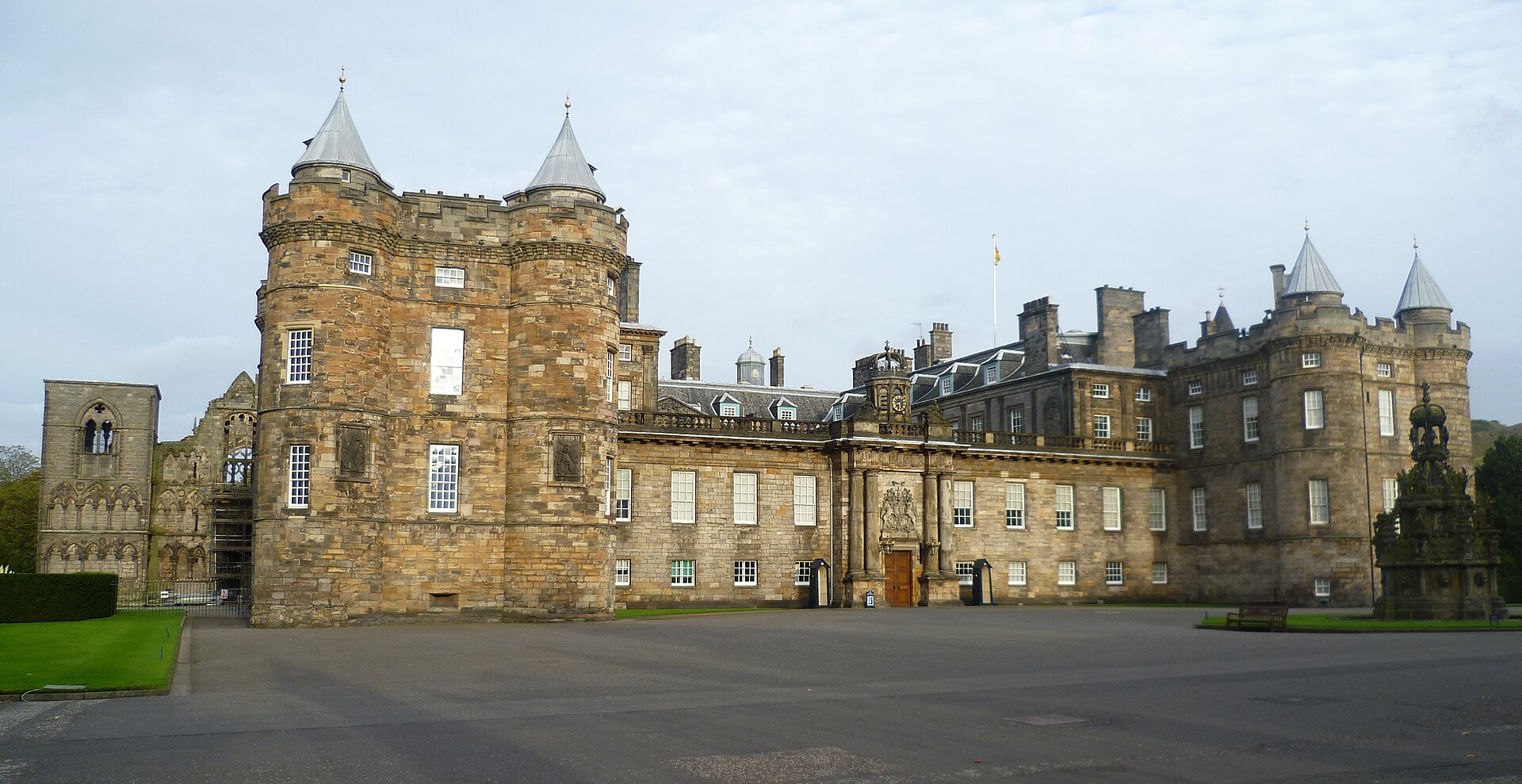
The architecture of Holyroodhouse tells its own story, layer by layer. The oldest part of the palace, built in the 16th century, is a study in Gothic austerity—thick walls, small windows, and a sense of fortified endurance. Later, in the 17th century, the palace was expanded in the Baroque style, its new facades grand and symmetrical, with tall windows and ornate gables facing the Royal Mile. Inside, the contrast is striking. The public rooms are formal and imposing, while the inner courtyards and galleries feel almost intimate, as if inviting visitors to linger. The Great Gallery is perhaps the most striking space, lined with portraits of Scottish kings from the legendary Fergus I to Charles II. Painted in the 17th century, these faces seem to watch over the room, a silent testament to the continuity of Scotland’s royal lineage.
Today, the palace is open to the public, offering a rare glimpse into the lives of the royal family, both past and present. The state apartments are a display of opulence—gilded ceilings, intricately carved fireplaces, and tapestries that have witnessed centuries of royal gatherings. Yet the most compelling rooms are those that have resisted modernization. Mary’s chambers, for instance, or the private apartments of Charles II, where the furnishings and decor remain largely as they were in the 17th century. There’s a sense of immediacy here, as if the occupants have only just stepped out. Unlike a museum, Holyroodhouse doesn’t feel sterile; it feels lived in, even if the lives it once sheltered are now part of history.
Beyond the palace itself, the ruins of Holyrood Abbey stand as a haunting reminder of the site’s medieval past. Little remains of the original 12th-century monastery founded by King David I, but the skeletal arches and crumbling walls still command attention. The abbey was once a place of pilgrimage, its quiet now broken only by the rustle of wind through the grass. Walking among the ruins, it’s easy to imagine the bustle of medieval Edinburgh, the prayers of monks, and the footsteps of pilgrims who once filled this space. Today, it’s a place of reflection, a quiet counterpoint to the grandeur of the palace next door.
The palace grounds extend toward Arthur’s Seat, a dramatic backdrop of wild hills that contrasts with the manicured gardens surrounding the building. These gardens, laid out in a formal style with gravel paths and symmetrical flowerbeds, were once the setting for royal hunts and grand celebrations. Now, they’re a peaceful retreat, where visitors can stroll along the paths or sit on a bench, taking in the view of the palace’s facade against the rugged landscape beyond. The gardens are a reminder that Holyroodhouse has always been a place of both ceremony and solitude, where the grandeur of monarchy meets the simplicity of nature.
Holyroodhouse remains an active part of Scotland’s present as much as its past. It hosts official events, receptions, and state visits, and each year during the Edinburgh Festival, it becomes a stage for concerts and exhibitions. Yet even on ordinary days, it draws both tourists and locals—some seeking a connection to history, others simply looking for a quiet place to walk or picnic in the gardens. The palace doesn’t need to shout its importance; its very existence is enough. It stands as a bridge between eras, a place where the stories of kings and queens, artists and rebels, are still being told.
A visit to Holyroodhouse is more than just a tour; it’s an encounter with the layers of time. Every room, every stone, carries the weight of centuries, and the air itself seems to hum with the voices of those who once walked these halls. You might spend hours studying the portraits in the Great Gallery or tracing the outlines of the abbey ruins, but the real magic lies in the way the palace makes history feel tangible. It doesn’t rely on spectacle or modern gimmicks—it simply endures, a silent witness to the passage of time, and that’s what makes it unforgettable.