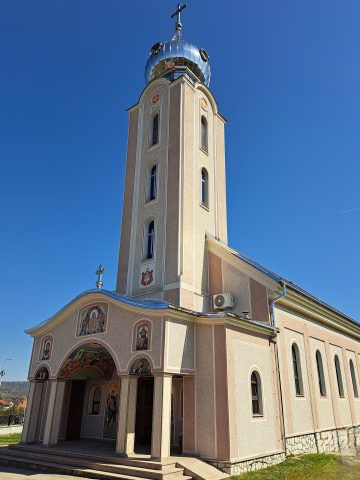
Kneževo Cultural Centre is one of those quiet places where time seems to slow down, where the past and present coexist without pretension. Tucked away in the small town of Kneževo, it doesn’t draw the crowds or the fanfare of Bosnia and Herzegovina’s more famous landmarks. Instead, it offers something subtler—a space where locals and the occasional visitor can engage with the region’s culture without the usual distractions.
The building itself is a piece of history. Constructed in the mid-20th century, it was likely meant for administrative or public use, though its original purpose has faded into the background. What remains is a structure that has absorbed the life around it, its simple, functional architecture carrying the weight of decades. High ceilings, large windows, and spacious halls give the place an airy, welcoming feel, as if the building itself is inviting you to step inside and linger.
This isn’t a museum in the traditional sense, though exhibitions are a regular feature. The centre is more of a living space for culture, where art and history aren’t just displayed but actively experienced. You might find works by local artists, photographs documenting the region’s life, or temporary exhibits on Bosnian traditions. Sometimes the themes are unexpected—folk crafts alongside contemporary art—making each visit a little different.
Music and literature play a central role here. The small hall, with its good acoustics, hosts concerts by local musicians, ranging from classical pieces to modern compositions. Literary evenings bring writers, poets, and historians to share their work, filling the room with the quiet rustle of pages and the measured cadence of storytelling. For Kneževo, where cultural events are less frequent than in Sarajevo or Mostar, these gatherings feel like small celebrations.
Education is another key part of the centre’s work. Workshops on traditional crafts, lectures on history and ethnography, and even courses for children and teenagers are all part of the programming. These aren’t just for entertainment; they’re a way to keep the past alive and pass it on to future generations. In a region where many traditions are fading, such efforts matter.
The centre also serves as a gathering place. Community meetings, discussions on local projects, and even casual get-togethers happen within its walls. You might find elderly men playing chess in one corner or young people planning their next steps in another. It’s a kind of town living room, where everyone can find something to do or someone to talk to.
Though unassuming, the centre holds significance beyond Kneževo. It connects people, ideas, and eras, reminding visitors that culture isn’t just about grand works or famous names—it’s also about the everyday. There are no tourist crowds here, no rush, just the chance to experience the real Bosnia, the one that exists in small towns and ordinary lives.
If you ever find yourself in Kneževo, don’t overlook this place. Even if nothing seems to be happening at first glance, step inside. Maybe someone is rehearsing for a concert, setting up an exhibit, or simply enjoying a quiet coffee. These are the kinds of places where the unremarkable often leaves the deepest impression.