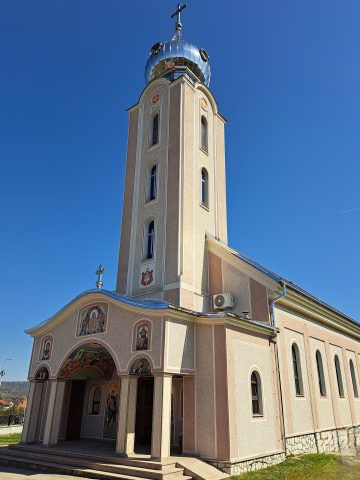
Perched on a quiet hillside near Kneževo, the Old Church of Saint Nicholas in Javorani stands where time moves differently. Dense forests surround it, and its wooden walls have endured for centuries. From the outside, it looks unremarkable—a small, weathered structure half-hidden by the landscape. But step closer, and you notice the details: the grain of the wood, the way the roof sags slightly under the weight of years.
The church was built in the 18th century, when Ottoman rule imposed restrictions on Orthodox communities constructing permanent places of worship. Wood was the only practical choice—easier to source and shape than stone. For the people of Javorani and nearby villages, this wasn’t just a place to pray. It was where they gathered for weddings, baptisms, and funerals, where they marked the passage of seasons and lives. The hillside location wasn’t random; Javorani had long been a spiritual center, where faith and daily routines merged.
The architecture follows the style of wooden churches across the Balkans. A low, sloping roof, covered in wooden shingles, shelters a single dome and a simple entrance. Inside, the space divides into three parts: the narthex, nave, and altar. The walls once held frescoes painted by local artisans, though time and humidity have blurred them. Now, only faint traces remain, visible in the dim light that filters through small windows.
A wooden bell tower was added in the 19th century. The bell, hanging beneath a small roof, once called people to service, its sound carrying across the hills. Nearby, an old cemetery holds graves dating back to the 1700s. The headstones are carved with crosses, rosettes, and floral patterns—each one unique, each one marking a life.
The church has survived fires and wars. During World War II, it was damaged but later restored by the community. In the 1990s, when conflict spread across Bosnia, many religious sites were destroyed. This one remained, perhaps because of its remote location or because it was never just a monument but a place still used for prayer and gatherings.
Today, the church is still active. Visitors come for the quiet, not the spectacle. There are no crowds, no guided tours—just the scent of aged wood and the sound of leaves rustling. The surrounding hills and forests, once called the green heart of Bosnia, stretch out in every direction. The Vrbas River winds through the landscape, its waters reflecting the trees. In the villages, traditional stone houses with wooden balconies stand as they have for generations.
Locals might offer you coffee or homemade bread. They’ll tell you stories if you ask, because hospitality here is as much a part of the place as the church itself.
The road from Kneževo winds into the mountains, and the last stretch is a dirt path. There are no signs, no promises of an easy visit. But that’s part of why it feels real—because it hasn’t been polished for tourists, because it doesn’t try to be anything other than what it is.
Some places don’t need to shout to be heard. This is one of them.