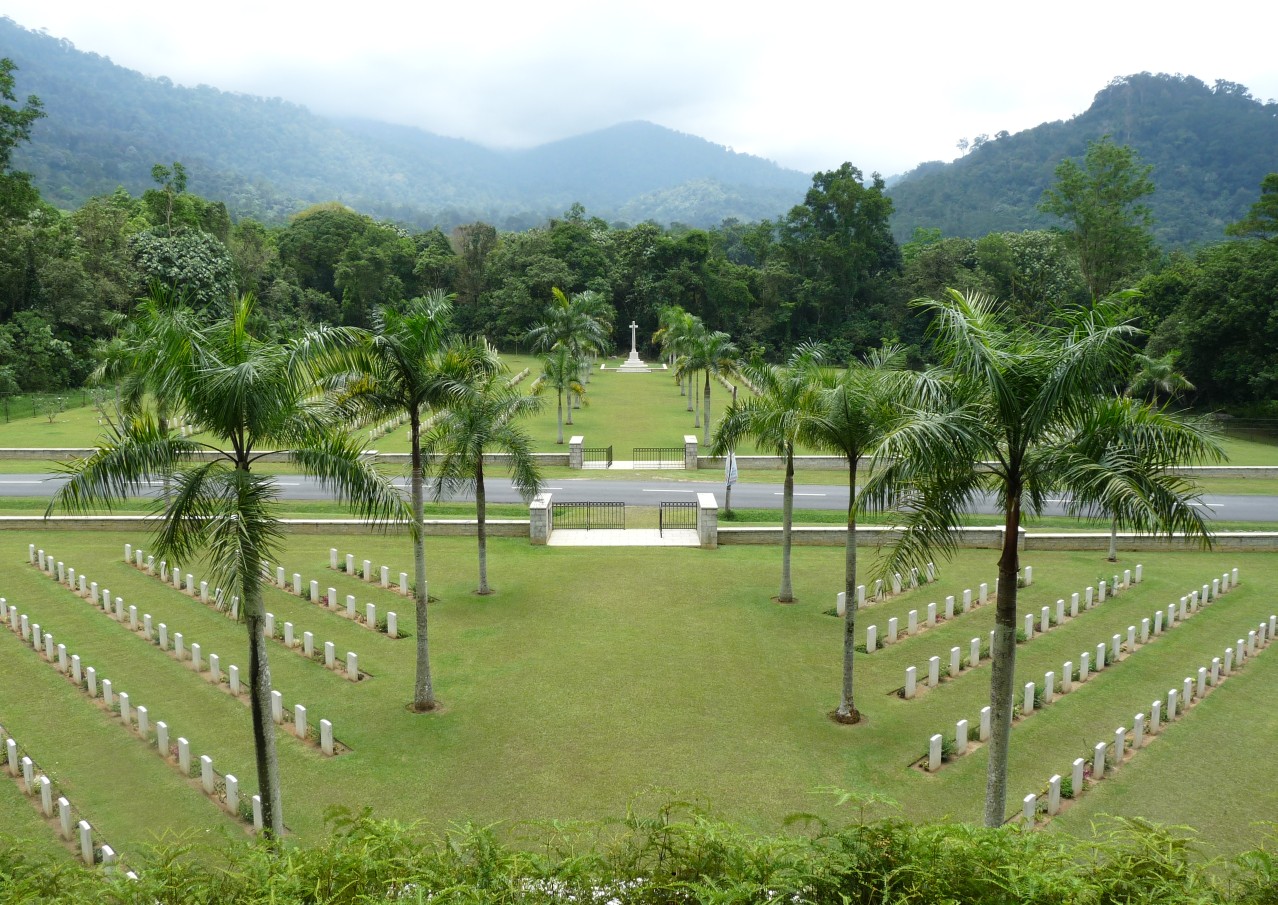
Taiping is the kind of Malaysian town that slips quietly under the radar. There are no towering skyscrapers or tourist crowds here, just a slow, steady rhythm of life where even the rain seems to fall at its own unhurried pace. The streets are lined with old colonial buildings, the parks stretch out in endless green, and tucked away among it all is a cemetery that tells a story most people have forgotten. The Taiping World War I War Cemetery is one of those places where the past isn’t just preserved—it lingers, a quiet reminder of lives that intersected in this corner of Southeast Asia, far from the battlefields where they might have expected to end.
It’s strange to think of the First World War in connection with Malaysia. The conflict is rarely associated with this part of the world, yet here, in Taiping, lies proof that its reach extended even to these distant shores. The cemetery holds the graves of soldiers who didn’t die in combat but in captivity. In 1914, British forces stationed in Malaya captured German sailors from the SMS Emden, a raider that had been disrupting Allied shipping in the Indian Ocean. The prisoners were sent to a camp near Taiping, where many succumbed to disease and the harsh conditions. Their graves, neatly maintained, stand among the tropical greenery, a silent testament to how war spares no corner of the earth.
The cemetery is small but meticulously kept. There are no grand monuments or elaborate sculptures, just rows of modest headstones, each bearing a name, rank, and date of death. Some inscriptions are in German, others in English, and in that mix of languages lies the quiet tragedy of it all—men who once stood on opposite sides now resting side by side. The headstones follow the simple, dignified style of British military graves from the era, unadorned but respectful. A cross stands at the center, surrounded by flowers, while trees along the perimeter seem to watch over the resting place.
Taiping’s role in this story is tied to its colonial past. In the early 20th century, the town was a key administrative hub for the British in Malaya, home to a garrison that oversaw the region. The prisoner-of-war camp became part of that infrastructure, and the cemetery its somber counterpart. After the war, the site faded from memory, like so many others around the world. But in the 1920s, the British Empire began efforts to commemorate its fallen soldiers, and Taiping’s cemetery was included in that care. Today, local authorities maintain it, though few visitors come. Those who do often find themselves staying longer than they intended.
The atmosphere here isn’t one of overwhelming sorrow. Instead, there’s a sense of quiet reflection, a subtle surprise at how far these lives were carried from their origins. Palm trees sway overhead, birds sing in the distance, and the air is thick with the scent of damp earth and flowers. Time moves differently here, and even a brief visit slows you down, making you wonder about the stories left untold. Occasionally, you might see locals paying their respects—not out of curiosity, but out of a quiet acknowledgment that this, too, is part of their history.
This cemetery isn’t just a memorial; it’s a reminder of how war reshapes even the most remote places. The First World War was a global conflict, and its echoes reached far beyond the trenches of Europe. Today, the site draws those with an interest in history—not the grand narratives, but the quiet corners where it settles like dust on old books. There are no guided tours, no crowds, no souvenir stalls, just silence, green hills, and a handful of graves still holding their secrets.
For Taiping, this cemetery is more than a landmark—it’s part of the town’s identity. Once a center of British influence in Malaya, the city now moves to its own rhythm, but the past hasn’t vanished. It lingers in the architecture, the street names, the customs of the people. The cemetery is one of those places where that past feels tangible, though tinged with loss. It doesn’t demand attention, but if you approach it with an open mind, you might hear more than you expected.
In a world where war memorials often focus on parades and speeches, places like Taiping’s cemetery offer a different perspective. Behind every name on a headstone is a person—someone with dreams, a life, a family. There’s no glorification here, no grand rhetoric, just a quiet acknowledgment that war is always a tragedy, no matter where it happens. If you ever find yourself in Taiping, don’t rush past. Take a moment to walk among the graves, read the inscriptions. You might leave feeling more connected to the past than you would in any museum.