St. Andrew’s Catholic Cathedral in Livingstone doesn’t demand attention. It sits quietly on a low hill, surrounded by modest trees and unassuming houses. Without knowing it’s there, you might walk right past—from the outside, it looks like any other parish church. Yet that very unpretentiousness is what makes it special. The cathedral doesn’t try to impress; it simply exists, woven into the fabric of the city’s daily life.
Built in the early 20th century, when Livingstone was little more than a colonial outpost on the banks of the Zambezi, the cathedral emerged during a time when the town served as a vital hub for goods and travelers moving between Southern Africa and the continent’s interior. The Catholic community here was small but devoted, and the church became both a place of worship and a gathering point. Missionaries, traders, officials, and locals all passed through its doors, their lives briefly intersecting within its walls.
The architecture is straightforward—clean lines, minimal ornamentation, nothing extravagant. This isn’t a soaring Gothic cathedral with stained glass and spires, but a practical building designed for its purpose. Inside, the simplicity continues. High ceilings, wooden pews, a few rows of columns. The altar is adorned with images of saints, the stained glass muted in tone. There’s no gold or marble, just quiet and space. People don’t come here to marvel at beauty, but to sit in stillness, to reflect. Perhaps that’s why, alongside the faithful, you’ll find tourists seeking a moment of respite from the noise of travel.
The cathedral’s story is intertwined with Zambia’s own. During the mid-20th century, as the country fought for independence, the church became an important social space. Here, people shared news, voiced hopes, and found solidarity. Even after 1964, when Zambia gained its freedom, the cathedral didn’t lose its significance. It remained a place where generations met—where the young learned traditions and the old reminisced about the past.
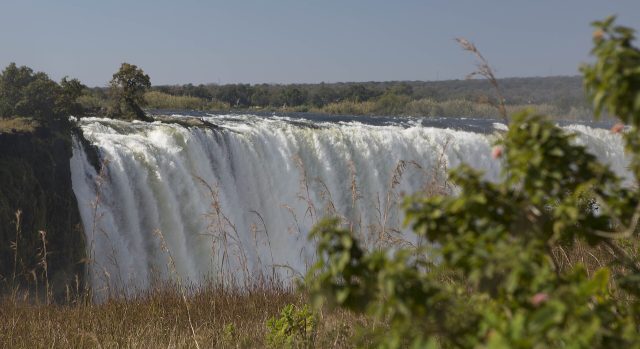
Today, Livingstone draws visitors with the thunderous spectacle of Victoria Falls, but St. Andrew’s offers something different: a pocket of calm. It serves as a reminder that a city isn’t just its landmarks, but the people who live there and the stories they carry. The cathedral stands a short distance from the falls, and while tourists come to witness nature’s power, some also stop here to catch their breath. The falls astonish with their force; the cathedral soothes with its silence. Together, they reveal different sides of Zambia.
Over the decades, the exterior has changed little. The paint on the walls is faded, the wooden doors darkened with age, yet the building retains its original character. A small garden surrounds it, filled with local trees and flowers. In the mornings, the air is cool, the light soft, and the only sounds are birdsong and the occasional rustle of leaves. Locals often come to sit on the benches, to talk, or simply to enjoy the quiet.
St. Andrew’s isn’t the kind of place that makes it into guidebooks as a must-see. There are no lavish interiors or dramatic legends attached to it. But that’s precisely why it feels authentic—there’s nothing staged or performative about it. It’s just a church, living its life, welcoming anyone who walks through its doors.
Maybe that’s where its charm lies. In a world where so much is designed to dazzle, St. Andrew’s offers something rarer: the quiet dignity of a place that doesn’t need to prove itself. It’s a reminder that sometimes, the most meaningful experiences aren’t the ones that shout for attention, but the ones that wait patiently to be discovered.