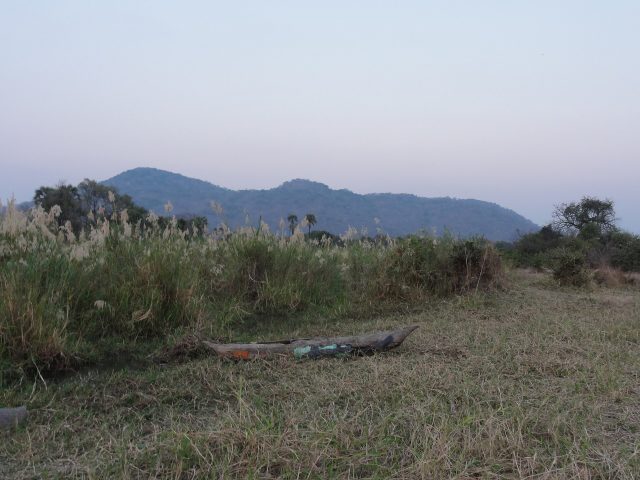
Livonde is a quiet town in southern Malawi, stretched along the banks of the Shire River. The low houses, half-hidden in greenery, give it a sleepy, unhurried feel. Among them stands St. Michael’s Catholic Church, a modest building that carries more weight than its size suggests. It’s not a grand landmark, but a place where faith, history, and the lives of ordinary people have quietly intertwined for decades.
The church was built in the mid-20th century, when Malawi was still the British protectorate of Nyasaland. Catholic missions were expanding across the region, establishing not just places of worship but schools and hospitals too. Livonde, sitting on a trade route between Lake Malawi and the Mozambican ports, became one of those small but important hubs. The building itself is unassuming—local brick and timber, with a few nods to neo-Gothic style in its pointed windows and simple spire. It doesn’t dominate the skyline; instead, it blends into the landscape, as if it’s always been there.
Inside, the space is airy, with wooden pews carved with geometric patterns that echo traditional Malawian designs. The altar is adorned with figures of saints, their features softened by the hands of local craftsmen. The stained glass shows muted blues and greens, the colors of Malawi’s rivers and forests. Sunlight filters through them gently, casting a quiet glow over the congregation.
For the people of Livonde, St. Michael’s is more than just a church. It’s where the community gathers for Sunday mass, baptisms, weddings, and funerals. On feast days, the air fills with singing, the rhythm of drums, and the sound of traditional instruments woven into Catholic hymns. Many of the parishioners are from the Chewa people, and their customs remain part of the services. Christianity and older beliefs coexist here, each shaping the other.
The church’s history is tied to Livonde’s past. During colonial times, the town was a key stop for goods moving from the African interior to the Shire River ports. St. Michael’s served as a landmark for both locals and European settlers. After Malawi gained independence in 1964, Livonde’s role as a trading post faded, but the church remained. Today, it stands as a witness to the town’s changes—less a relic of the past than a place that has adapted, just as the people around it have.
Visiting St. Michael’s isn’t about seeing something ornate. There are no towering frescoes or gilded altars. Instead, it offers a sense of how faith and culture come together in everyday life. You might arrive during a service, where the singing rises in waves, and the congregation wears bright fabrics patterned with traditional designs. Or you could sit on a bench in the garden afterward, watching children play on the grass while elders chat in the shade. The air smells of earth and flowers, and the river murmurs in the distance.
Malawi has faced hardships—economic struggles, shifting weather patterns, the slow erosion of old ways. But places like St. Michael’s endure. The building shows its age: the roof leaks when the rains come, and the walls could use fresh plaster. Yet the parishioners take care of it. Some bring flowers, others sweep the floors, and some simply come to pray. It’s not a tourist attraction. It belongs to the people who have shaped it, and who, in turn, have been shaped by it.
If you do visit, come with an open mind. Listen to the voices raised in song, watch the way the light falls through the windows, and notice how the church fits into the rhythm of the town. It’s a place where history isn’t just remembered—it’s lived.