The Catacombs of Kom el-Shoqafa are one of those rare places in Alexandria where the past doesn’t just linger—it breathes. Carved into the limestone beneath the city, these underground burial chambers date back to the Roman era, a time when Alexandria was a crossroads of civilizations, where Egyptian, Greek, and Roman traditions collided and merged. The name itself, Kom el-Shoqafa, translates to Mound of Shards, a nod to the broken pottery that once littered the site, concealing the catacombs beneath. Today, they stand as one of the most remarkably preserved necropolises of the ancient world, a silent testament to the city’s layered history.
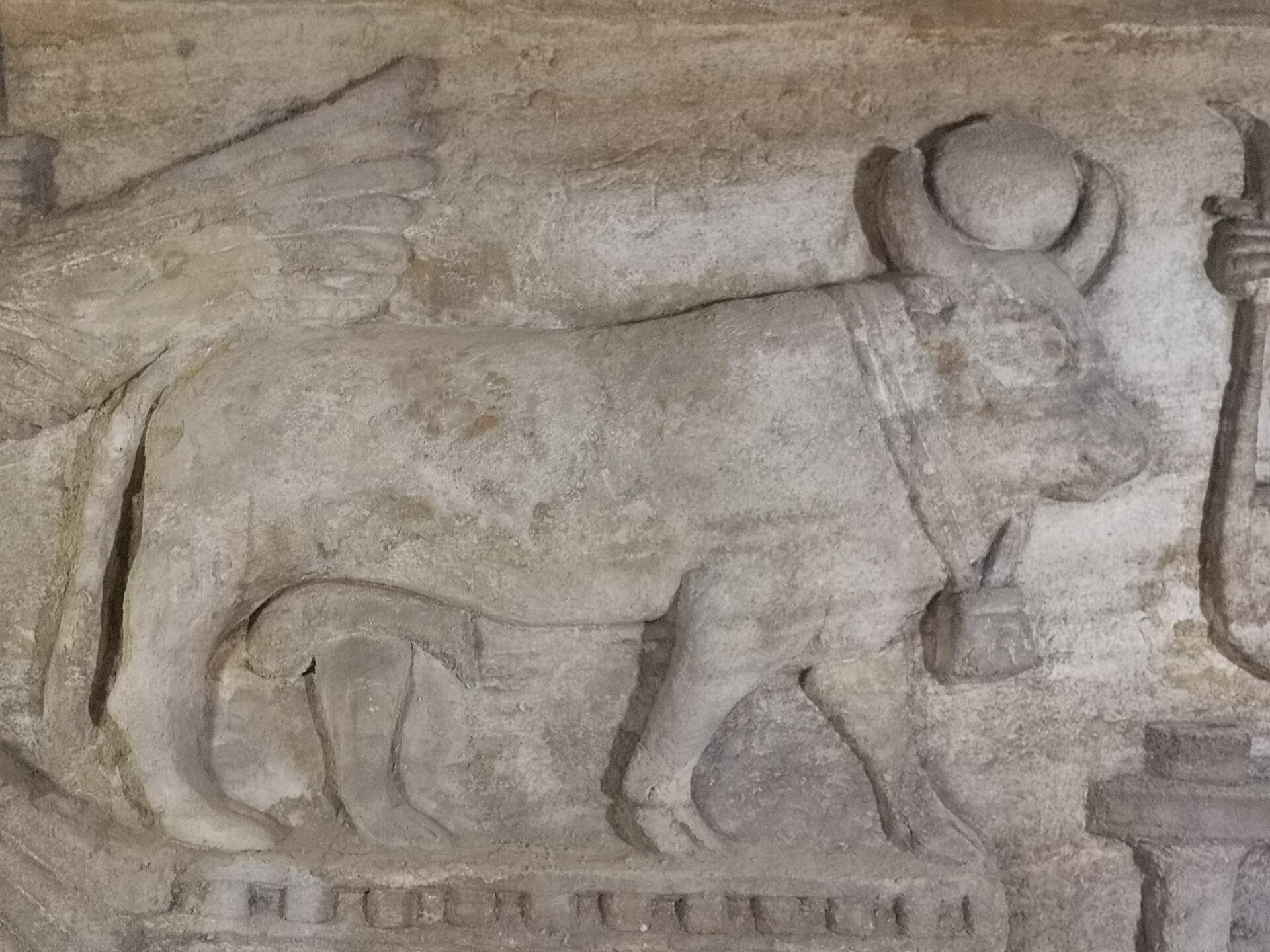
Descending into the catacombs feels like stepping into another time. A narrow spiral staircase, worn smooth by centuries of footsteps, leads downward into the cool, damp air of the underground. The first sight that greets visitors is a series of rotundas lined with niches for sarcophagi, their surfaces adorned with reliefs that tell the stories of those interred here. Unlike the grand tombs of pharaohs, there are no gilded walls or elaborate murals—just the quiet dignity of stone carvings and inscriptions, each one a fragment of lives long gone.
What makes Kom el-Shoqafa truly fascinating is its fusion of cultures. Here, Egyptian deities appear in Roman attire, Anubis dons a toga, and Isis takes on the features of a Greek goddess. The architecture blends Corinthian columns with Egyptian motifs, while the ceilings depict scenes from the afterlife where ancient myths intertwine. It’s as if the catacombs themselves are a physical manifestation of Alexandria’s identity—a city that absorbed and reinterpreted the traditions of those who passed through it, creating something entirely its own.
The catacombs extend three levels deep, though only the uppermost is accessible to visitors. The lower chambers remain flooded, their secrets still locked beneath the water, a challenge for archaeologists to unravel. The visible levels reveal family tombs, where merchants, artisans, and officials were laid to rest. These aren’t the grand mausoleums of kings but the more modest resting places of Alexandria’s middle class, offering a glimpse into the everyday lives of its people. The simplicity of the tombs makes them feel strangely intimate, as if the past is just a whisper away.
One of the most evocative spaces within the catacombs is the Triclinium, a chamber designed for funerary feasts. Stone benches and tables line the walls, where families once gathered to honor their dead. In the ancient world, death wasn’t an end to connection—it was believed that the deceased remained part of the family, and these meals were a way to maintain that bond. Standing in the dim light of the Triclinium, it’s easy to imagine the murmur of voices, the clink of cups, the sense of continuity between the living and the dead.
The catacombs were discovered by accident in the early 20th century when a donkey’s hoof broke through the ground, revealing the hidden passage below. Since then, they’ve been the subject of ongoing archaeological study, though much of the site remains unexplored. Collapsed corridors and unexcavated chambers add to the sense of mystery, making Kom el-Shoqafa feel less like a static museum and more like a living puzzle, still revealing itself piece by piece.
Visiting the catacombs isn’t just about seeing an ancient site—it’s about experiencing Alexandria as a city that has always been a meeting point of worlds. There are no towering pyramids or monumental temples here, just the quiet power of a place where history was lived, not just recorded. The catacombs remind us that the past isn’t always grand or dramatic; sometimes, it’s hidden beneath the surface, waiting in the shadows for someone to listen. And for those who descend into their depths, even briefly, the past feels a little less distant.