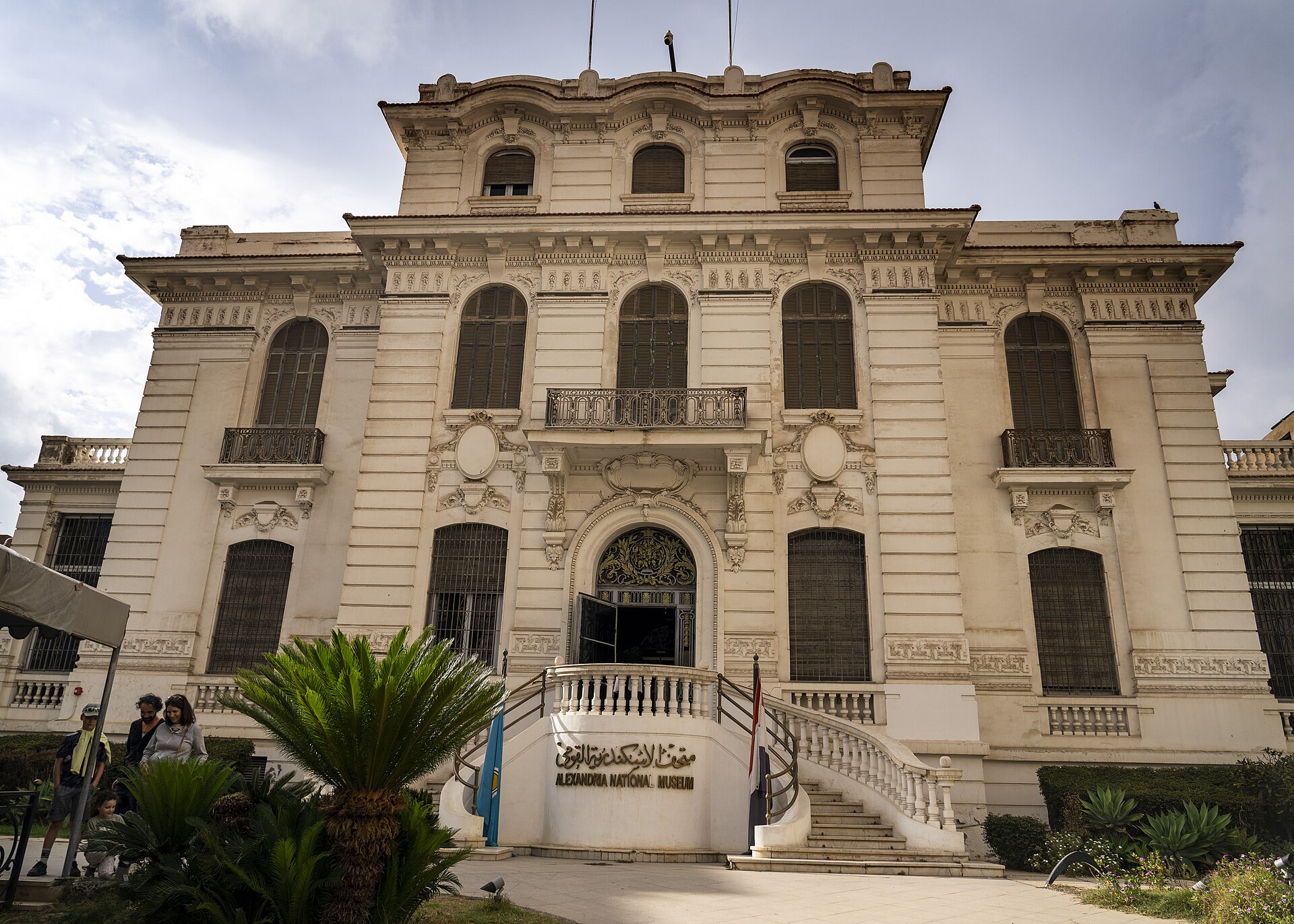
The Alexandria National Museum is one of those rare places where history doesn’t just sit behind glass—it lingers in the air, in the details of every object, in the very walls that house them. Housed in a former mansion built in the early 1900s, the building itself is a piece of the past. Once the home of a wealthy timber merchant, it was designed in the Italian Renaissance style, with high ceilings, marble staircases, and stained-glass windows that still catch the light in shifting patterns. Walking through its halls, it’s easy to imagine the gatherings that once took place here—elegant receptions, quiet conversations over coffee, the murmur of a city that has always been a crossroads of cultures. Now, those same rooms hold thousands of years of Egyptian history, from the age of the pharaohs to the modern era.
The museum opened in 2003, and since then, it has become a cornerstone of Alexandria’s cultural life. Its collection is divided into three main periods: Ancient Egypt, the Greco-Roman era, and the Islamic period. But this isn’t just a display of artifacts—it’s a narrative, a way of understanding how the city evolved over millennia. The exhibits include intricately painted sarcophagi, statues of gods and rulers, coins, jewelry, and everyday objects that offer glimpses into the lives of people who shaped—and were shaped by—this place. Each piece tells a story, and together, they form a mosaic of Alexandria’s layered identity.
One of the museum’s most compelling sections is dedicated to the city itself. Founded by Alexander the Great in 331 BCE, Alexandria was always a meeting point of civilizations—Egyptian traditions blending with Greek philosophy and Roman law. Many of the artifacts here come from underwater excavations of the ancient city, parts of which sank beneath the Mediterranean due to earthquakes. Statues, columns, and even entire structures recovered from the seabed reveal just how grand Alexandria once was. These relics, some still bearing traces of salt and time, offer a tangible connection to a world that has long since vanished.
The Greco-Roman gallery is particularly striking. Here, you’ll find busts of Roman emperors crafted by local artisans who merged Roman techniques with Egyptian sensibilities. The result is a unique fusion of styles, a testament to the cultural exchange that defined the city. But the real standouts are the Fayum mummy portraits—lifelike paintings on wood that were buried with the dead during the first to fourth centuries CE. These portraits are astonishingly vivid, their subjects gazing out with an almost uncanny presence. They’re considered some of the earliest examples of portraiture in history, and standing before them, it’s hard not to feel a direct link to the people who once lived here.
The Islamic period is equally well-represented, with exhibits showcasing ceramics, weapons, manuscripts, and jewelry that reflect the richness of medieval Egyptian culture. The Mamluke era, in particular, left a lasting mark on Alexandria, turning it into a thriving hub of trade and craftsmanship. The museum displays delicate glasswork, intricate metalwork, and fragments of architectural ornamentation that once adorned mosques and palaces. These objects aren’t just beautiful—they’re evidence of a society that valued artistry and innovation, where every detail mattered.
The museum’s modern section covers Egypt’s 19th and 20th centuries, offering a look at the country’s transformation during a time of upheaval and change. Photographs, documents, and personal belongings of key figures trace the impact of British occupation and the struggle for independence. These exhibits provide context for how Alexandria evolved from an ancient city into the bustling metropolis it is today, all while retaining its distinct character. It’s a reminder that history isn’t just about the distant past—it’s about the forces that shape the present.
What makes the Alexandria National Museum special isn’t just its collection, but the way it invites visitors to engage with history. There’s no attempt to overwhelm with sheer volume; instead, the focus is on the small details—the pattern on a vase, the inscription on a coin, the expression in a portrait. These fragments make the past feel immediate, almost tangible. The museum doesn’t claim to tell the whole story of Alexandria—it doesn’t need to. By focusing on the nuances, it allows visitors to piece together their own understanding of the city’s legacy.
The building itself is worth exploring. The inner courtyard, with its fountain and columns, evokes the grandeur of a bygone era, while the stained-glass windows cast shifting hues across the floors. The space feels timeless—cool in the summer, warm in the winter, and always welcoming. It’s no wonder that locals, not just tourists, frequent the museum. For some, it’s a place to reconnect with their heritage; for others, it’s a chance to discover something new about the city they call home.
More than just a repository of artifacts, the Alexandria National Museum is a living institution. It hosts temporary exhibitions, lectures, and workshops that encourage fresh perspectives on familiar subjects. The goal isn’t to be the biggest or the most comprehensive museum—it’s to be honest. Honest about the complexities of history, about the people who lived it, and about the visitors who come to learn. In that sincerity lies its greatest strength. It doesn’t just preserve the past; it makes it accessible, relatable, and, above all, human.