Carrownore is one of those rare places in Ireland where the past isn’t just remembered—it lingers in the air, heavy with the weight of centuries. Tucked away in the quiet hills near Westport in County Mayo, this sprawling megalithic complex is among the oldest and most significant in the country. The site is a scatter of ancient stone tombs, some still standing defiantly after more than five thousand years, their weathered surfaces bearing the marks of time and the elements. For anyone drawn to Ireland’s prehistoric roots, Carrownore is a must-visit, but even those who stumble upon it by chance will find themselves captivated by its quiet, enduring presence.
The tombs here are portal dolmens, a type of burial structure built by Neolithic communities. Each one consists of massive upright stones supporting a single, colossal capstone, some weighing as much as thirty tons. How these stones were quarried, transported, and lifted into place remains a mystery, a testament to the ingenuity—or perhaps the sheer determination—of the people who built them. The most impressive of these is Listoghil, its enormous slab still resting where it was placed millennia ago. Over time, some tombs have collapsed or been worn down by the elements, but even in their fragmented state, they carry an undeniable sense of purpose and reverence.
What makes Carrownore special isn’t just its age or its scale, but the way it blurs the line between history and myth. In Irish folklore, these tombs were often linked to the *sídhe*, the fairy folk said to dwell within the hills. Local stories tell of voices carried on the wind, of strange lights flickering in the mist, and of a place where the veil between worlds feels thin. Even now, with modern explanations for many of these phenomena, the site retains an air of quiet mystery. It’s easiest to feel when the morning fog clings to the hills or when the last light of dusk softens the edges of the stones, making them seem almost alive.
Visiting Carrownore isn’t like touring a museum or ticking off a famous landmark. There are no crowds, no guided tours pressing you to move along, just the open landscape and the slow, steady rhythm of the wind. A small visitor center offers context—maps, displays on Neolithic life, and explanations of the rituals that may have taken place here—but the real experience lies outside, among the stones themselves. Walking between the tombs, it’s impossible not to wonder about the people who built them: what they believed, how they lived, and why this particular spot held such significance for them.
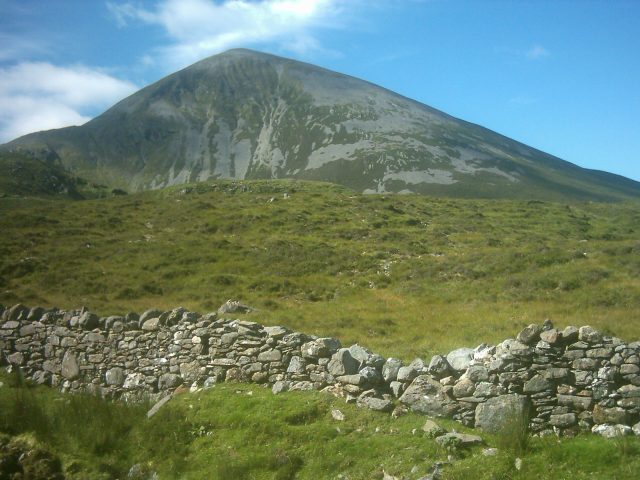
The surrounding countryside is just as compelling as the site itself. The tombs sit on gentle slopes, offering sweeping views of the Mayo landscape—rolling hills, distant mountains, and, on clear days, the glint of the sea in the distance. The land here is quiet, broken only by the occasional bleat of sheep or the rustle of wind through the heather. Well-worn paths wind through the area, leading past old stone walls and across open bogland. It’s the kind of place where you can walk for hours without seeing another soul, the kind of landscape that invites reflection rather than conversation.
Unlike more famous sites like Newgrange, Carrownore sees relatively few visitors, which only adds to its appeal. There’s no need to rush, no pressure to see everything at once. You can take your time, wandering from one tomb to the next, or simply sit on the grass and let the silence settle around you. The lack of crowds also means the site feels untouched, as if it’s still holding its breath, waiting for the next person to step into its story. Weekdays are the best time to visit, when the light is soft and the weather is most likely to cooperate, painting the hills in shades of green and gold.
It’s worth remembering that Carrownore isn’t just a historical site—it’s an active archaeological landscape. The stones are fragile, the ground uneven, and the tombs themselves are protected. Climbing on them or touching the surfaces isn’t just discouraged; it’s a way of respecting the site’s integrity. The paths can be slippery after rain, so sturdy shoes are a good idea, along with a waterproof layer—this is Ireland, after all. The site is free to explore, but donations to help with its upkeep are always welcome.
For those who want to make a day of it, Westport is the perfect base. The town itself is charming, with its cobbled streets, brightly painted shopfronts, and a relaxed, welcoming atmosphere. It’s the kind of place where you can spend an afternoon wandering between bookshops and cafés, or linger in a pub where traditional music spills out onto the street. From Westport, Carrownore is an easy drive or bike ride away, following quiet country roads that wind through farmland and past old stone cottages. If you’re lucky, you might even meet a local who’ll share a story or two about the area—after all, this is a place where history isn’t just in the stones, but in the people who’ve lived alongside them for generations.
Carrownore doesn’t demand attention the way some sites do. There are no grand monuments or flashy exhibits, just the quiet persistence of the past. Yet that’s precisely what makes it so powerful. Standing among the tombs, it’s easy to feel a connection to the people who once gathered here, who looked at the same hills and the same sky and found meaning in these stones. It’s not just a place to visit; it’s a place to pause, to listen, and to wonder. And perhaps that’s why, long after you’ve left, you’ll find yourself thinking of it again—the way the light fell on the stones, the sound of the wind, the sense that some things, no matter how old, never really fade.