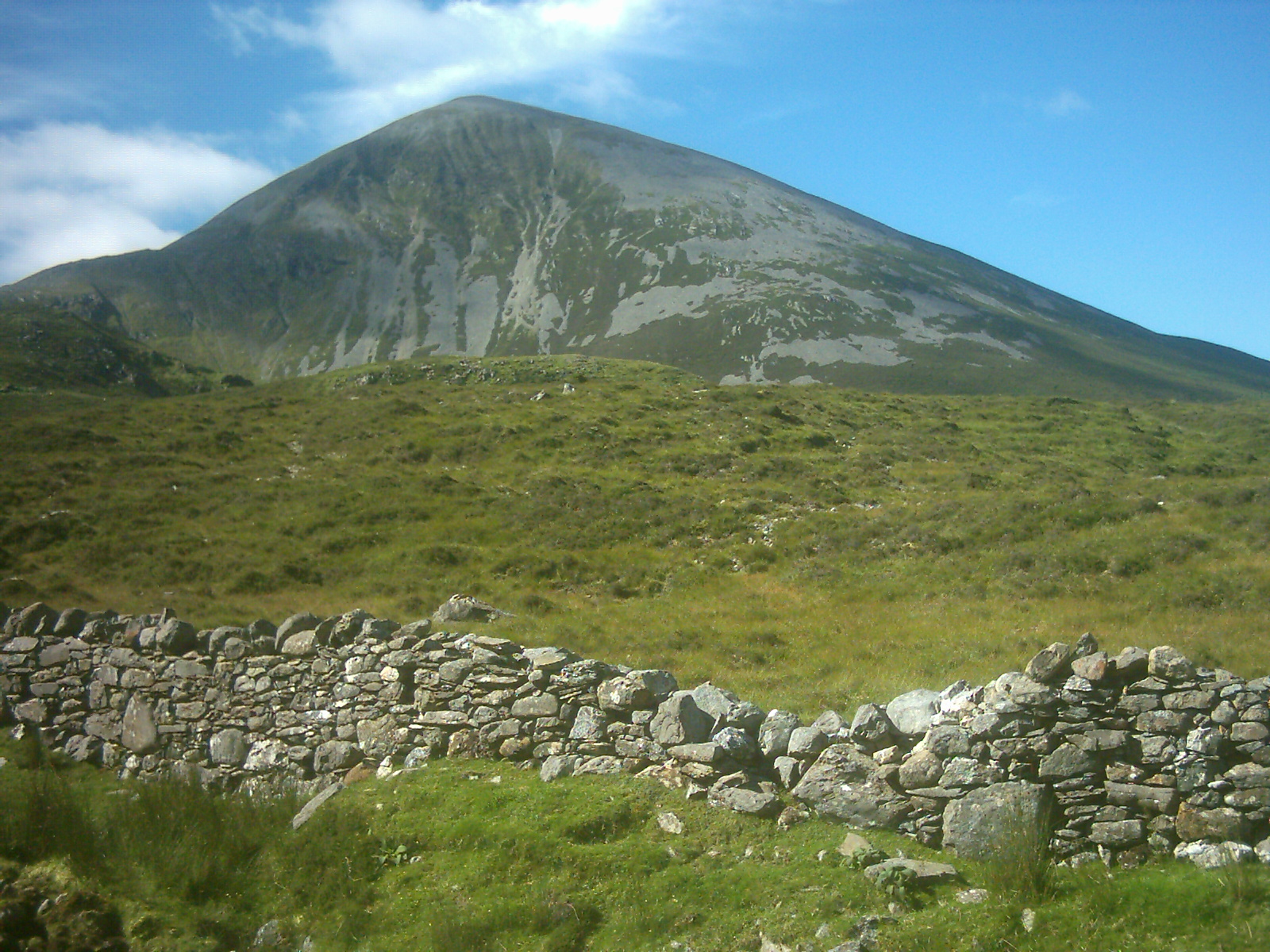
Croagh Patrick is more than just a mountain—it’s one of Ireland’s most striking natural landmarks, a place that feels lifted from an old legend. Rising above the landscape near the town of Westport in County Mayo, its distinctive shape draws the eye from miles away. The name comes from the Irish *Cruach Phádraig*, meaning "Patrick’s Stack," though the saint himself is said to have never set foot here. Locals often call it simply the Reek, a nickname that carries the warmth of something familiar, as if the mountain has always been part of their lives.
The history of Croagh Patrick stretches back thousands of years. In Neolithic times, its slopes were used for rituals, evidenced by the megalithic structures scattered across the area. Later, during the Iron Age, fortifications were built on the summit, likely serving as lookout points or refuges. By the Middle Ages, the mountain had woven itself into local folklore, becoming a place of fairies, spirits, and hidden treasures. Even today, the sense of mystery lingers, especially when mist rolls over the peak, blurring the line between reality and myth.
Climbing Croagh Patrick isn’t just a physical challenge—it’s a journey through layers of time. The most popular trail begins at the base, where remnants of old stone walls still mark the boundaries of ancient pastures. The first stretch is gentle, winding through heather and wild grasses, but soon the path steepens, twisting between boulders and rocky outcrops. Around five hundred meters up, the view opens onto Clew Bay, where the river glints like a silver ribbon, and on clear days, the distant peaks of Nephin and Mweelrea come into focus. It’s easy to lose track of time here, pausing to catch your breath while taking in the vastness below.
The summit isn’t a sharp peak but a broad plateau, covered in short grass and scattered stones. At the highest point stands a simple stone cross, marking the mountain’s spiritual significance. From here, you can see three counties—Mayo, Galway, and Roscommon—and on a good day, the Atlantic Ocean shimmers on the western horizon. But the real reward isn’t just the view; it’s the sense of space, the wind that almost always blows across the summit, a reminder of how small we are in this ancient landscape.
Croagh Patrick holds a special place in the region’s cultural life. Every year in late July, pilgrims gather for a traditional nighttime ascent to greet the sunrise, a tradition tied to Saint Patrick despite the mountain’s lack of direct connection to him. The event feels solemn, almost timeless. The mountain also serves as a backdrop for festivals and sporting events, including an annual race that draws runners from across Ireland. For many, it’s not just a competition but a way to connect with the land and its history.
Despite its popularity, Croagh Patrick retains a wild, untouched feel. There are no visitor centers, cafes, or souvenir shops—just trails, rocks, and wind. This makes it especially appealing to those seeking solitude or an unfiltered experience of Ireland. The climb takes about two hours, and while it’s not overly strenuous, it’s best approached at a leisurely pace, allowing time to soak in the surroundings.
The area around Croagh Patrick is just as compelling. Nearby Lough Lannagh is surrounded by bogs and peatlands, where traditional thatched cottages still stand. In the villages, old pubs come alive in the evenings with live music, and locals are always ready to share stories about the mountain and its legends. Westport itself is one of Ireland’s most charming towns, with cobblestone streets and colorful houses lining the canal, creating a sense of warmth and history.
Croagh Patrick is a place that stays with you. Some come for the photographs, others for the silence, and still others to feel part of something larger. The mountain seems to hold the memories of everyone who has climbed it—shepherds, pilgrims, adventurers. Standing on the summit, looking out over the rolling hills and valleys, it’s easy to understand why this place has become a symbol of this corner of Ireland. There’s nothing here but earth, sky, and wind, telling stories to those who listen.