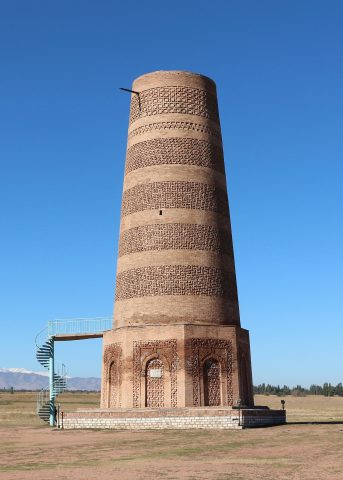
Tokmok’s local history museum sits quietly in the heart of this small Kyrgyz town, where the snow-capped peaks of the Tian Shan loom in the distance. Unlike the grand, bustling museums of bigger cities, this one doesn’t try to impress with size or spectacle. Instead, it offers something more intimate—a collection of objects that tell the story of the people who have lived in the Chuy Valley for centuries, from nomadic herders to modern-day residents. The museum itself is housed in a building that feels like a piece of history, its mid-20th-century architecture reflecting the Soviet era with its high ceilings and large windows. Inside, the wooden display cases and faded photographs create an atmosphere that feels more like a family home than a formal exhibition space.
The choice of Tokmok as the site for this museum isn’t accidental. The town has long been a crossroads, once part of the Silk Road network that connected East and West. Even today, the surrounding area bears traces of its past—ancient settlements, burial mounds, and petroglyphs carved into rock. The museum preserves artifacts uncovered during archaeological digs: pottery, tools, jewelry, and coins that offer glimpses into the daily lives of the region’s inhabitants. Among the most striking exhibits are the items tied to nomadic culture—saddles, horse harnesses, and traditional clothing—that paint a vivid picture of life on the move.
The museum’s collection spans several eras, each presented in its own way. The ancient history section features stone tools, fragments of pottery, and bronze ornaments from Bronze Age settlements, reminding visitors that complex societies thrived here long before written records. A separate section focuses on the medieval period, when the Chuy Valley was a vital trade route. Here, you’ll find coins, weapons, and household items, along with models of caravanserais that once sheltered merchants and travelers. These exhibits don’t just show objects; they hint at the connections between cultures and the movement of ideas across vast distances.
One of the most compelling parts of the museum is its ethnographic collection, which highlights the traditions of the Kyrgyz people and other groups who have called this region home. The displays include intricately decorated yurts, national costumes, musical instruments, and everyday household items. These aren’t just relics of the past—they reveal a way of life deeply tied to the land and sky. A massive kazan, or cooking pot, stands out as a symbol of hospitality, used for preparing meals during family gatherings and celebrations. Such objects were central to nomadic life, representing community and shared traditions.
The Soviet era is also well represented, with photographs, documents, and personal belongings that reflect the dramatic changes of the 20th century. Old newspapers, medals, school notebooks, and tools from factories and farms tell the story of a region transformed by industrialization and collectivization. The black-and-white portraits of local residents add a human dimension, showing the faces of those who lived through these shifts. It’s a reminder of how quickly life can change, and how ordinary people adapt to new realities.
Beyond its exhibits, the museum serves as a gathering place for the community. School groups often visit for guided tours, while lectures and workshops on traditional crafts keep local traditions alive. For many residents, the museum is more than just a place to learn about history—it’s a space where they can connect with their own past, share memories, and pass on knowledge to younger generations. This sense of continuity is what makes the museum special. It doesn’t just preserve artifacts; it keeps the stories behind them alive.
Visiting the museum is a quiet experience. There’s no rush, no crowds, just the chance to wander through the rooms and take in the details. The exhibits aren’t flashy, and there are no high-tech displays—just the quiet power of real objects that have survived the passage of time. Each item, whether a simple tool or a faded photograph, carries the weight of real lives lived in this place. That authenticity is what makes the museum meaningful, not just for tourists but for the people of Tokmok, for whom it holds a piece of their own history. In a world that often moves too fast, this small museum offers a moment to pause and reflect on the layers of time that shape a place and its people.