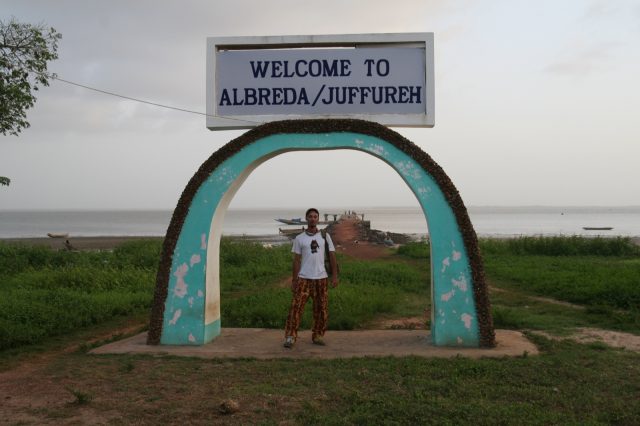
Albreda sits quietly on the northern bank of the Gambia River, a place where the pace of life seems to slow just enough to let the past breathe. The town is small, its low clay houses and narrow, grass-tufted lanes carrying the weight of centuries. The river here is wide and still, its waters reflecting the mangroves that line the shore, while the air carries the faint saltiness of the Atlantic mixed with the sweetness of ripe mangoes. There’s a sense of history here, thick and unshaken, because Albreda was once a crucial point in the transatlantic slave trade. The town doesn’t hide from its past—instead, it holds onto it, and nowhere is that more evident than at the Maadi Historical House.
The Maadi House isn’t just a museum; it’s a building that has witnessed the complexities of an era when European traders settled along the Gambia’s banks. Built in the late 18th century, it belonged to a British merchant family who conducted business with local rulers. The architecture is unmistakably colonial—thick walls of fired brick, high ceilings to keep the heat at bay, and large windows with wooden shutters that could be closed against the midday sun. Inside, the furnishings remain much as they were: heavy wooden furniture, yellowed maps, and everyday objects that tell a story of power and commerce. But what lingers most is the atmosphere, the quiet weight of a place where decisions were made that altered countless lives.
In those days, Albreda was part of a vast and brutal trade network. The Maadi House served as a residence, a warehouse, and a negotiation hall. Goods like textiles, firearms, alcohol, and glass beads were stored here, exchanged for human beings. The basement still contains the cramped rooms where enslaved people were held before being loaded onto ships. These spaces are stark, their walls bearing no inscriptions, yet they speak volumes. Standing in them, it’s impossible not to feel the absence of those who were once confined there, their voices lost to time but their presence still palpable.
Today, the Maadi House functions as a museum, though its approach is far from clinical. The exhibits don’t just present facts; they weave together personal narratives, letters from merchants, and records of transactions. There’s a deliberate focus on the stories of resistance—local people who defied the trade, hid fugitives, or helped them escape. These accounts serve as a reminder that even in the darkest chapters of history, humanity persisted. The museum doesn’t shy away from the horrors of the past, but it also doesn’t let them overshadow the resilience of those who fought back.
Beyond the house, the surrounding area holds its own echoes of history. Nearby is the old wharf, where ships once departed with their human cargo. Now, it’s a quiet spot where the only sounds are the calls of birds and the gentle lapping of the river. Yet if you listen closely, it’s easy to imagine the noise of that time—the shouts, the chains, the fear. A massive baobab tree stands near the house, its gnarled trunk and sprawling branches a living monument. Locals say it has stood there for centuries, a silent witness to everything that has unfolded beneath its boughs.
Visiting the Maadi House is less about ticking off a tourist site and more about engaging with a history that still shapes Gambia today. Many in the community regard the place as sacred, a site of remembrance for ancestors whose lives were irrevocably changed. The museum often hosts events centered on preserving cultural heritage, from storytelling sessions to discussions about the traditions of the region’s ethnic groups. For visitors, it’s a chance to move beyond textbooks and feel the weight of the past in a way that’s both personal and profound.
Albreda itself is a town that exists in two timeframes. On the surface, life moves at its own unhurried rhythm—fishermen setting out in wooden canoes, women selling fresh fruit at the market, children playing in the dust. But beneath that everyday rhythm, the memory of the slave trade remains. The people here don’t treat history as something distant; it’s part of their identity, woven into conversations and daily life. The Maadi House isn’t just a relic; it’s a living part of a culture that continues to evolve, even as it remembers.
If you find yourself in Albreda, take your time. Walk along the riverbank, where the water glints under the sun, and stop by the small shops selling handwoven fabrics and beaded jewelry. Talk to the locals—some may share stories passed down through generations, fragments of a history that’s still very much alive. The Maadi House won’t just be a stop on your itinerary; it will be a place that stays with you. Because history isn’t just about dates and events. It’s about the people who lived it, the choices they made, and the legacies they left behind.