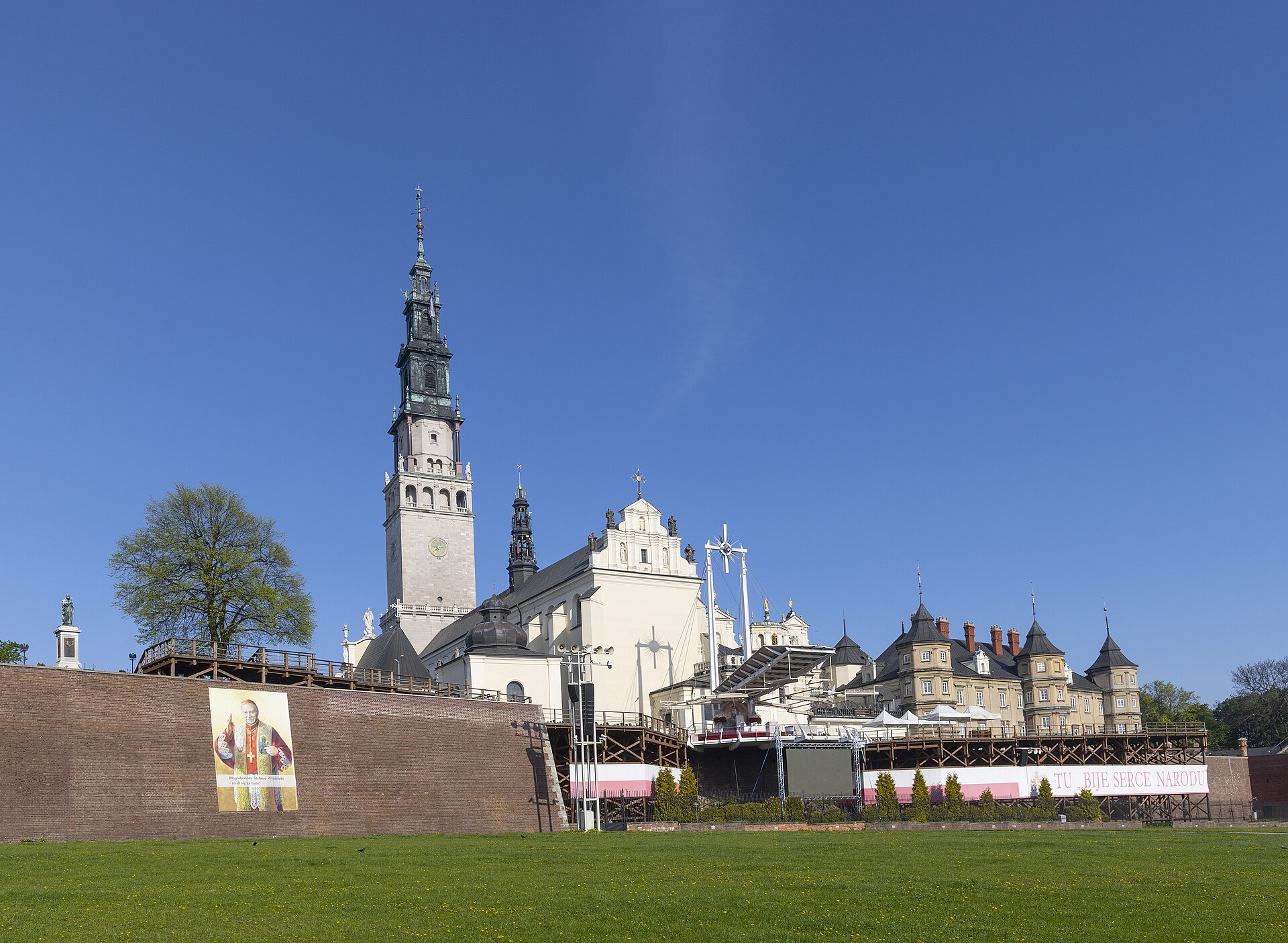
Jasna Góra is one of those rare places where history, faith, and national identity merge into something greater than the sum of its parts. Perched on a hill above Częstochowa, this monastery has stood for centuries as a silent witness to Poland’s triumphs and struggles, drawing pilgrims and travelers who come not just for spiritual solace but to step into a living tradition. The moment you approach its fortified walls, the weight of the past becomes tangible—every stone, every corridor, every quiet courtyard seems to hold the echoes of those who walked here before.
The story of Jasna Góra begins in the 14th century, when Prince Władysław Opolczyk invited the Pauline monks to establish a monastery here. From the outset, it was conceived as a fortress of faith, a place meant to endure whatever trials history might bring. Soon after its founding, the monastery became home to the Black Madonna of Częstochowa, an icon that would come to define its purpose. According to tradition, the image was painted by St. Luke on a tabletop from the Holy Family’s home, though its journey to Poland remains shrouded in legend. What is certain is that the icon quickly became a symbol of national devotion, its fate intertwined with that of the Polish people.
The architecture of Jasna Góra tells its own story, layer by layer. Over the centuries, the monastery expanded and evolved, absorbing the influences of different eras. The massive bastions and defensive walls speak of a time when the complex had to withstand sieges and invasions. The most famous of these occurred in 1655, when a small garrison of monks and townspeople held off a vastly superior Swedish force. The victory was seen as miraculous, reinforcing the belief in the icon’s protective power. Today, the walls still bear the scars of that battle—cannonballs embedded in the masonry, a silent testament to resilience.
Inside, the monastery is a world of contrasts. The basilica’s main altar, a masterpiece of Baroque artistry, gleams with gold and precious stones, its grandeur designed to lift the gaze upward. Yet just steps away, in the Chapel of the Black Madonna, the atmosphere is one of quiet reverence. The dim light of countless candles flickers against the icon’s darkened face, while pilgrims stand in silent prayer. Even those who don’t share the faith often find themselves moved by the stillness, the sense of something ancient and enduring.
Beyond its religious significance, Jasna Góra has long been a cultural treasure. The monastery houses an impressive collection of art, from paintings and sculptures to rare manuscripts and textiles. The library alone holds volumes dating back to the 16th century, some of them gifts from kings and popes. Among the most striking are the offerings left by ordinary pilgrims—simple wooden carvings, handwritten prayers, and humble tokens of devotion. These objects, though unassuming, carry the weight of personal stories, each one a thread in the larger tapestry of Polish history.
Every August, the monastery becomes the heart of one of Poland’s most profound traditions. Hundreds of thousands of pilgrims journey here, many on foot, to honor the Black Madonna. The roads leading to Częstochowa fill with people walking for days, their voices blending into a chorus of hymns and prayers. The monastery grounds transform into a vast, temporary community, where the air is thick with the scent of candles and incense. For many, this pilgrimage is more than a religious act—it’s a moment of connection, a chance to step outside the rush of modern life and find meaning in shared devotion.
Yet Jasna Góra is just as compelling on an ordinary day. The tower offers sweeping views of the city and the surrounding countryside, while the monastery gardens provide a quiet retreat. Small shops sell religious books, icons, and handmade crafts, their shelves lined with reminders of the place’s enduring influence. In the early morning or late evening, when the crowds thin, the monastery regains its original purpose—a sanctuary for reflection. It’s then that the sense of continuity is strongest, as if the centuries between past and present dissolve into something timeless.
For Poles, Jasna Góra is more than a landmark; it’s a cornerstone of national identity. The monastery has survived partitions, wars, and occupations, yet it has never lost its significance. It was here that the Black Madonna was crowned Queen of Poland, here that people have prayed for the nation’s survival in its darkest hours. Generations have found comfort within these walls, whether seeking solace for personal loss or strength in times of crisis. In that sense, Jasna Góra is not just a monument but a living piece of history—one that continues to shape the way Poles see themselves and their place in the world.