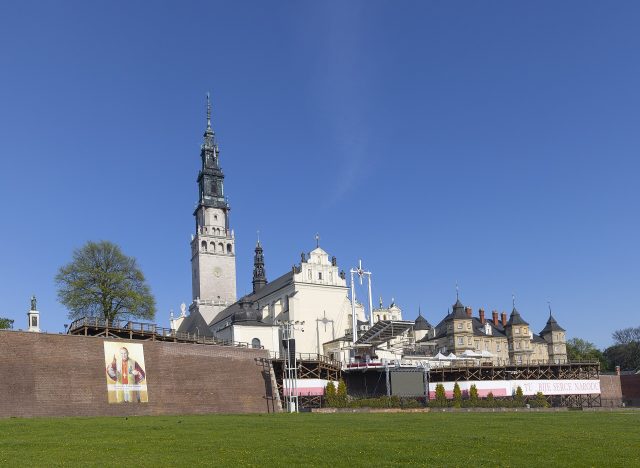
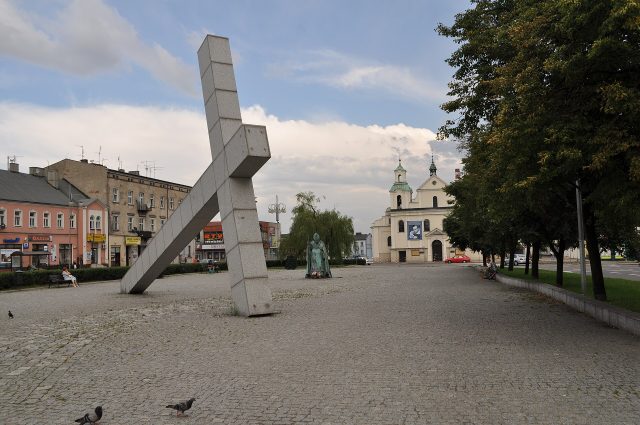
Częstochowa’s streets hum with faith. Most travelers head straight to Jasna Góra, the monastery that draws pilgrims from every continent. But on the quieter edges of the city, the Basilica of the Holy Family stands—a place locals keep to themselves. No towering spires or golden domes announce it. It waits, offering stillness instead.
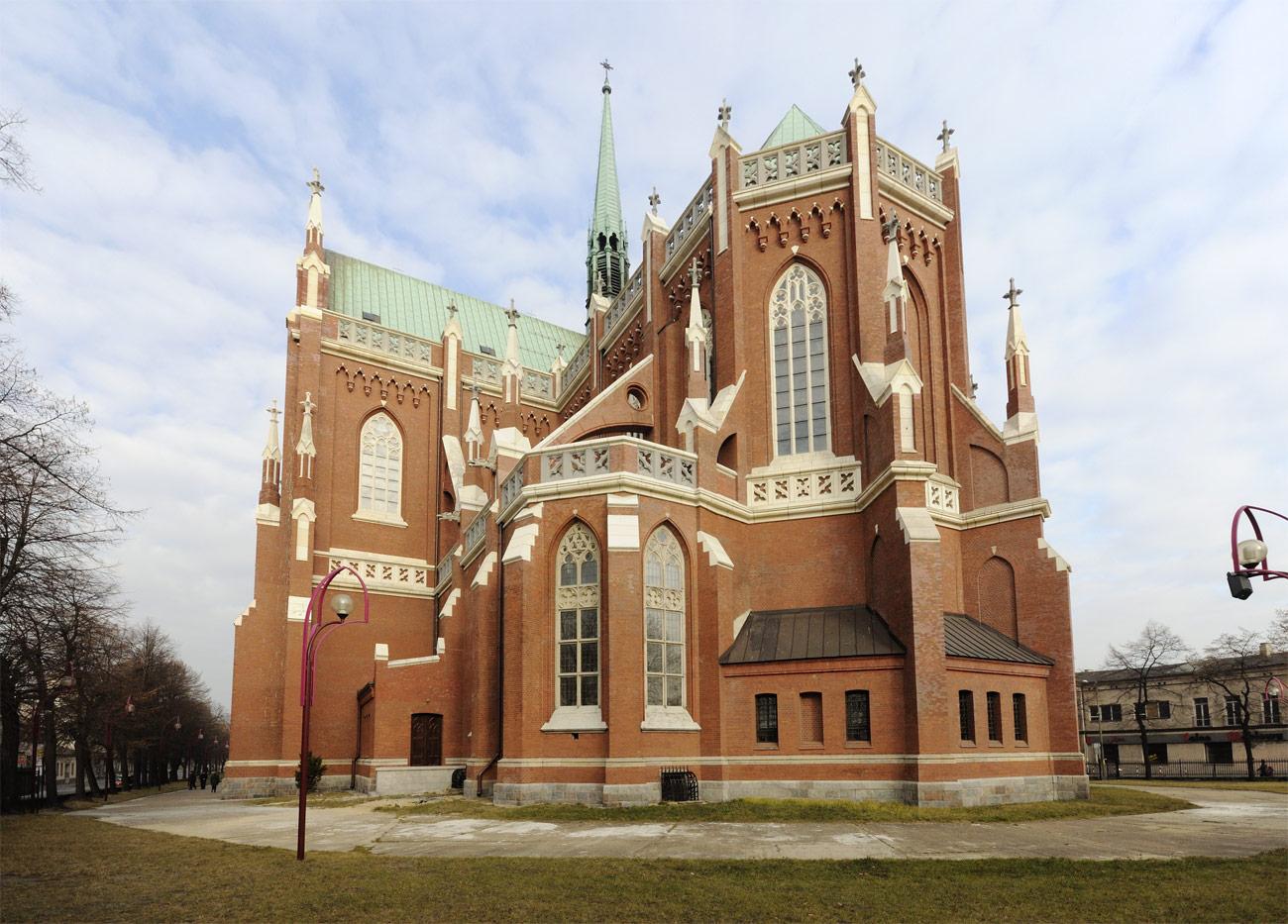
The basilica was built in the early 1900s as a parish church for Częstochowa’s residents. Its design reflects that simplicity. The exterior mixes neo-Gothic and neo-Romanesque elements, with pointed arches and buttresses that ground it in the neighborhood. The brickwork doesn’t compete with the sky; it feels built to endure. Inside, high vaulted ceilings rest on pale stone columns. Light filters through stained glass in soft hues. There’s no gold leaf or marble excess—just space that feels both vast and intimate.
The main altar is carved from marble, with reliefs of biblical scenes. At its center stands the Holy Family, the parish’s focal point. Smaller chapels line the nave, each dedicated to a saint or moment in Christian history. One holds relics of Saint Hyacinth of Poland, a 13th-century Dominican friar who spread devotion to the Virgin Mary in the region. These chapels aren’t ornate. They exist for prayer, not spectacle. The air carries the scent of incense and candle wax, lingering from decades of services.
During World War II, the basilica survived when much of Częstochowa did not. Locals say German forces used it for storage but left the interior untouched. Under communist rule, when religious life was restricted, the church remained open. For many, it became a symbol of resilience—a place where faith persisted despite outside pressures. That quiet defiance remains today, in the way the community gathers each week.
The Basilica of the Holy Family is part of the neighborhood. On Sundays, the pews fill with parishioners singing Polish hymns. Even if you don’t understand the words, the rhythm of the service is familiar—the murmurs of prayer, the solemnity of the liturgy, the organ’s deep resonance. There’s no rush, no performance. Just people marking time in a place that has seen generations pass.
Outside, a small park surrounds the basilica. In summer, the trees offer shade. In autumn, leaves carpet the paths. Winter transforms it: snow dusts the rooftops, and warm light spills from the church windows. Parents bring children here. Elderly couples sit on benches. The basilica isn’t separate from the city; it’s woven into its fabric.
This church isn’t famous. It doesn’t claim architectural marvels or miracles. What makes it special is how it feels lived-in. Baptisms, weddings, funerals—the ordinary moments of a community. The basilica doesn’t ask for admiration. It simply exists, a place for comfort or reflection. In an age where so many places are staged for tourists, its authenticity stands out. Here, you’re not an observer. You’re a guest, stepping into a rhythm that hasn’t changed in over a century.
If you visit Częstochowa, take the short trip to the Basilica of the Holy Family. It’s not a must-see attraction. It offers something else: a reminder that faith isn’t always about spectacle. Sometimes, it’s about quiet moments, small acts of devotion, a place holding a community’s history without fanfare. You might come for the architecture or the stories, but you’ll leave with something less tangible—a sense that some places are meant to be felt.