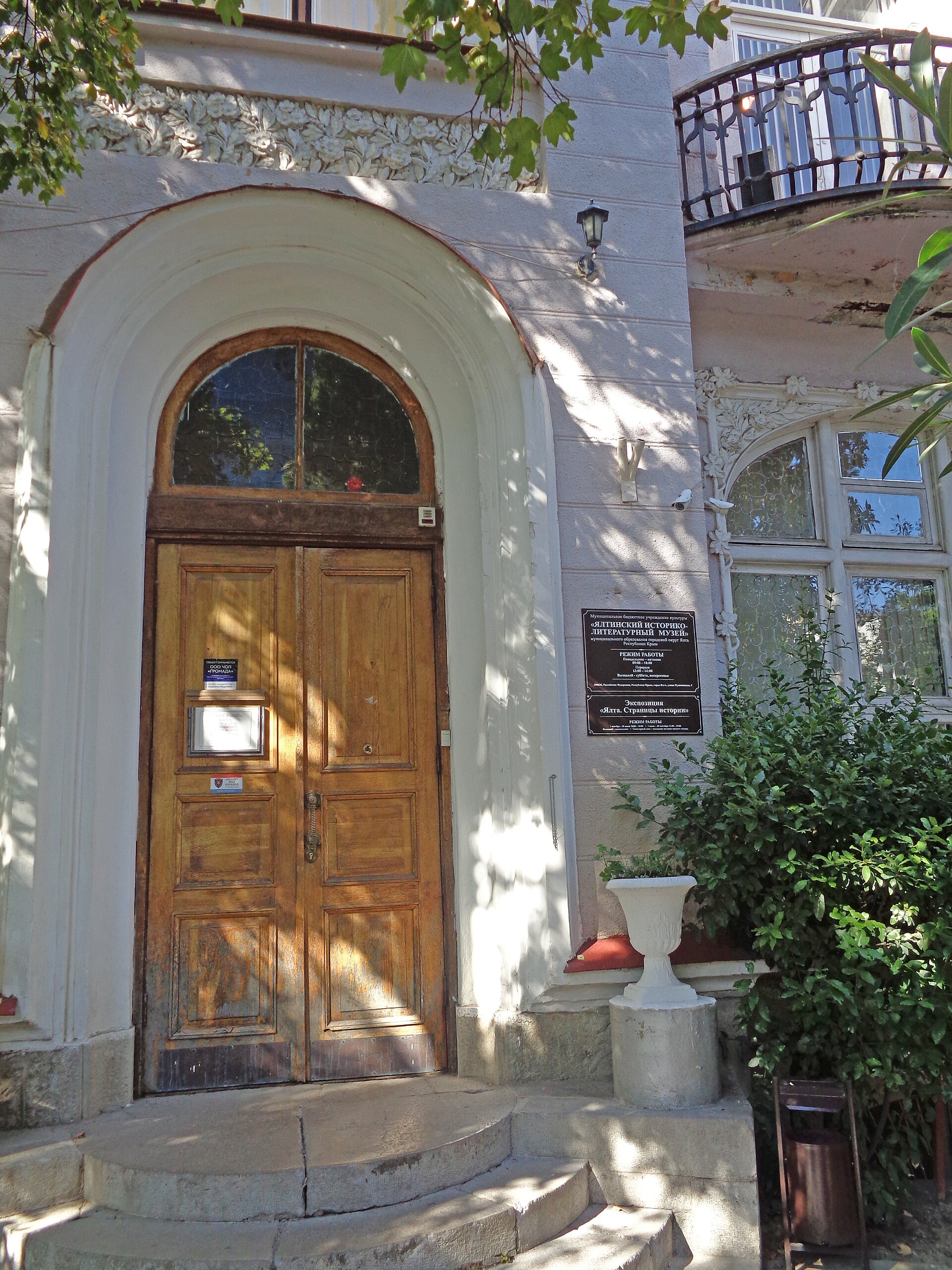
The Yalta Historical and Literary Museum sits quietly on Gogol Street, a place where the past feels closer than it should. The building itself is a relic of another era, constructed in the late 19th century as the home of merchant Nikolai Dmitrievich Stakheev, a man whose name is woven into the story of Crimea’s southern coast. The architecture carries the weight of its time—tall ceilings, large windows framed by intricate stucco, and interiors that still whisper of the days when Yalta was more than just a resort. It was a gathering place for those who shaped culture, politics, and art, a town where ideas moved as freely as the sea breeze.
The museum’s collection didn’t begin with its official opening in the mid-20th century. Its roots stretch further back, to a time when Yalta was a magnet for writers, artists, and thinkers. The exhibits are built around documents, photographs, and personal belongings that trace the city’s evolution, but the heart of the museum lies in its connection to literature. Anton Chekhov lived here for years, and the museum preserves that bond with care. His letters, the desk where he wrote, the books from his personal library—these aren’t just artifacts; they’re fragments of a life lived in this very place. Chekhov didn’t just visit Yalta; he became part of its rhythm, and the museum ensures that rhythm isn’t forgotten.
But Chekhov isn’t the only literary figure whose presence lingers here. The museum holds traces of others who passed through Yalta, leaving behind more than just memories. Maxim Gorky worked on *The Lower Depths* during his stay, his notes and letters offering a glimpse into the creative process. Alexander Kuprin’s impressions of Crimea’s landscapes and people are preserved in his correspondence, while Ivan Bunin’s time in the city is documented in ways that reveal how deeply the place influenced him. These aren’t just stories about writers—they’re stories about how Yalta became a crossroads for those who shaped Russian literature.
Beyond literature, the museum also tells the story of Yalta itself, from its humble beginnings to its rise as one of the most famous resorts in the Russian Empire and later the Soviet Union. Old maps, photographs of streets and promenades, and documents about the construction of early sanatoriums and hotels paint a picture of a city in constant transformation. The exhibits don’t just show how Yalta changed; they explain why. The pre-revolutionary elegance, the Soviet-era pragmatism, and the modern-day identity all coexist here, offering visitors a chance to understand the forces that shaped the city.
The museum’s collection of everyday objects brings the past to life in unexpected ways. Furniture, clothing, jewelry, and household items from different eras reveal how people lived, what they valued, and how their world differed from ours. A dress from the late 1800s, a pocket watch, a hand-painted tea set—these aren’t just relics; they’re silent witnesses to the lives of those who once called Yalta home. They tell stories of wealth and simplicity, of leisure and labor, of a time when the city was still finding its place in the world.
What makes the museum special is its refusal to be a static monument to the past. It remains alive, hosting exhibitions on contemporary authors, artists, and historical events. Literary evenings, lectures, and discussions bridge the gap between then and now, inviting visitors to engage with history in a way that feels immediate. The museum doesn’t just preserve the past; it lets it breathe, ensuring that the stories it holds remain relevant.
Walking through the museum’s halls, it’s easy to imagine the conversations that once filled these rooms. The clink of tea cups during an afternoon gathering, the scratch of a pen as Chekhov worked on a new story, the animated debates about art and politics that must have echoed through the house. The museum doesn’t dictate how you should feel about the past; it simply offers the space to step into it, to see the connections between then and now.
This isn’t a place for quick visits. It rewards those who take their time, who linger over old photographs, who read the letters and let the words sink in. The quiet of the rooms, the weight of the objects, the sense of history pressing in from all sides—it all adds up to something more than a collection of exhibits. It’s a chance to understand how Yalta became the city it is today, not through grand declarations, but through the small, human details that make history real.
The Yalta Historical and Literary Museum doesn’t claim to have all the answers. It doesn’t need to. Its strength lies in what it leaves unsaid, in the questions it invites you to ask, in the way it lets the past speak for itself. Whether you’re drawn by literature, history, or simply curiosity, the museum offers something rare: a quiet corner of the world where the past isn’t just remembered—it’s still alive.