Gulbene’s railway station is one of those places that feels suspended in time. Tucked away on the edge of this small Latvian town, it stands as a quiet reminder of an era when railroads were more than just a means of travel—they were symbols of progress, connection, and the promise of distant horizons. Built in the early 20th century, the station has retained its original character, looking much as it did a hundred years ago when the first steam whistle echoed through its halls.
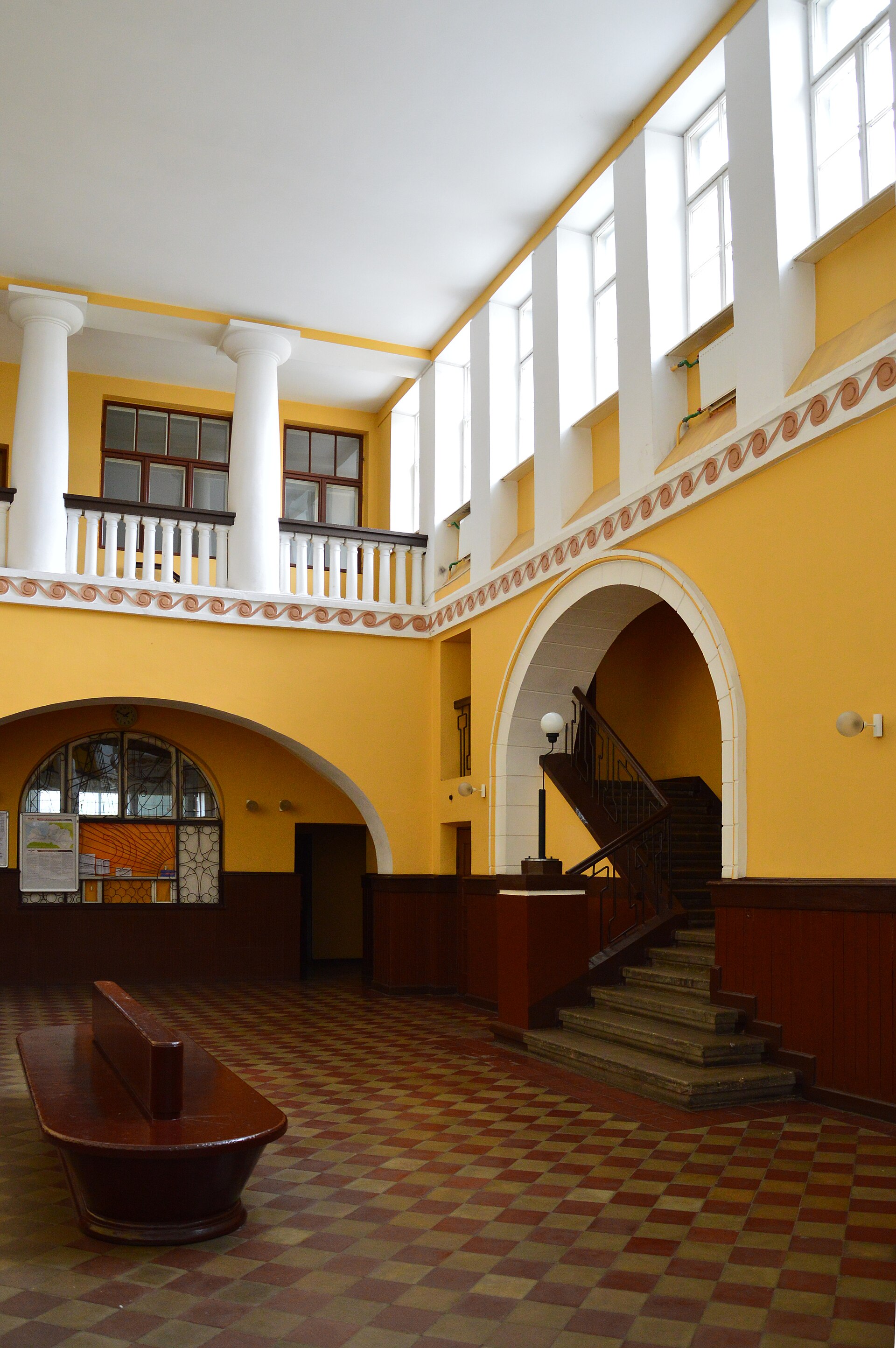
The architecture is a blend of practicality and understated elegance. The brick walls, tall arched windows, and sturdy wooden roof beams give the building a sense of solidity, as if it were built to endure. Inside, traces of its past remain: wooden paneling, ornate ceiling moldings, and vintage light fixtures that hint at the bustle that once filled the space. Passengers rushing to catch trains, porters hauling luggage, the murmur of announcements—all of it seems just out of reach, lingering in the air like an old memory.
Gulbene’s role as a railway hub wasn’t accidental. In the late 19th and early 20th centuries, this region was expanding rapidly, and the railroad became a lifeline for its economy. The station was part of a broad-gauge line connecting Riga to Pskov, with later branches extending to other destinations. For locals, it was more than just a transport hub—it was where life’s journeys began and ended. Students left for school, workers headed to jobs in distant cities, and families gathered to welcome loved ones home.
Today, the station still serves its purpose, though far less frequently than in its heyday. Trains come and go, but the building itself feels alive in a different way. The waiting hall occasionally fills with passengers, and the platform still echoes with the occasional whistle of a shunting locomotive. What’s striking is how seamlessly the station fits into modern life—cars park nearby, locals walk past without a second glance, and yet it remains a quiet witness to the town’s history.
For those who appreciate history and architecture, Gulbene’s station is a hidden gem. It lacks the grandeur of some of Europe’s more famous terminals, but that’s part of its charm. There are no crowds of tourists, no commercial hustle—just a sense of stillness and the feeling that time moves differently here. You can study the old photographs on the walls, depicting steam engines and uniformed railway workers, or simply sit on a bench and watch the occasional train roll by.
The station’s surroundings add to its appeal. Gulbene is a small town where life moves at a slower pace, where everyone knows their neighbors. The streets around the station are lined with wooden houses, and beyond them stretch the forests and fields that define this part of Latvia. A short walk away, you might find overgrown railway tracks and abandoned depots where steam engines were once repaired. It all contributes to an atmosphere of quiet nostalgia, a sense of stepping into a moment frozen in time.
This isn’t just a historic building—it’s a living piece of the past. The station has weathered wars, political upheavals, and economic shifts, yet it remains largely unchanged. Standing here, you can almost hear the echoes of the past: the greetings and farewells, the steam whistles, the conversations of railway workers in their uniforms. It’s a place where history isn’t confined to museums but exists in the everyday.
For travelers who prefer to explore beyond the usual tourist routes, Gulbene and its station offer something rare. There are no crowds, no must-see attractions—just the quiet authenticity of a place that has endured. It’s a spot for those who value stillness, who want to touch history without the barriers of glass cases or "Do Not Touch" signs. Come, sit on the platform, listen to the sound of a departing train, and you’ll understand why this station still matters—to the people who call Gulbene home and to those who stumble upon it by chance.