Zrenjanin’s city park is one of those quiet, unassuming places that slowly grows on you. It doesn’t announce itself with grand monuments or flashy attractions, but rather settles into the rhythm of the town like an old friend who’s always there when you need a moment of calm. Stretching along the banks of the Begej River, the park follows the gentle curve of the water, its paths weaving between mature trees, open lawns, and the occasional bench worn smooth by years of use. Locals come here to walk their dogs, meet friends for coffee at the riverside café, or simply sit and watch the slow drift of the river. There’s no rush here—just the steady hum of life in a provincial Serbian town.
The park’s origins trace back to the late 19th century, when Zrenjanin, then known as Veliki Bečkerek, was part of the Austro-Hungarian Empire. The town was flourishing as a center of trade and industry, and the park was conceived as a green escape for its growing bourgeoisie. The design reflects the era’s romantic ideals of nature—meandering paths, carefully placed trees, and open spaces meant for leisurely strolls. Over the decades, the park has seen wars, regime changes, and economic shifts, but it has endured, adapting to each new chapter of the town’s history. The old bandstand near the river, though no longer used for concerts, still stands as a reminder of a time when summer evenings were filled with music.
What makes the park special is how deeply it’s woven into the daily life of Zrenjanin. It’s not just a place to pass through, but a space where the town’s routines unfold. In the mornings, elderly men gather on the benches to play chess or debate politics, their voices blending with the rustle of leaves. Children race along the paths on bicycles, while parents push strollers or sip coffee at the small kiosks that dot the park. On weekends, the atmosphere shifts slightly—families spread out picnics on the grass, teenagers lounge in groups, and the occasional street musician sets up near the river. The park doesn’t have a strict schedule; it simply absorbs whatever the day brings.
The architecture around the park tells its own story. The buildings that line its edges are a mix of styles, reflecting the town’s layered history. There’s the grand, slightly faded elegance of the old Austro-Hungarian villas, their facades adorned with ornate balconies and wrought-iron details. Nearby, socialist-era apartment blocks rise in stark contrast, their utilitarian lines a testament to a different era. The park acts as a buffer between these architectural worlds, softening the edges of the town’s past and present. Even the river itself, the Begej, has played a role in shaping Zrenjanin’s identity. Once a vital trade route, it’s now a quiet presence, its waters reflecting the changing seasons.
One of the park’s most understated features is its trees. Planted over a century ago, they’ve grown into towering specimens that provide shade in the summer and a canopy of gold and red in the autumn. Some are native to the region, while others were introduced during the Austro-Hungarian period, their origins a quiet nod to the empire’s reach. Walking beneath them, it’s easy to forget you’re in the middle of a town. The air is cooler here, the sounds of traffic muffled by the rustling leaves. In the spring, the park bursts into color—cherry blossoms, magnolias, and tulips adding splashes of pink and white to the green. It’s a fleeting beauty, but one that locals anticipate each year.
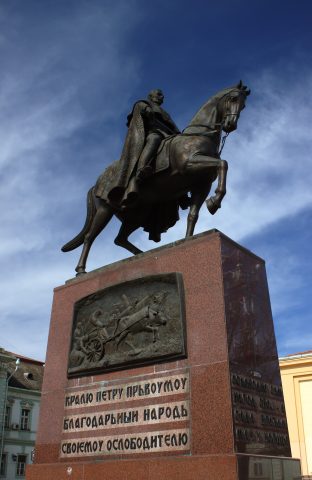
The park also serves as a kind of open-air gallery for the town’s artistic and cultural life. Every now and then, sculptures appear along the paths—some permanent, others temporary installations for local festivals. The most notable is a bronze figure near the river, a tribute to the town’s literary heritage. Zrenjanin has produced its share of writers and poets, and the park, with its quiet contemplative atmosphere, feels like a fitting place to honor them. During the summer, the park occasionally hosts small concerts or theater performances, though these are low-key affairs, more about community than spectacle.
What’s striking about Zrenjanin’s city park is how little it has changed over the years. Unlike parks in larger cities, which often undergo frequent redesigns or commercialization, this one has retained its modest, lived-in character. There are no fancy playgrounds or high-end restaurants here—just a few simple cafés, a couple of kiosks selling ice cream, and the occasional food stand during festivals. The benches are wooden, the paths are paved with worn cobblestones, and the riverbank is left mostly natural, with reeds and wildflowers growing along the water’s edge. It’s not pristine, but that’s part of its charm. The park feels like a shared backyard, a place where everyone knows the rules without them needing to be written down.
For visitors, the park offers a glimpse into the slower, more deliberate pace of life in a Serbian provincial town. It’s not a place you’d travel across the country to see, but if you find yourself in Zrenjanin, it’s worth spending an hour or two wandering its paths. Sit by the river and watch the ducks glide past, or strike up a conversation with one of the regulars on the benches. The park doesn’t demand attention; it simply invites you to slow down and notice the small things—the way the light filters through the leaves, the sound of laughter from a nearby café, the quiet rhythm of a town that has learned to take its time. In a world that often feels rushed, places like this are a reminder of what it means to simply be.