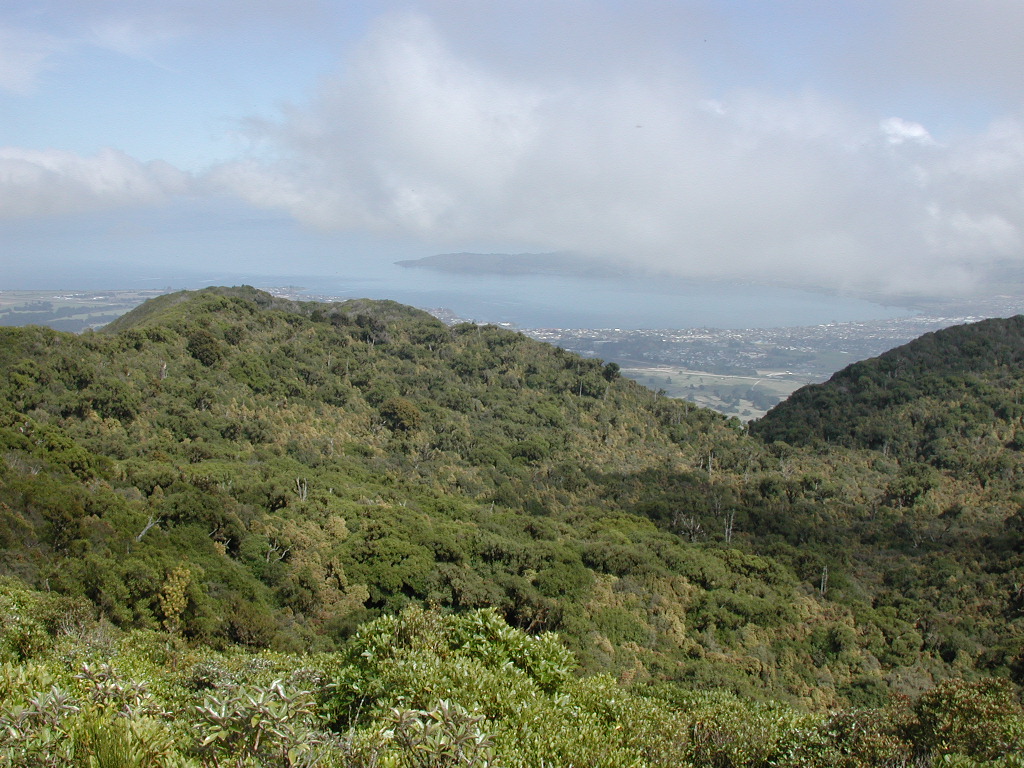
Mount Tauhara stands quietly above Lake Taupō, its forested slopes rising like an ancient sentinel. At just over a thousand metres high, it’s not the tallest peak in the region, but its presence is unmistakable. On clear days, the view from the summit stretches far beyond the lake—its vast blue expanse covering more than six hundred square kilometres—to the distant volcanic cones of Tongariro, Ngāuruhoe, and Ruapehu. These mountains, part of a national park known for its raw beauty, frame the horizon like guardians of a landscape shaped by fire and time.
For the Māori people, Tauhara is more than a mountain. It holds stories of arrival, conflict, and connection, woven into the land over centuries. Known as Tauhara-o-te-rangi, or the peak that touches the sky, it features in oral traditions as a place of significance for the first Polynesian settlers. Some trails and areas remain off-limits out of respect for its spiritual importance, a reminder that this is a living landscape, not just a backdrop for visitors. The mountain’s name itself carries weight, hinting at its role in the narratives that define the region’s identity.
The most common route to the summit begins at the base, where a well-trodden path winds upward through dense forest. The climb isn’t steep, but it demands steady effort—around two hours each way. Roots twist across the trail, rocks jut from the earth, and the ground can be slick after rain, so sturdy footwear is essential. The air is thick with the scent of damp foliage and pine, and sunlight filters through the canopy in shifting patterns. Along the way, towering podocarps and southern beech trees stand as silent witnesses to the passage of time.
About halfway up, the trail opens onto a small clearing where walkers often pause. From here, Lake Taupō reveals itself in stages: silver in the morning light, deep blue by midday, and gilded at dusk. When the wind picks up, whitecaps ripple across the water, but on still days, the surface becomes a perfect mirror, reflecting the sky above. Those who make the ascent at dawn sometimes see mist rolling down the slopes, slowly unveiling the world below. It’s a quiet spectacle, one that feels almost private.
The summit isn’t a jagged peak but a gentle, grassy plateau, unmarked by viewing platforms or signs. There’s nothing here but space—open, uncluttered, and still. On clear days, the distant plume of Ngāuruhoe’s steam serves as a reminder of the land’s restless energy. Most visitors find themselves alone at the top, though occasionally another hiker appears, equally content with the silence. Locals often say the real reward isn’t the view, but the chance to sit, listen to the wind, and feel the weight of the place.
For those who prefer not to walk, a road leads partway up the mountain to a radio tower. The view from there is impressive, though not as sweeping as from the summit. Even a short stroll along the lower slopes offers a sense of Tauhara’s character—its quiet strength, its layers of history. Below, farms and small settlements dot the landscape, their rhythms tied to the seasons. Life here moves at a different pace, one that feels far removed from the rush of cities.
Tauhara doesn’t announce itself like the more famous landmarks of the North Island. There are no crowds, no souvenir stalls, no guided tours. It’s a place that reveals itself slowly, rewarding those who take the time to look. That might be why people return—drawn back by the quiet, the space, the way the mountain seems to hold its breath. In a world that rarely stands still, Tauhara offers something rare: a moment of stillness, a connection to something older than memory.