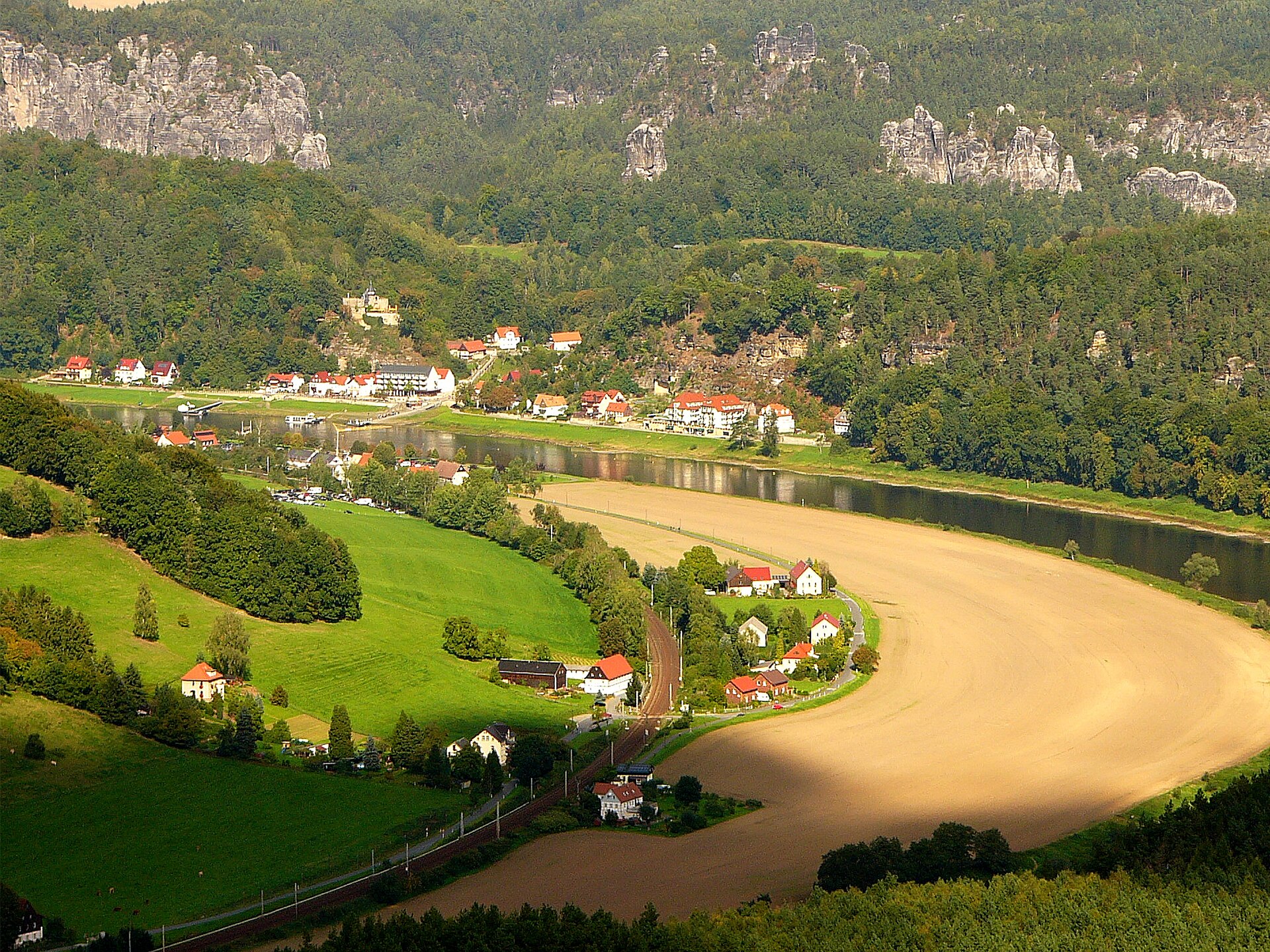
Lilienstein is one of those places that lingers in your memory long after you’ve left. Rising abruptly from the Elbe Valley, this flat-topped sandstone monolith dominates the landscape of Saxon Switzerland, its sheer cliffs and rugged profile visible from miles away. It’s not the tallest peak in the region—nowhere near the heights of the Alps—but here, among the labyrinthine rock formations and dense forests, it commands attention. The climb isn’t just about reaching the summit; it’s about the slow reveal of the landscape, the way each turn in the trail offers a new perspective on the river winding below, the distant hills, and the otherworldly rock towers that define this corner of Germany.
The history of Lilienstein is as layered as the sandstone beneath your feet. Centuries ago, its strategic position made it an ideal site for a fortress, and by the 12th century, a castle stood watch over the Elbe, controlling trade routes and offering protection to those who held it. The ruins that remain today are little more than fragments—crumbling walls, the outline of foundations—but they hint at the power this place once wielded. Over the years, the castle changed hands multiple times, was destroyed and rebuilt, only to be abandoned for good in the 17th century. Now, a small memorial marker is all that commemorates its existence, though the real monument is the view: from here, you can almost imagine the medieval sentries scanning the horizon for approaching threats, the river below bustling with merchant boats and travelers.
The ascent begins deceptively gently, winding through a quiet forest where the only sounds are the rustle of leaves and the occasional call of a bird. But soon, the trail grows steeper, the path narrowing as it snakes between boulders and up rocky inclines. Metal railings and carved steps offer some assistance, but there’s no avoiding the fact that this is a climb that demands effort. The most challenging section is the so-called Devil’s Staircase, a near-vertical scramble up a sheer rock face where you’ll need both hands and a steady nerve. Yet the reward comes quickly: after the last push, the trees thin out, and suddenly, the entire Elbe Valley unfolds beneath you.
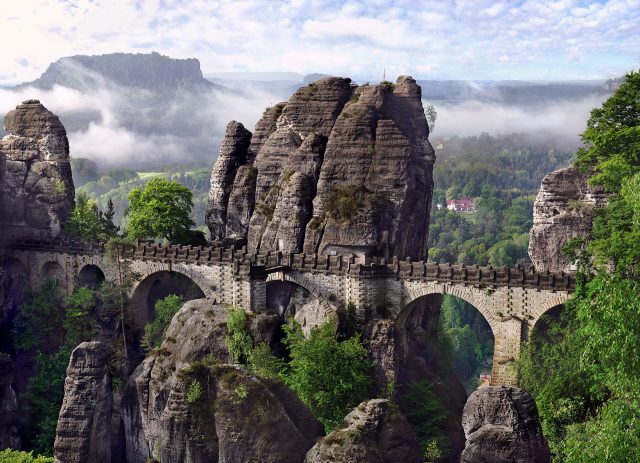
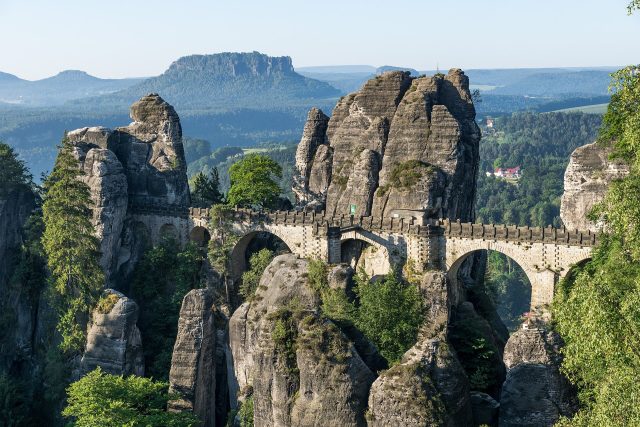
From the summit, the view is worth every strained muscle. The Elbe curves lazily around the base of the mountain, its waters glinting in the sunlight, while across the valley, other iconic peaks rise like sentinels—Bastei with its dramatic bridge, the jagged spires of Schrammsteine, and the imposing fortress of Königstein perched atop its own plateau. On clear days, the distant Ore Mountains shimmer on the horizon. In summer, the summit is lively with hikers unpacking picnics, strumming guitars, or simply soaking in the scenery. Winter transforms the place entirely: the crowds vanish, the wind howls through the rocks, and the ruins of the old castle stand silent under a dusting of snow.
What makes Lilienstein special isn’t just its height or its history, but the way it embodies the raw, untamed beauty of Saxon Switzerland. The sandstone here is ancient, formed over millions of years when this region was submerged beneath a shallow sea. Over time, wind and water sculpted the rock into the fantastical shapes we see today—towers, arches, and isolated monoliths like Lilienstein itself. Geologists call it an inselberg, a remnant of erosion that resisted the forces that wore away the surrounding landscape. For most visitors, though, the science is less important than the sense of standing on something primordial, a place where the earth’s history is written in every layer of stone.
Unlike many popular hiking destinations, Lilienstein offers no shortcuts. There are no cable cars or funiculars, no paved paths or visitor centers. The climb is a test of endurance, and while the trails are well-maintained with safety railings and clear markers, the experience remains fundamentally wild. This is especially true in autumn, when the surrounding forests blaze with color, the air turns crisp, and the paths are carpeted with fallen leaves. The crowds thin out, and for a few weeks, the mountain feels like a secret again, a place where you can lose yourself in the quiet rhythm of the woods.
For locals, Lilienstein is more than just a scenic spot—it’s a place woven into personal histories. Many Saxons have memories of climbing it as children, or returning as adults with their own families. Weekends often bring multi-generational groups to the summit, grandparents pointing out landmarks to wide-eyed grandchildren, parents snapping photos of their kids perched on the rocks. Some come back year after year, drawn by the changing seasons: the burst of spring wildflowers, the golden light of summer evenings, the fiery foliage of autumn, or the stark beauty of winter’s frost.
There’s something about Lilienstein that stays with you. Maybe it’s the physical challenge of the climb, the way your legs burn on the final ascent, or the quiet satisfaction of standing on the summit, looking out over a landscape that feels untouched by time. Maybe it’s the sense of connection—to the people who’ve stood here before, to the river winding below, to the slow, patient work of geology. Or maybe it’s simply the way the place strips away the noise of everyday life, leaving only the wind, the rocks, and the vast, open sky. Whatever it is, Lilienstein doesn’t just offer a view—it offers a moment of clarity, a reminder of how small we are in the grand scheme of things, and how extraordinary it is to be here at all.