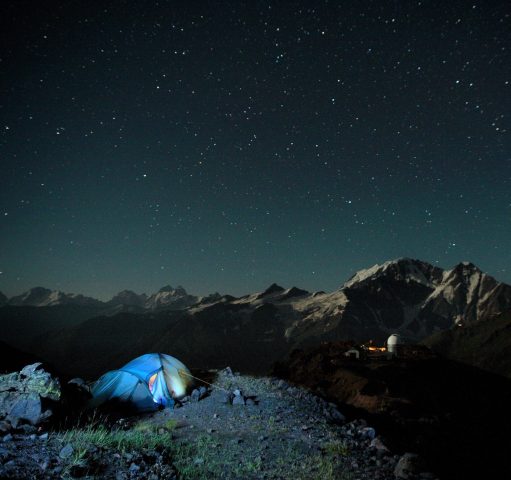
Cheget rises above the Baksan Valley in the Caucasus, a mountain that commands attention from the moment you see it. Its slopes are steep, almost vertical in places, and the summit often disappears into the clouds, even on clear days. This isn’t a mountain you climb for postcard views—though they exist here in abundance. Cheget is for those who want more than scenery; it’s a place where the raw power of the mountains makes itself felt with every step. The air is thinner, the terrain unforgiving, and nature sets the rules.
The mountain’s modern identity began in the mid-20th century, when the first ski trails were carved into its slopes. Before that, it was known mostly to local herders and the occasional traveler who made the journey on foot or horseback. Soviet-era development brought cable cars, hotels, and cafes, but even now, Cheget retains a wildness that’s hard to find elsewhere. Perhaps it’s the proximity to Elbrus, towering nearby like a silent guardian, that keeps the place from feeling too tamed. No matter how much infrastructure exists, the mountain always reminds you who’s in charge.
The architecture of Cheget isn’t about buildings—it’s about the engineering that blends into the landscape. The cable cars, especially the famous pendulum lift, aren’t just transportation; they’re part of the experience. The ride up takes about twenty minutes, enough time to adjust to the altitude and take in the stark beauty of the surroundings. Below, dense forests and rushing streams give way to rocky slopes and patches of snow that linger even in summer. The contrast is striking: lush greenery at the base, barren stone and ice near the top.
In winter, Cheget becomes a magnet for skiers and snowboarders who crave a challenge. Unlike the wide, groomed runs of European resorts, the trails here are narrow and steep, demanding skill and concentration. A misstep can have serious consequences, which is exactly why experienced riders keep coming back. The Krugovzor trail, for instance, is notorious for its difficulty. Summer transforms the mountain into a hub for climbers and trekkers. Many routes to Elbrus start here, along with paths leading to glaciers and high-altitude lakes. Even a short hike in the area leaves a lasting impression—the air is crisp and clean, and the views make you feel like you’re standing at the edge of the world.
But Cheget isn’t just about adrenaline. There’s a quiet rhythm to life here, a balance between the harshness of the mountains and the warmth of human presence. At the base, small cafes and guesthouses offer a place to unwind after a day on the slopes. A cup of tea with local honey or a plate of Ossetian pies can feel like a reward. As evening falls and the sun dips behind Elbrus, the valley grows dim, but the lights from the cable cars twinkle like stars, a reminder that you’re not alone in this high-altitude world. The locals—Kabardians, Balkars, Russians—are reserved but welcoming. There’s an unspoken understanding that this isn’t a place for loud displays or carelessness; the mountains demand respect.
Over the years, Cheget has become more than just a sports destination. In Soviet times, it was a backdrop for films about mountaineering, and in the 1990s, it drew those seeking freedom and new experiences. Today, it’s a crossroads for different kinds of travelers: professionals and amateurs, climbers and tourists, locals and visitors. You might see a family trying skiing for the first time or a group of seasoned alpinists preparing for an Elbrus ascent. Everyone finds something here—whether it’s the thrill of the descent, the peace of the highlands, or simply the chance to disconnect from the noise of everyday life.
Cheget doesn’t tolerate a casual attitude. It’s not a place you visit for a quick photo op and then leave. The mountain asks for time and patience. Even if you don’t plan to climb to the summit, spending a few days here lets you acclimate, settle into the pace of mountain life, and understand why people return year after year. Maybe it’s the sense of freedom that draws them—the way the altitude strips away distractions, leaving only the essentials. Up here, the world feels simpler, and the horizon stretches further, not just in distance but in possibility.
The weather on Cheget is as unpredictable as the mountain itself. Even in summer, snow can fall without warning, and the wind can knock you off your feet. Winters are bitter, with temperatures often dropping below -20°C, and blizzards can erase trails in hours. But that unpredictability is part of the appeal. No two days are the same: one morning might bring sunshine and calm, the next a storm rolling in. Every ascent is different, and you never know what you’ll find at the top. That uncertainty is why Cheget remains a favorite for those who seek more than just beauty—they come for the challenge, the test of endurance, and the chance to prove something to themselves.