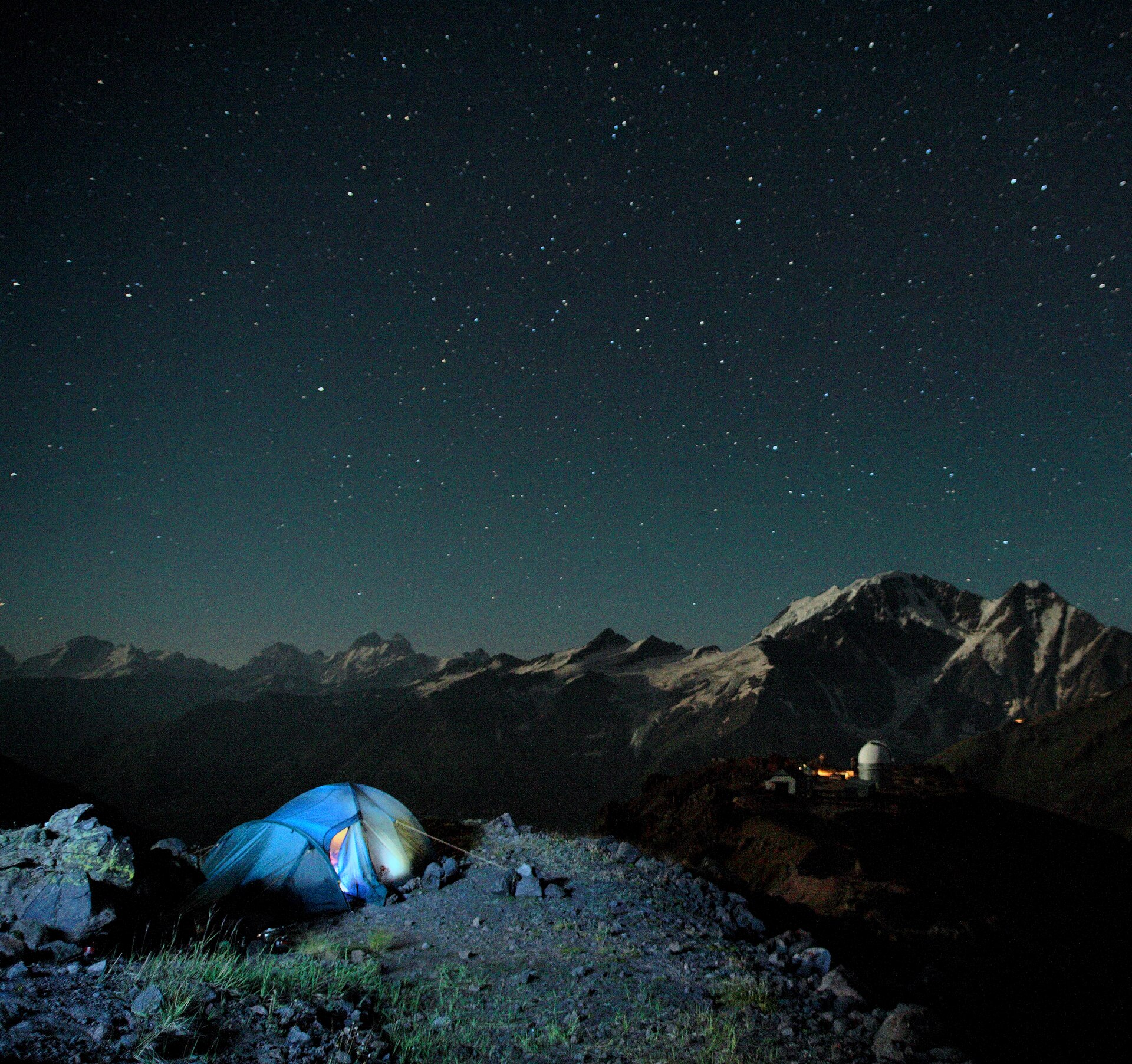
Terskol Peak Observatory sits on the slopes of Mount Elbrus, where the air is thin and the sky stretches endlessly. It’s not a place for those who prefer easy hikes or crowded viewpoints. The observatory calls to people who want more than just a mountain panorama—they come for the sky itself. At over 3,000 meters, the journey is demanding: a winding drive through the Caucasus foothills, a cable car ride upward, and then either a steep hike or a rough ride in an off-road vehicle. The moment you arrive, the effort feels worth it. The view isn’t just beautiful—it’s as if the world has shifted, and the stars are suddenly within reach.
The observatory’s origins
In the mid-20th century, Soviet scientists needed a place with clear skies and minimal light pollution. The Caucasus Mountains, with their dry air and high altitude, were ideal. By the 1980s, the first telescopes were installed. Over time, the site expanded into a research complex where scientists now study distant galaxies, solar activity, and near-Earth asteroids. The observatory isn’t just equipment—it’s a working space where discoveries happen under some of the clearest skies on Earth.
Built for the sky
The buildings here are practical, not pretty. Low and sturdy, they’re designed to endure harsh mountain weather. Concrete and metal blend into the rocky terrain, while the telescope domes rise above like white sentinels, turning slowly to track the stars. Inside, precision matters. Floors are isolated to prevent vibrations, and the air is controlled to protect sensitive instruments. Walking through the observatory feels like entering a spaceship stranded in the mountains—a place where human engineering meets the vastness of space.
The real wonder isn’t the architecture or the technology. It’s the sky. At this height, the stars aren’t just visible—they’re vivid. The Milky Way isn’t a faint glow but a bright, dense band of light. Planets hang like jewels in the dark. On clear nights, the staff sometimes lets visitors look through the telescopes. Seeing the Moon’s craters, Saturn’s rings, or the colors of a distant nebula up close makes the universe feel both immense and intimate.
A different rhythm
Life here follows the pace of research. Days are quiet—scientists analyze data or maintain equipment. Nights are for work. Telescopes lock onto targets, cameras record images, and astronomers study the light from distant stars. There’s no rush, no city noise, just the wind and the occasional murmur of voices. Time moves differently here, marked by the slow turn of the heavens.
Terskol Peak isn’t just a scientific outpost. The isolation, the altitude, and the scale of the night sky make you feel both small and connected. That’s why it draws more than just scientists. Artists, writers, and philosophers have come here, seeking the quiet revelation that comes from staring into the infinite. The mountains, the stars, and the silence create a space where thoughts sharpen and the world feels a little clearer.
Not everyone will make the trip. The road is long, the conditions basic, and the weather unpredictable. But those who do come rarely regret it. Terskol Peak Observatory isn’t just a location—it’s a threshold. Stand here, with the Earth beneath you and the universe above, and the moment feels impossible to ignore. Some places change how you see the world. This is one of them.