Mount Elbrus
Elbrus doesn’t just tower over the Caucasus—it reshapes the horizon. The twin summits, West Peak (5,642 meters) and East Peak, rise above the ridges, their snow-covered domes visible from valleys away. As Russia’s highest point, it also marks Europe’s tallest peak if you count the Caucasus as the continent’s edge. Glaciers carve the mountain, feeding the Kuban, Malka, and Baksan rivers, which have shaped the land for centuries.
The southern slope offers an unexpected ease of access. From Terskol or the Azau meadows, cable cars climb in stages. The first lift stops at Krugozor, where the air thins. The second reaches Mir at 3,500 meters, where meadows give way to rock. The last gondola arrives at Garabashi (3,847 meters), where snow persists year-round. From here, the mountain reveals itself: ice fields stretching toward the summit, the jagged Main Caucasus Range, and the Donguz-Orun glacier’s figure-eight shape.
Climbing Elbrus demands endurance, not technical skill. The ascent is a slow grind through snow and ice, where altitude and weather decide the outcome. Storms can erase visibility in hours. The air leaves even seasoned hikers gasping. Most spend days acclimatizing, moving between camps before the final push. The mountain’s reputation for accidents stems from underestimating conditions or rushing—more incidents occur here than on many steeper peaks.
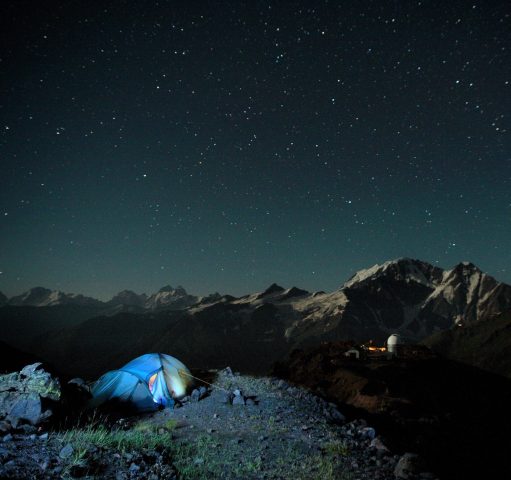
For those who stay lower, the area still delivers. Winter turns Azau and Cheget into a ski resort with runs for all levels. Summer draws trekkers to Adyl-Su, Adyr-Su, and Irikchat valleys, where wildflowers cover meadows and waterfalls cut through gorges. The Terskol Peak Observatory (3,100 meters) offers a look at regional research. The Devichyi Kosy waterfall cascades in misty tiers. Weather shifts without warning—sun one moment, fog the next, disrupting cable car schedules.
The journey from Nalchik follows the Baksan Valley, a drive past villages and orchards with mountains filling the windshield. Stays range from guesthouses in Terskol to lodges in Azau or Cheget. In winter and from July to August, book early. The road itself unfolds the Caucasus slowly, bend by bend.
Elbrus isn’t just about height. It’s where modern infrastructure meets wilderness. Cable cars and ski lifts suggest control, but step beyond them, and the mountain takes over. The air thins. The wind bites. The silence deepens. Even with thousands visiting yearly, the land sets the rules. Whether you climb, ski, or simply stand in its shadow, the mountain stays with you.