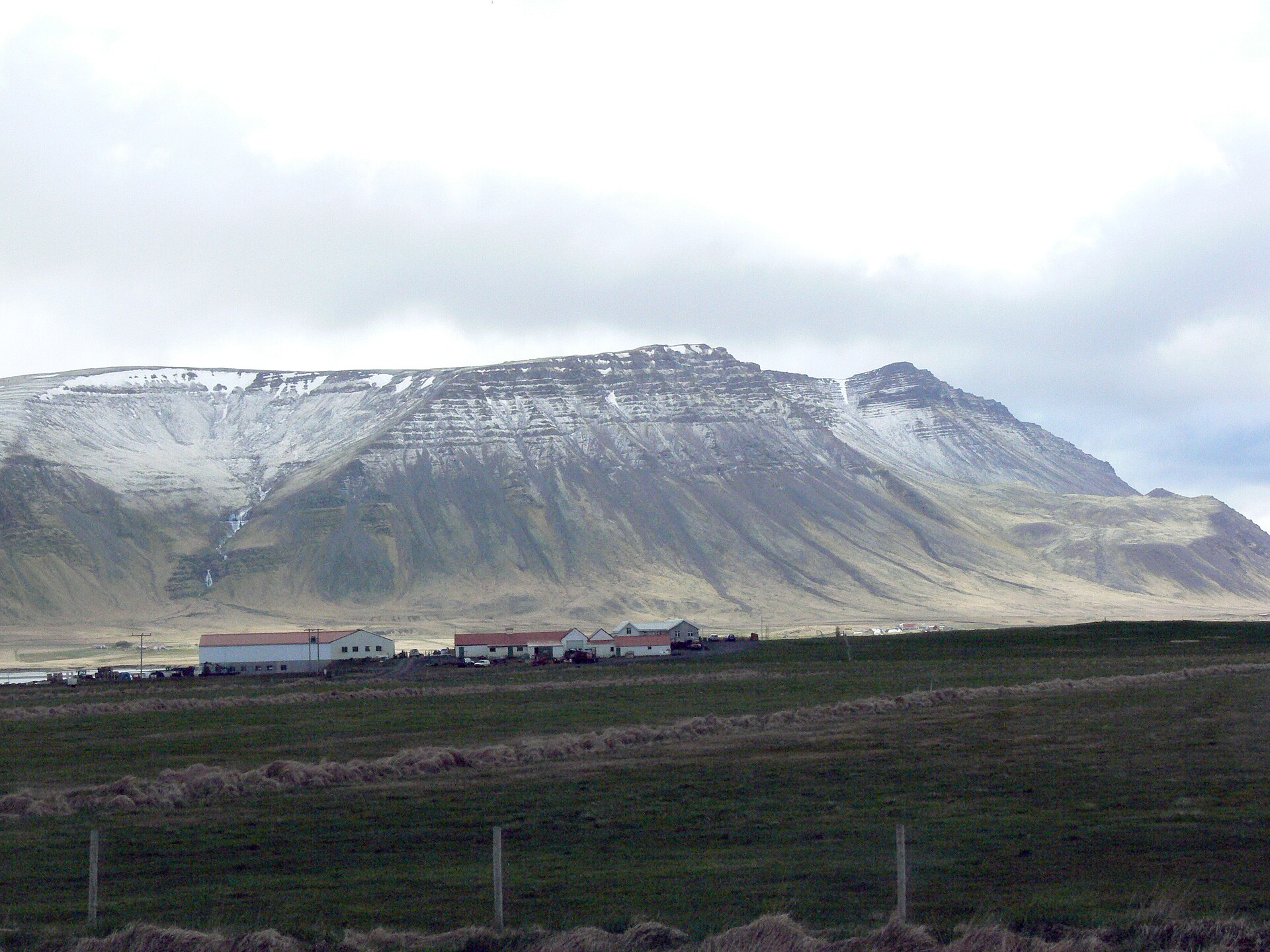
Akrafjall is one of those quiet, unassuming landmarks that doesn’t demand attention but rewards those who take the time to notice it. Rising just outside Akranes, a small coastal town about forty minutes north of Reykjavík, this flat-topped mountain feels like a natural sentinel over the surrounding landscape. From a distance, its broad, sloping shoulders and dark basalt cliffs give it a sturdy, almost stoic presence, as if it’s been standing guard over the fjord for centuries—and in many ways, it has.
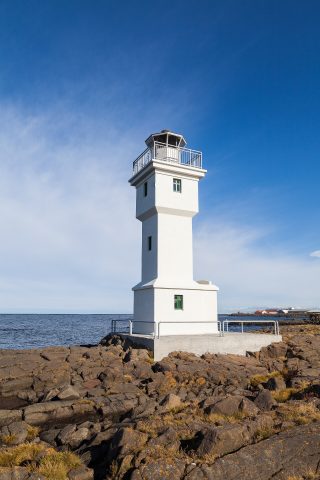
The mountain’s name translates loosely to "Akranes mountain," though locals often just call it Akrafjall, as if no further explanation is needed. It’s not the tallest peak in Iceland, nor the most dramatic, but its shape is distinctive: a long, gently curved ridge that stretches like a sleeping giant along the shoreline. On clear days, the summit offers sweeping views of Breiðafjörður, the wide, island-dotted bay to the north, and the distant Snæfellsnes peninsula, its own iconic glacier-capped peak sometimes visible on the horizon. Closer in, the town of Akranes unfolds below, its harbor and lighthouse marking the edge of the North Atlantic.
Geologically, Akrafjall is a remnant of Iceland’s volcanic past, though it hasn’t been active in the way most people imagine. The mountain is composed largely of basalt layers, formed from ancient lava flows that cooled and solidified millions of years ago. Over time, erosion and glacial movement shaped it into its current form, carving out the steep cliffs that drop sharply toward the sea. The lower slopes are covered in a patchwork of moss, heather, and hardy grasses, their colors shifting with the seasons—deep greens in summer, muted browns in autumn, and a dusting of snow in winter that never quite lingers long.
For centuries, Akrafjall has been a familiar landmark for those living in the region. Fishermen sailing into Akranes harbor would use it as a navigational reference, its silhouette unmistakable against the sky. Farmers in the surrounding valleys grazed sheep on its lower slopes, and in the past, the mountain even provided building materials; some of the older houses in Akranes were constructed from stone quarried here. There’s a practicality to Akrafjall that goes beyond its appearance—it’s a place that has quietly served the people around it, rather than being a destination in itself.
That said, the mountain has become a popular spot for hiking, particularly among locals and those who prefer their outdoor adventures without the crowds. The most common route starts near the town and winds up the southern slope, a steady but manageable climb that takes about an hour and a half to reach the summit. The path is well-trodden but not overly developed, with only a few wooden markers to guide the way. Along the ascent, the landscape changes subtly: the grassy foothills give way to rocky outcrops, and the air grows cooler as you gain elevation. Near the top, the wind often picks up, carrying the scent of salt from the sea and the faint tang of distant rain.
The summit itself is a broad, uneven plateau, more like a high meadow than a sharp peak. There’s no dramatic drop-off, no vertigo-inducing cliffs—just a sense of openness, as if the world has suddenly expanded in every direction. On a clear day, the view is worth the climb: the bay stretches out below, its waters shifting between deep blue and silver depending on the light, while the mountains of the Westfjords loom in the distance like a mirage. In winter, the scene takes on a different mood, with snow clinging to the rocks and the low sun casting long shadows across the landscape.
Akrafjall isn’t the kind of place that makes it onto postcards or travel brochures, and that’s part of its charm. There are no visitor centers, no gift shops, no carefully curated viewpoints—just the mountain, the sky, and the sea. It’s a reminder that Iceland’s beauty isn’t only in its famous waterfalls or geothermal springs, but in the quiet, unassuming corners where the land simply exists as it has for millennia. For those who take the time to climb it, Akrafjall offers a sense of connection—not just to the landscape, but to the people who have lived in its shadow for generations.
The mountain also holds a place in local folklore, though the stories are more understated than the grand tales of hidden elves or trolls found elsewhere in Iceland. Some say that in the past, fishermen would leave offerings at the base of Akrafjall before setting out to sea, a small gesture to ensure safe passage. Others claim that the mountain was once home to a hermit who lived in a cave near the summit, though no one seems to know for certain if the cave ever existed. These stories, whether true or not, add a layer of mystery to the mountain, a sense that it holds secrets just beyond reach.
Today, Akrafjall remains a place where people come to walk, to think, or simply to stand and look out over the water. It’s a short drive from Reykjavík, yet it feels worlds away from the capital’s bustle. The town of Akranes, with its working harbor and quiet streets, provides a glimpse into Icelandic life that’s less polished than what you’ll find in the tourist hotspots. After a hike, it’s not uncommon to stop at a local café for coffee and a slice of kleinur, the Icelandic doughnut, or to wander down to the shore and watch the waves roll in.
In the end, Akrafjall is a place that doesn’t need to be extraordinary to be meaningful. It’s a mountain that has witnessed the daily lives of generations, a silent witness to the changing seasons and the ebb and flow of the sea. For those who visit, it offers a moment of stillness, a chance to step away from the rush of modern life and simply be in a landscape that has remained largely unchanged for centuries. And perhaps that’s the real draw—not the grandeur, but the quiet persistence of a place that has always been here, and always will be.