Langasandur isn’t just another beach on Iceland’s western coast—it’s where the raw power of the North Atlantic meets the stark, untamed beauty of the island’s landscape. Stretching along the edge of Faxaflói Bay near the quiet town of Akranes, this stretch of shoreline feels like the edge of the world. There are no crowds, no beachside cafés, no sun umbrellas—just open space, the rhythmic crash of waves, and the sense that you’ve stepped into a place where nature still calls the shots. On clear days, the distant peaks of the Snæfellsnes Peninsula rise on the horizon, while in winter, the faint glow of Reykjavík’s lights can sometimes be seen flickering across the water.
The beach is best known for its unusual sand, which isn’t sand at all in the traditional sense. Instead, it’s fine volcanic grit, dark as charcoal with flecks of gray and green, crunching underfoot like gravel. Unlike the golden shores of warmer climates, Langasandur’s surface is unyielding, its texture a reminder of the island’s fiery origins. When storms roll in, the waves here turn leaden and violent, hurling themselves against the shore in towering swells. In calmer summer months, the water settles, though it never warms enough for most swimmers—only the bold or the foolhardy venture in, and even then, not for long.
Langasandur is deeply tied to Akranes’ history, a town that grew from a humble fishing village into a quiet port settlement. In the past, locals gathered seaweed here for fertilizer, and fishermen dragged their boats ashore to escape rough weather. Today, the beach remains a place of solitude, where people come to walk along the water’s edge, breathe in the salt-tinged air, or simply stand and stare at the endless expanse of ocean. Unlike the tourist-packed spots in southern Iceland, Langasandur sees few organized tours, which only adds to its sense of authenticity.
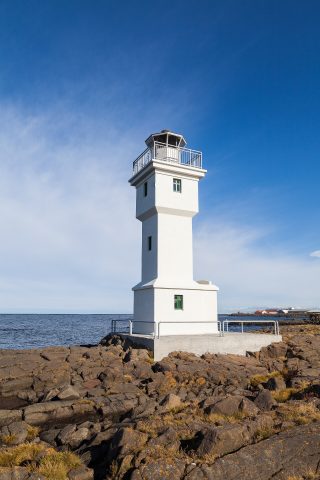
There are no grand architectural landmarks on the beach itself, but a short walk away stands the Akranes Lighthouse, a modest white tower with a red roof built in the early 20th century. Once a vital guide for ships entering the bay, it now operates automatically, though its silhouette against the ocean and rocky cliffs has become an iconic sight in this part of Iceland. Nearby, a handful of old fishing cottages still dot the landscape, some still in use by locals who’ve called this place home for generations.
Langasandur is at its most dramatic under overcast skies, when low clouds press down on the sea and the wind sends wisps of mist skittering across the sand. In these moments, the beach feels even more remote, as if nature is reminding visitors of its dominance. In summer, seabirds—gulls, terns, and occasionally puffins—wheel overhead or nest on the nearby cliffs. Winter, though, transforms the shore into a desolate stretch, where only the rare passerby leaves footprints that are soon erased by snow or tide.
For those used to beaches with amenities—sun loungers, changing rooms, beachside bars—Langasandur might feel too harsh, too unpolished. There are no facilities here, no convenience stores, and the nearest café is back in Akranes, a few kilometers away. But that’s precisely what draws people to it: the chance to be alone with the elements, without distractions. Locals often bring thermoses of hot coffee or tea, settling in for an hour or two to watch the light play across the waves.
The beach has also become a favorite spot for photographers, especially during the winter months when the northern lights dance across the sky. On clear nights, the aurora’s green and violet ribbons reflect off the black sand and water, creating a surreal spectacle. Even without the lights, the sheer vastness of the ocean and sky lends the place a timeless quality, as if the world moves slower here than elsewhere.
Langasandur isn’t one of Iceland’s must-see destinations, and that’s probably its greatest strength. It doesn’t try to impress or cater to expectations—it simply exists, with its own quiet history, its own silence, and its own wild beauty. For some, it’s just a black sand beach on the way from Reykjavík to Snæfellsnes. For others, it’s a place to pause, take a deep breath, and remember how small we are in the face of something so vast.