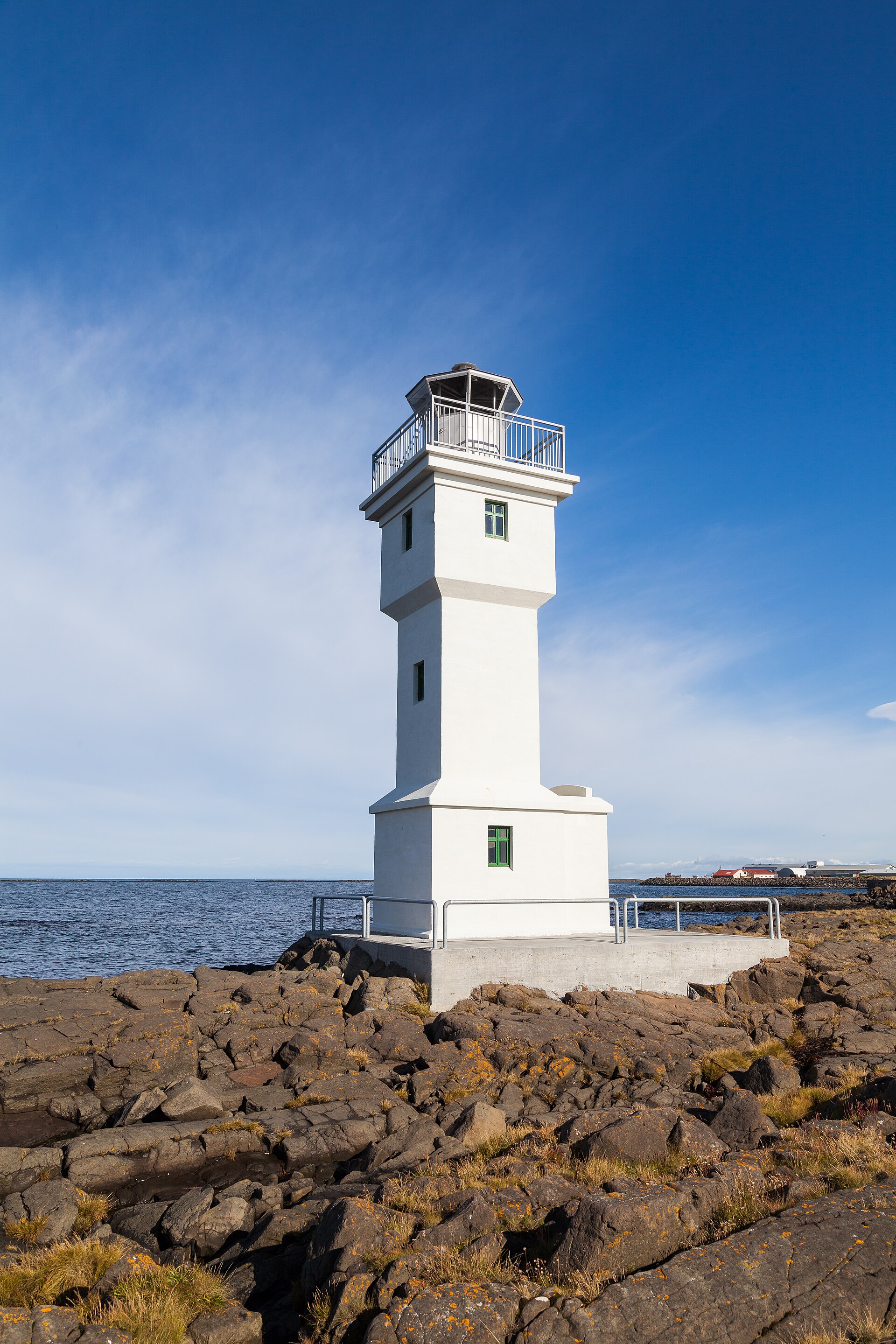
Akranes Lighthouse stands on a windswept headland where the land meets the North Atlantic, a place where the elements are always in motion. The wind rarely lets up here, and waves crash against the rocks with such force that spray often rises high into the air. The lighthouse itself is modest in size but unmistakable, its bright red tower cutting through the gray of the cliffs and the steely waters of the fjord. Unlike some of Iceland’s more remote lighthouses, this one doesn’t draw crowds. Instead, it offers something quieter—a sense of solitude, the sound of gulls, and the constant rhythm of the sea.
The need for a lighthouse here became clear in the late 19th century, as shipping along Iceland’s coast grew busier. Ships frequently ran aground on hidden rocks, especially in fog or storms, and Akranes, positioned along the route from Reykjavík to the northern ports, was a particularly hazardous stretch. The first light was built in 1918, but it was small and weak. The current structure dates to 1947, when advances in technology allowed for a more powerful beacon, visible up to twenty nautical miles away. Over the years, the lighthouse has been updated, but its appearance has remained largely the same—a red tower with a white band, now a familiar sight along this stretch of coast.
The design of the lighthouse is simple and practical, built to withstand Iceland’s harsh weather. The concrete tower tapers slightly, a shape that helps it resist the force of the wind. Inside, a narrow spiral staircase leads to the lantern room, where keepers once stood watch. Today, the light operates automatically, but in the past, people lived here, maintaining the equipment and recording weather conditions. Life for a lighthouse keeper in Iceland was demanding—winters brought early darkness, and storms could isolate the station for weeks at a time.
The landscape around Akranes is as striking as the lighthouse itself. The cliffs are jagged and moss-covered, and on clear days, the view stretches across the fjord to the mountains on the opposite shore. In good weather, you might even glimpse the distant Langjökull glacier, though more often than not, the horizon is obscured by rain or low clouds. In summer, the cliffs are alive with nesting birds—puffins, guillemots, and gulls—while in winter, the sea sometimes washes up debris or strange objects carried by currents from far away. Locals say that during storms, the waves roar through caves beneath the rocks, a sound like distant drumming.
Akranes Lighthouse is more than just a navigational aid; it’s part of Iceland’s cultural fabric. It appears in local legends and songs, and its image is often used in photographs and postcards, symbolizing the rugged beauty of the Icelandic coast. In recent years, more visitors have started coming here, drawn not just by the lighthouse but by the wild scenery around it. The road to Akranes passes through small villages where life moves at a slower pace, and where fishing and sheep farming still shape daily routines. Nearby, you can find old fishing huts, abandoned piers, and even remnants of German fortifications from World War II, when Iceland was occupied by Allied forces.
The best time to visit is on a clear day when the wind isn’t too fierce. The road to the lighthouse is narrow and gravel, often slippery after rain, so a sturdy vehicle is a good idea. There are no cafés or souvenir shops here, so bringing your own coffee and snacks is wise. If you’re lucky, you might spot seals lounging on the rocks or even whales in the distance. Winter brings a different kind of beauty—snow-covered cliffs and a leaden sea—but the weather can be unpredictable, so it’s best to come prepared for anything.
Akranes Lighthouse is a place where you can experience Iceland as it truly is, away from tourist crowds and busy attractions. There are no luxury hotels or bustling restaurants here, just the wind, the sea, and the rocks that have stood for millennia. It’s a place for those who appreciate solitude and wild nature, who want to listen to the sound of the waves and watch the light play on the water. Time moves differently here, and even a short visit can leave you with the sense that you’ve touched something enduring.