Perched on the western edge of Savanna-la-Mar, Fort Charlotte stands as a quiet witness to Jamaica’s layered past. Built in the late 18th century, the fort was part of a network of coastal defenses constructed by the British to protect their Caribbean colonies from foreign invasions and privateers. Its location, overlooking the bay where ships once anchored, made it strategically important—though today, the water is calm, and the only vessels passing by are fishing boats and the occasional yacht.
The fort’s design is modest compared to the grand fortresses of Europe, but it carries the unmistakable marks of military pragmatism. Low stone walls, thick enough to withstand cannon fire, curve gently along the shoreline, their rough texture softened by time and the creeping embrace of tropical vegetation. Inside, the remains of gun emplacements and powder magazines hint at the fort’s original purpose, though much of the structure has surrendered to the elements. The sea breeze, heavy with salt, still whispers through the ruins, as if carrying echoes of the orders once barked here.
What makes Fort Charlotte intriguing is not its size or state of preservation, but the stories it doesn’t tell outright. During the height of the transatlantic slave trade, Savanna-la-Mar was a bustling port, and while the fort was never directly involved in the trade, its presence loomed over the town’s commerce. The cannons that once pointed seaward also served as a reminder of colonial power—who was protected, and who was not. Later, during the 19th century, the fort fell into disuse as Jamaica’s strategic importance shifted, and the town itself turned inward, focusing on agriculture and local trade.
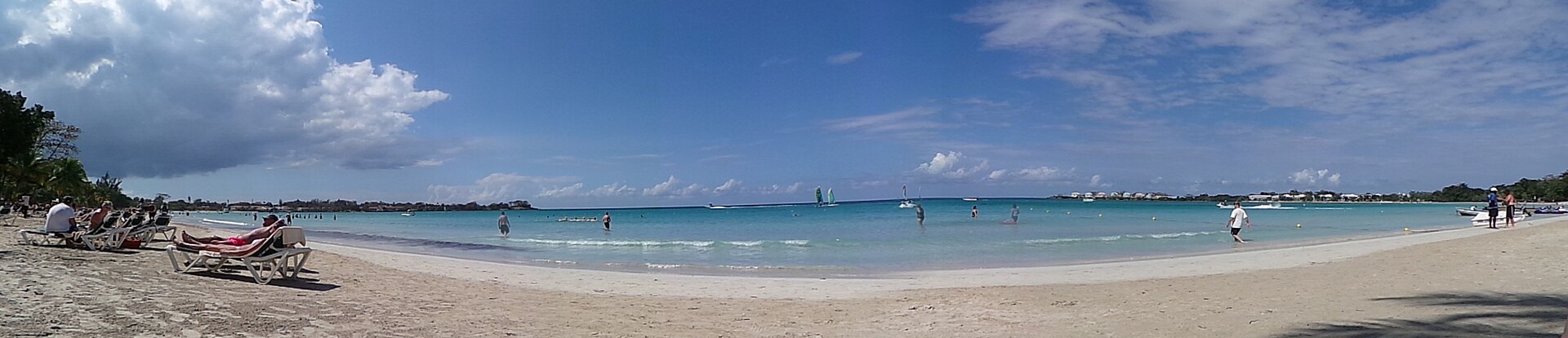
Today, the fort is more of a local landmark than a tourist attraction. Visitors who make the short walk from the center of Savanna-la-Mar will find a place where history feels tangible, not because of plaques or guided tours, but because of the way the past lingers in the air. The view from the ramparts is still striking—a sweep of blue water meeting the sky, with the distant outline of the Blue Mountains faint on the horizon. On clear days, the light is so sharp it almost hurts, casting long shadows that stretch across the weathered stone.
The town around the fort has its own rhythm, one that moves at a slower pace than Jamaica’s more famous resort areas. Savanna-la-Mar is a place where life unfolds in the shade of almond trees and the clatter of dominoes in roadside bars. The fort, with its crumbling walls, fits into this landscape naturally, as if it has always been here, not as a relic, but as part of the living fabric of the town. Locals might point it out to visitors, but they don’t linger—it’s just there, like the old market square or the church with the leaning steeple.
For those who take the time to explore, Fort Charlotte offers a different kind of history lesson—one that isn’t polished or packaged for consumption. There are no grand narratives here, just the quiet accumulation of time. The fort’s walls have seen hurricanes come and go, watched as the town rebuilt itself after storms, and stood silent as the world beyond Jamaica changed in ways no one could have predicted. In a country often defined by its vibrant culture and natural beauty, places like this remind you that history isn’t always dramatic. Sometimes, it’s just a slow settling of dust on stone.
If you visit, go in the late afternoon, when the heat of the day begins to ease. The light turns golden, and the shadows grow long enough to soften the edges of the ruins. You might see a fisherman mending his nets on the shore below, or a group of children playing in the shallows. The fort, in its quiet way, becomes part of the scene—not as a monument, but as a backdrop to the everyday. That, perhaps, is its most enduring legacy: not the battles it never fought, but the ordinary lives that have unfolded in its shadow.